Favourites

Meet Henry Southwick-Camp

Engineering Manufacturing Technician

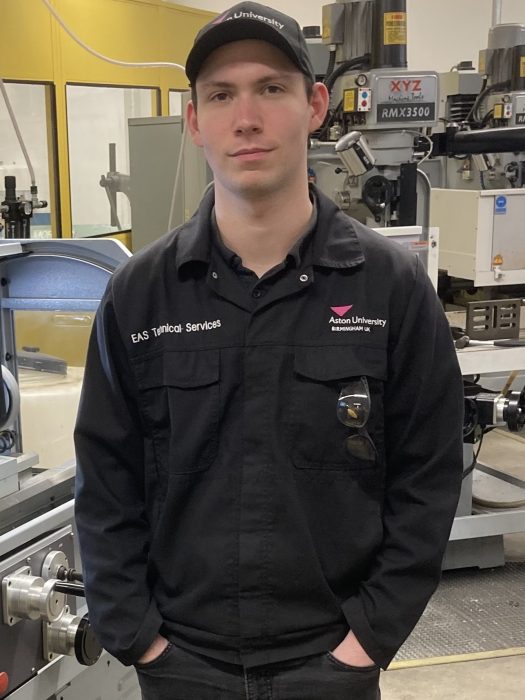
Henry is an apprentice technician at Aston University

What I do

I help turn students and researchers’ ideas into real things. People studying at university, or organisations conducting research, come to us with a problem or a project, and I help design, make and test the parts they need to make it happen.

That could involve CAD (computer-aided design), 3D printing a model, cutting metal and more. I’ve built things that support lots of different types of research, like biomedical science, chemistry, and mechanical engineering.

One minute I could be teaching someone to use the 3D printer, and the next I could be helping to make improvements to a racing car – every day is different.

I like knowing that the things I help build will help to make a real difference in the future.

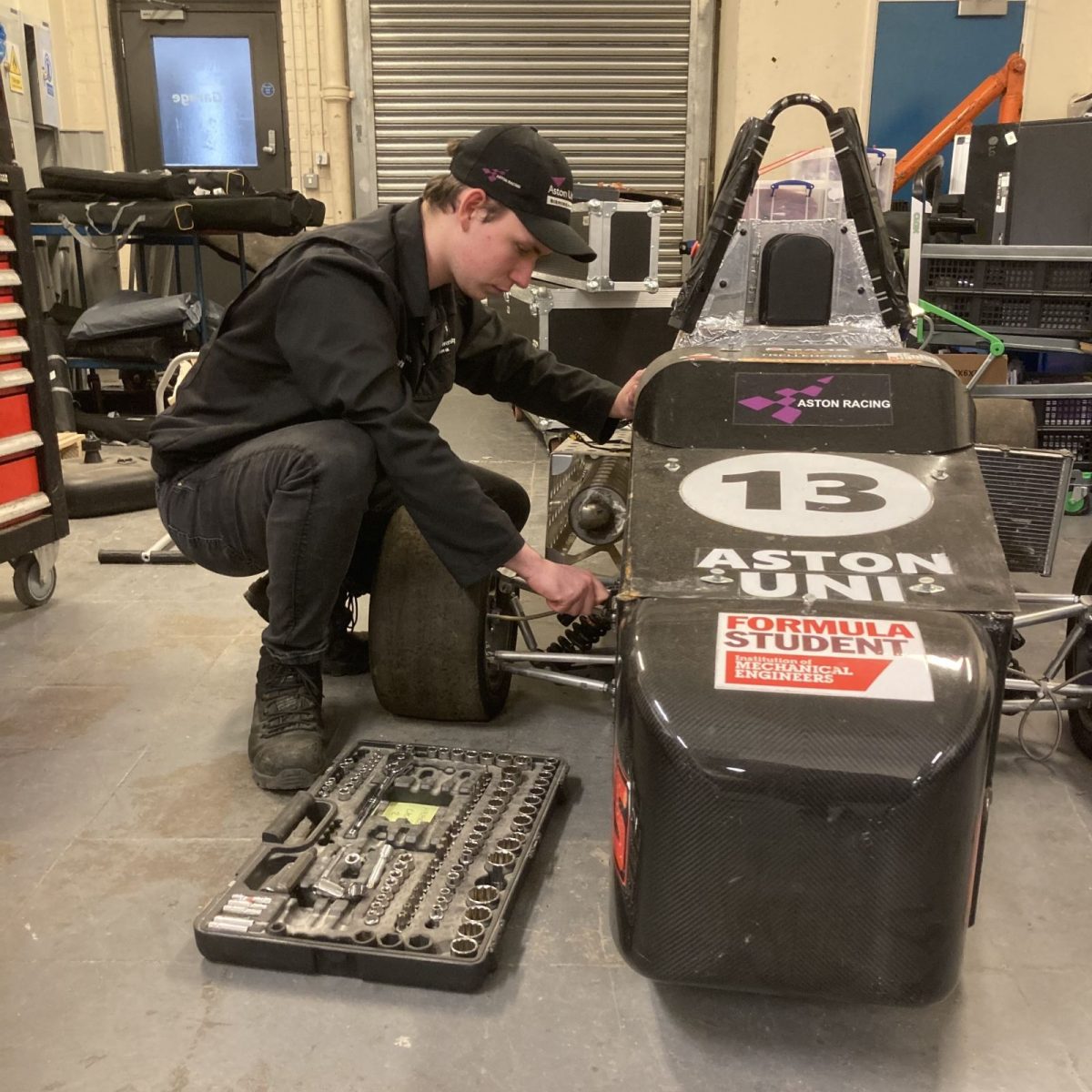
Engineering Manufacturing Technician Henry wearing overalls, kneeling on the floor to work on a racing kart.
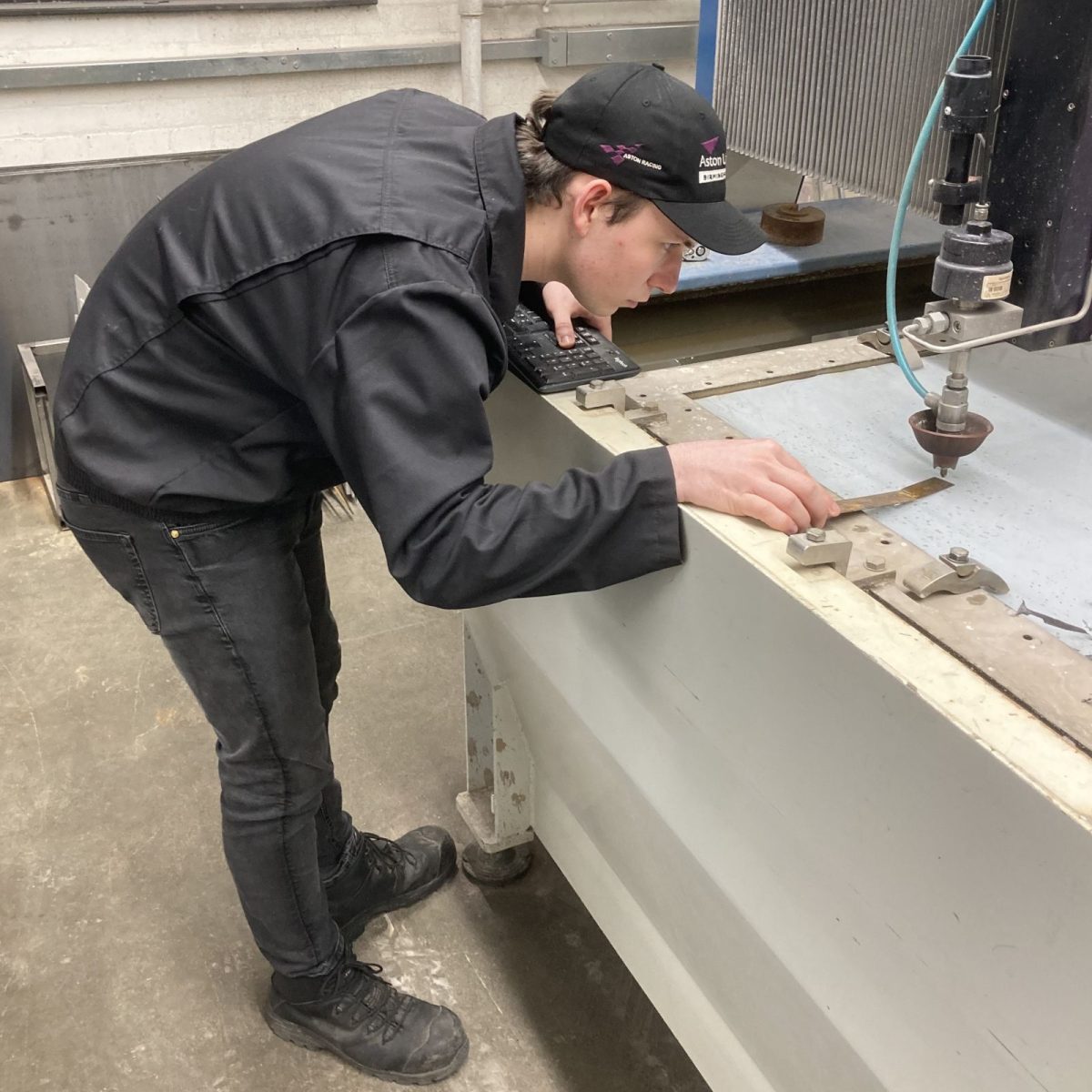
Engineering Manufacturing Technician Henry in the workshop, bent over, looking closely at a waterjet cutting machine.

What I love about my job

I love the variety. There’s no telling what the next big project will be and that’s what makes it great. One day I might be working on a biomedical experiment, the next on a civil engineering project or a chemical research machine. I even get to handle liquid nitrogen!

I also enjoy chatting with the university students and researchers about what they’re building. It’s a great way to learn more about how things work and the science behind it.

The skills I use most

Problem-solving is a big one. People come to us when they don’t know how to make something happen, so it’s our job to figure it out. That could mean changing the design or figuring out a way to manufacture it.

Good communication is important too, as the students need support with tasks and answers to their many questions. I don’t always find it easy to speak to lots of new people (I was diagnosed with autism around the time I left school), so I’ve had to learn how to give advice and support in a constructive, helpful way.

You also need to be resilient – not everything works the first time. I must admit, I broke some tools in my first year – that was quite embarrassing! That said, you learn from your mistakes and get better over time.

Time management is really important too. We might take a whole project from start to finish ourselves, so you’ve got to stay organised.
A little more about my everyday role

The best bits about working in a team

My team is brilliant. There are five of us in the main workshop and two more in the model shop. Everyone’s got different experience and backgrounds, so there’s always someone to ask if you get stuck.

One colleague might know more about machining, another about CAD and another about electronics. No single person can know everything, so it’s great that we can all rely on each other for help and advice.

My favourite piece of equipment

The water jet cutter is my favourite. It can cut through anything – from millimetre thick carbon fibre, to inch-thick steel. You can cut any 2D shape that you can draw. It blasts water mixed with garnet (like sand) at super high pressure – over 4,000 bar, which is about 200 times more pressure than a firefighter’s hose. It cuts more accurately than anything else we have.

That said, it’s a complicated machine and it needs a lot of attention and maintenance to keep running. There are times it’s given up on us just when we needed it the most, but once it’s back up and running, it’s a life saver.

What I like to do in my spare time

I’m into rock climbing and I build mechanical models for fun, the kind with gears and moving parts. At the moment I’m working on a wooden gramophone model.

I’ve always spent a lot of time doing DIY with my dad, anything from building sheds to fitting new windows. That’s probably where my love of designing and building comes from.

My school days

School was a bit up and down. I really enjoyed Design and Technology, but the workshop was closed halfway through my GCSEs, which was disappointing. I kept up with science and computing though, and I enjoyed problem-solving subjects like physics and maths.

I didn’t know exactly what I wanted to do when I left school, but I knew I liked making things and figuring stuff out. I just had to wait a bit longer to find the right job.

The most exciting thing I’ve achieved so far in my job

Last year, I worked on my biggest project so far from the Energy and Bioproducts Research Institute. They showed me a piece of scientific research, where scientists had built a machine to automate experiments involving liquids. They asked me to make a version of that machine.

Over the course of a few months, I created drawings and designed the machine using CAD software, modified it, built prototypes, sourced all the parts (including machining and 3D printing some!) and assembled the machine myself. It’s definitely the most complex thing I’ve made so far.

A surprising fact about my job

You might think technicians at universities just make and repair things, but we teach students too. Over the last year, I’ve even started writing and delivering my own lectures for product design students to give a different perspective from the professors.

I’ve also built a lot of connections with people. There are students and researchers that I work with regularly, and I’ve learnt a lot about the science, and the impact of what I’m doing. It’s very rewarding.

The next steps in my career journey

I’ve nearly finished my Level 4 NVQ. Once that’s finished, I can take my final assessment and continue my work on a full-time contract.

From there, I want to build up my experience. I’d like to learn to weld and maybe get involved in the STEM racing program. After that, I can look to take on a more senior position and see where life takes me.

The advice I’d give to someone younger

You don’t have to know exactly what you want to do when you leave school. Try different things and know that nothing you do is wasted. Explore your options, and as you do, you’ll learn more about yourself. Follow what genuinely interests you, because that’s where you’ll find success.

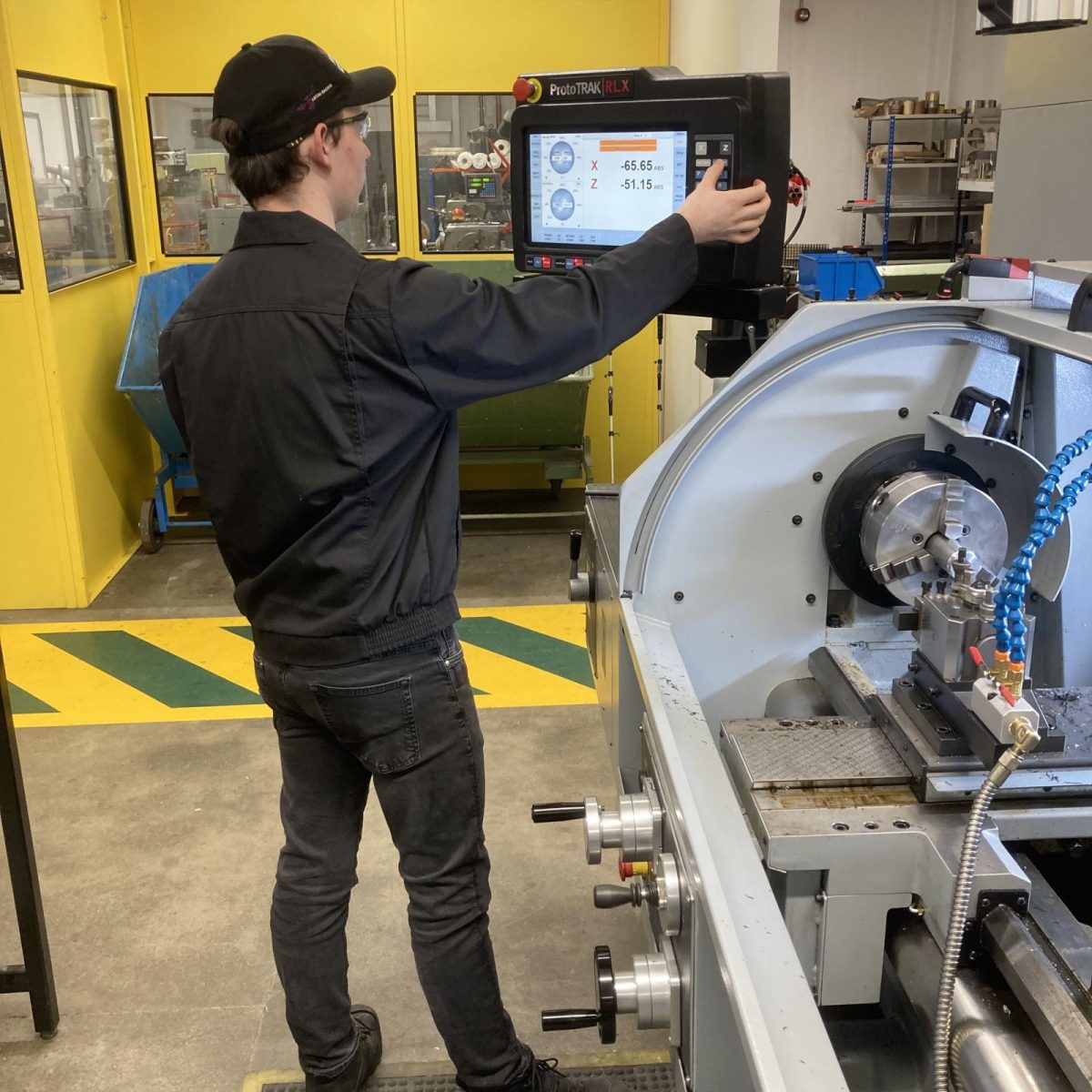
Engineering Manufacturing Technician Henry in the workshop, operating a control panel on a CNC lathe.

Think you could be an Engineering Manufacturing Technician?

Discover what qualifications you’ll need, how much you can earn, and what the next steps are.

Like the sound of
this role?
Visit the
role detail page