Favourites

Meet Jack Baldwin

Rail Engineering Technician

Jack is a Reliability Technician at West Midlands Trains

What I do

I’m a Reliability Technician at West Midlands Trains. That means I fix and maintain trains to keep them running safely and on time. When something goes wrong, I’m the one who investigates and repairs the fault, so the train can get back into service.

I sort all sorts of issues, from brakes, to changing engine oil, to electrical faults. My job helps people get where they need to go, because trains can only keep moving if someone sorts out any problems they may have.

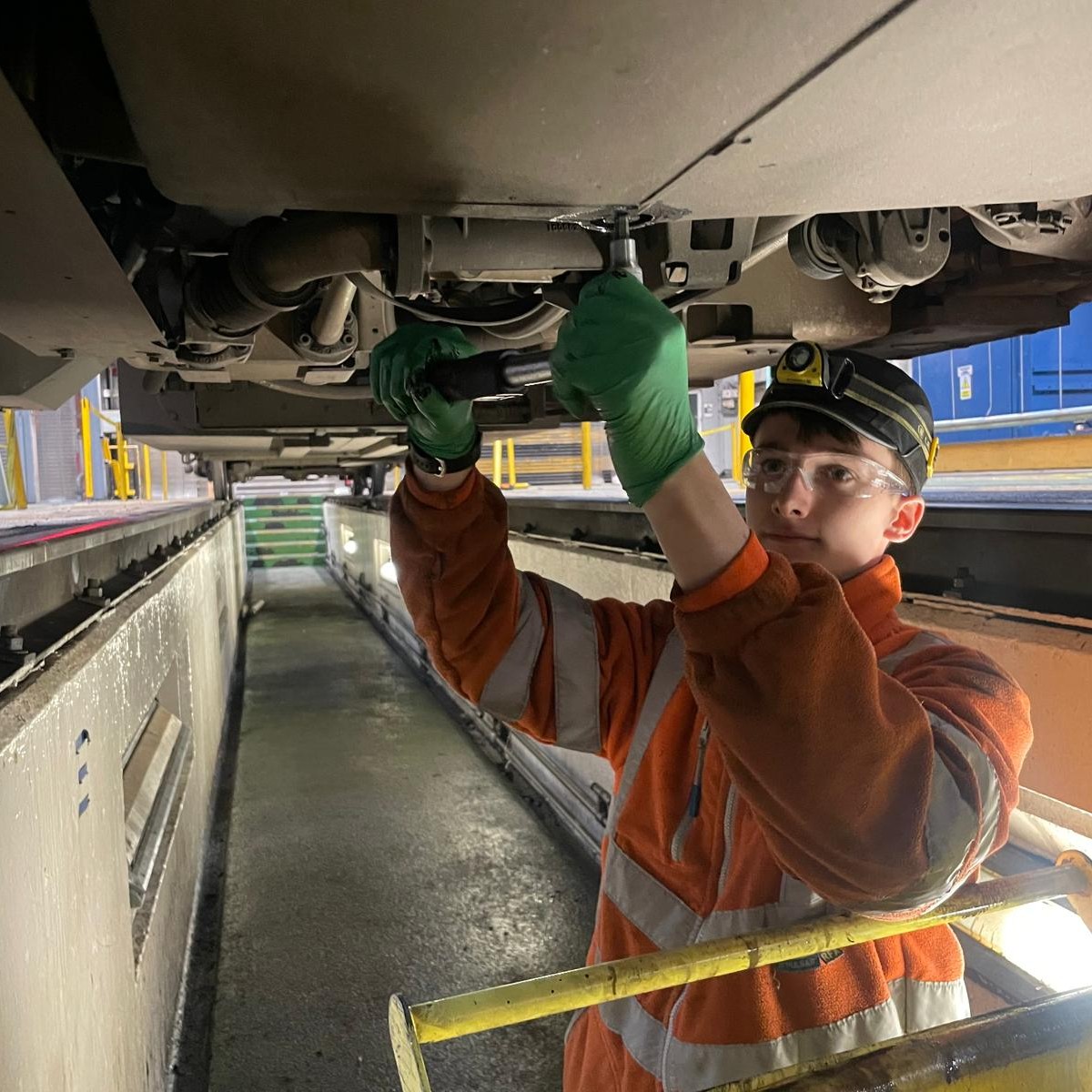
Jack, wearing overalls, gloves, safety goggles and a hard hat, standing in a service pit underneath a train, doing maintenance on its undercarriage.
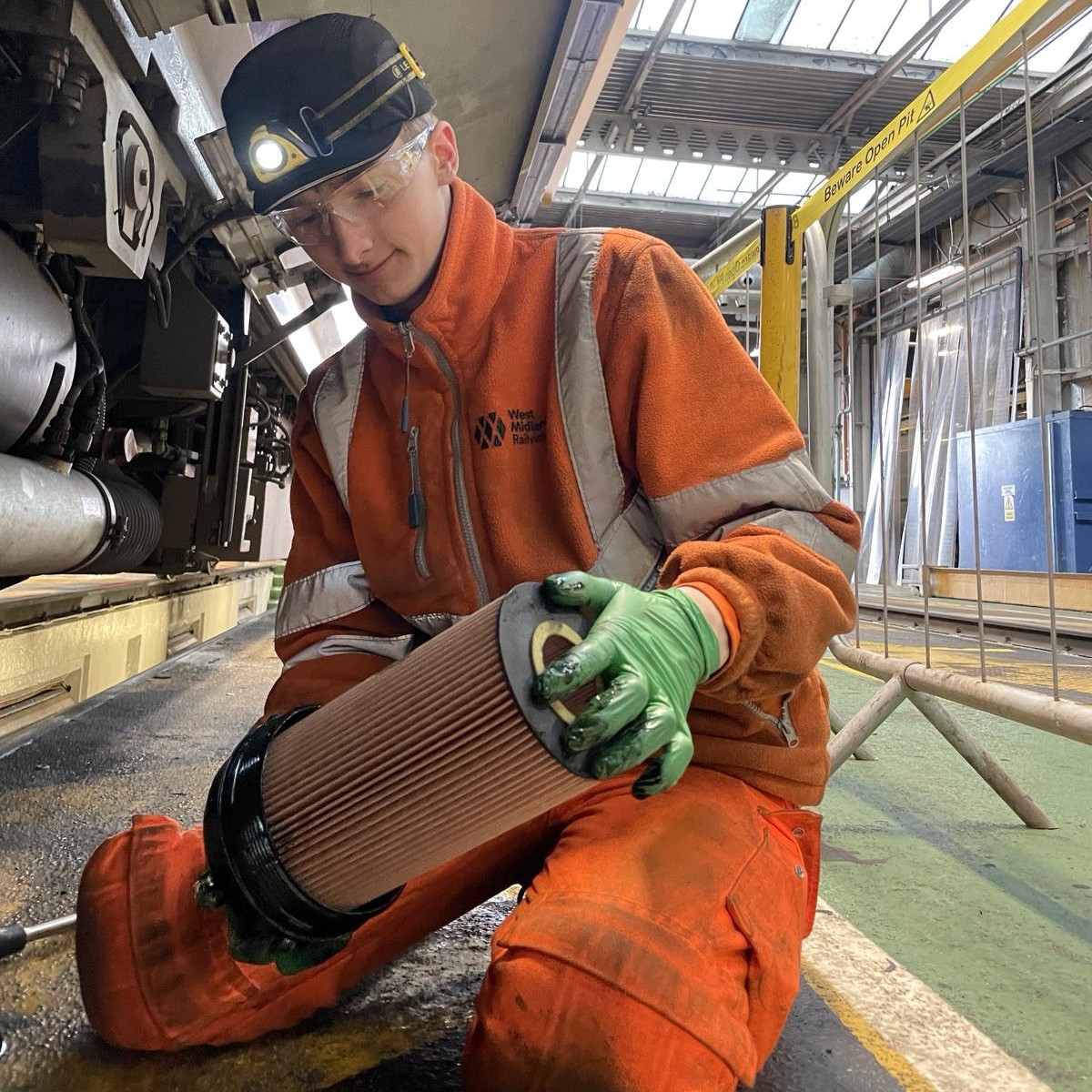
Jack, wearing overalls, gloves, safety goggles and a hard hat, kneeling beside a train, replacing a filter.

What I love about my job

The best part is that every day is different. I never know what I’ll be working on when I wake up, so it’s never boring or repetitive. I enjoy having to think on my feet and use my initiative to solve problems. I like that I’m always learning and that there’s always something new to figure out.

Even when the jobs are tough or the deadlines are tight, I like the challenge of getting a train back into service safely and on time.

The skills I use most

Problem solving is the skill I use the most. A lot of my work involves finding faults and working out how to fix them, especially with electrics. You also need to be able to work independently and use your initiative, especially when you’re out on your own doing repairs.

Teamwork is important too, and having a positive attitude helps a lot. If you’re respectful and friendly, people are more likely to help you. I’ve learnt loads from the more experienced technicians just by being curious and getting stuck in.

A little more about my everyday role

The best bits about working in a team

In my depot, there are about 16 technicians in each team and three reliability technicians per shift. A lot of the time we work in pairs, but sometimes we’re on our own if two trains break down at once. What’s great is that everyone helps each other.

The more experienced team members have so much knowledge, and they’re always willing to share if you’re friendly and keen to learn. It’s a mix of team working and lone working, but either way you feel supported. It makes the job a lot easier and a lot more fun.
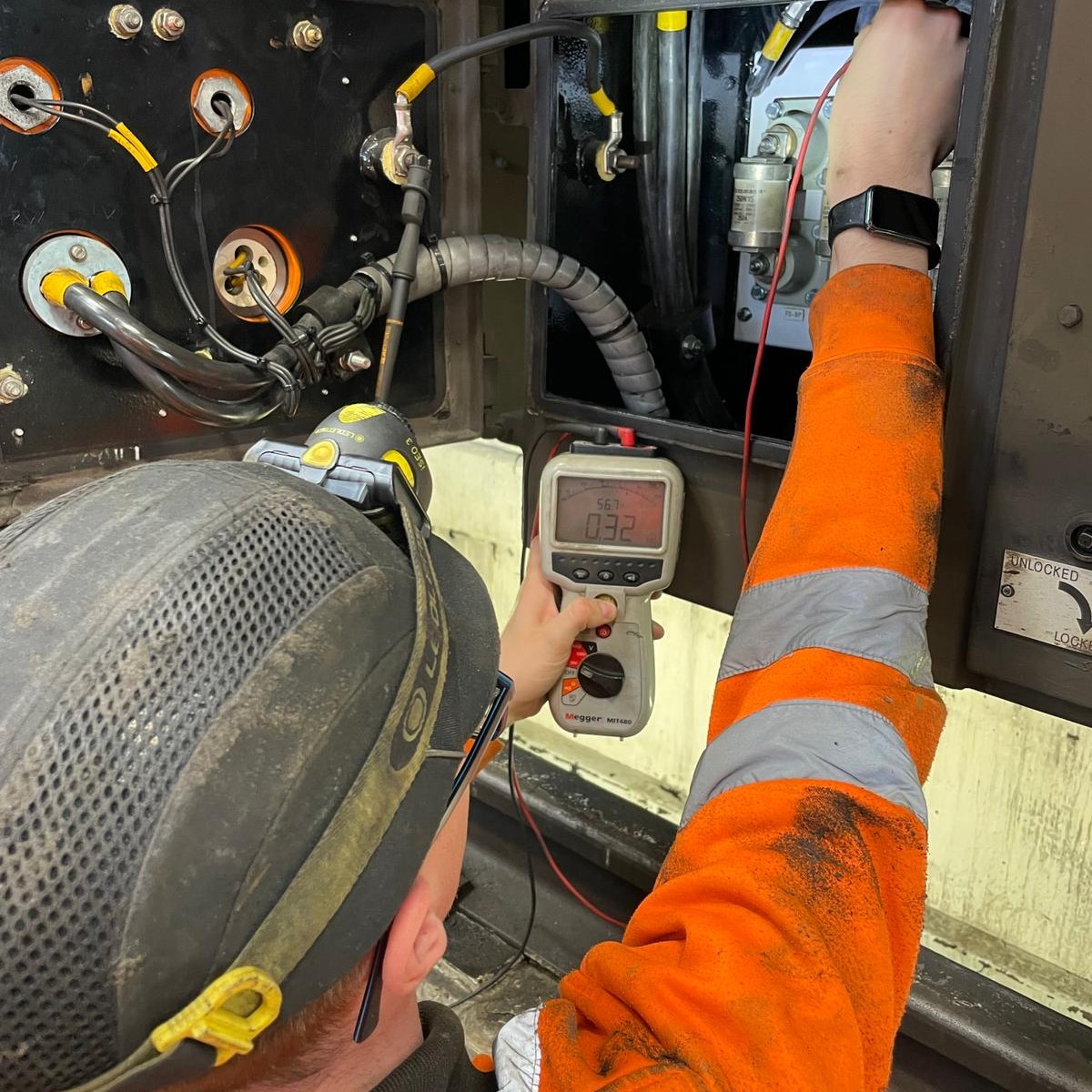

My favourite piece of equipment

My favourite bit of kit is my multimeter. It’s an electrical testing tool that shows things like voltage, current and resistance. I use it a lot when I’m fault finding. It gives me the answers I need when something’s not working properly. If you’re working with electrics, it’s one of the handiest tools to have in your bag.

What I like to do in my spare time

I love travelling. Because of the way my shifts work, I get nine days off every month in a row, so I’ve got lots of time to get away. This year I’ve been to places like Portugal, Tenerife, Ibiza, Germany, Greece and Belgium.

When I was younger, I played table tennis and did lots of photography, and I still volunteer at the heritage railway where I’ve worked since I was 12.

The most exciting thing I’ve achieved so far in my job

I’ve won a couple of awards, including Apprentice of the Year at my company, which meant a lot to me.

Outside work, I help lead a project at the Severn Valley Railway where we’re converting an old diesel train to run on hydrogen power. I’ve been working on it for over four years. It’s a great way to learn about project management and sustainability, and it looks brilliant on my CV.

A surprising fact about my job

People often think I’m always out on the tracks fixing trains, but most of our work is done in the depot. We only get called out if a train breaks down during the day and can’t make it back. That doesn’t happen very often, only about once a month. Most of the time, the trains come to us.

The next steps in my career journey

I’ve finished my apprenticeship and now work full time. Next, I’m hoping to do a Level 4 Higher National Certificate in engineering, to help me progress further in my job.

The advice I’d give to someone younger

Don’t stress too much about your future. Keep trying to do your best and things will fall into place. Whatever you choose to do, ask questions and take every chance to learn. Make the most of your opportunities – putting in effort makes a massive difference later on.

Jack, wearing overalls, gloves, safety goggles and a hard hat, using a multimeter to test an electrical system.

Think you could be a Rail Engineering Technician?

Discover what qualifications you’ll need, how much you can earn, and what the next steps are.

Discover other
technicians who
do this role

Like the sound of
this role?
Visit the
role detail page