Favourites

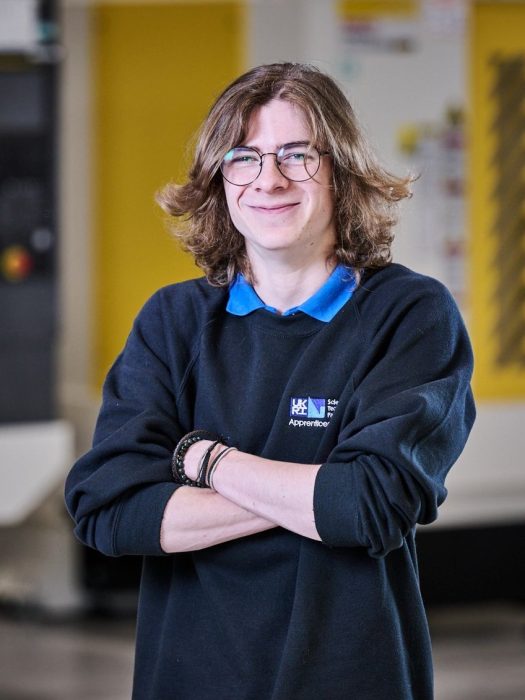
Meet Ben Lockett

Mechanical Engineering Technician

Ben is a Mechanical Engineering Technician at the Science Technology and Facilities Council, based at the Rutherford Appleton Laboratory

What I do

At the Rutherford Appleton Laboratory, we have a selection of specialist equipment that scientists use, so they can carry out experiments they wouldn’t normally be able to afford to do themselves.

My job is to help make the parts and equipment they need. To do this, I use things like CNC (computer numerically controlled) machines, manual mills and lathes, hydraulic presses and bandsaws.

As part of my apprenticeship, I get to work in different departments for a few months at a time, building components and prototypes for experiments.

A lot of the time, I work in the machine shops using tools that cut and shape metal or plastic, so it becomes the exact shape to make the part a scientist needs.

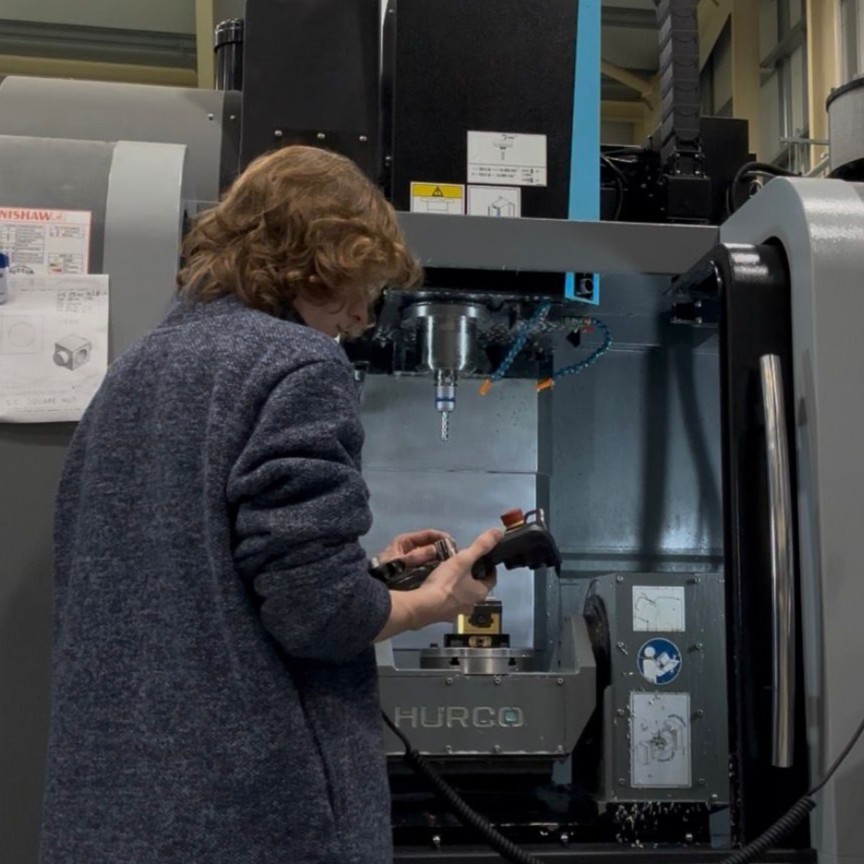
Maintenance and Operations Engineering Technician Ben, stood next to a large industrial CNC milling machine.
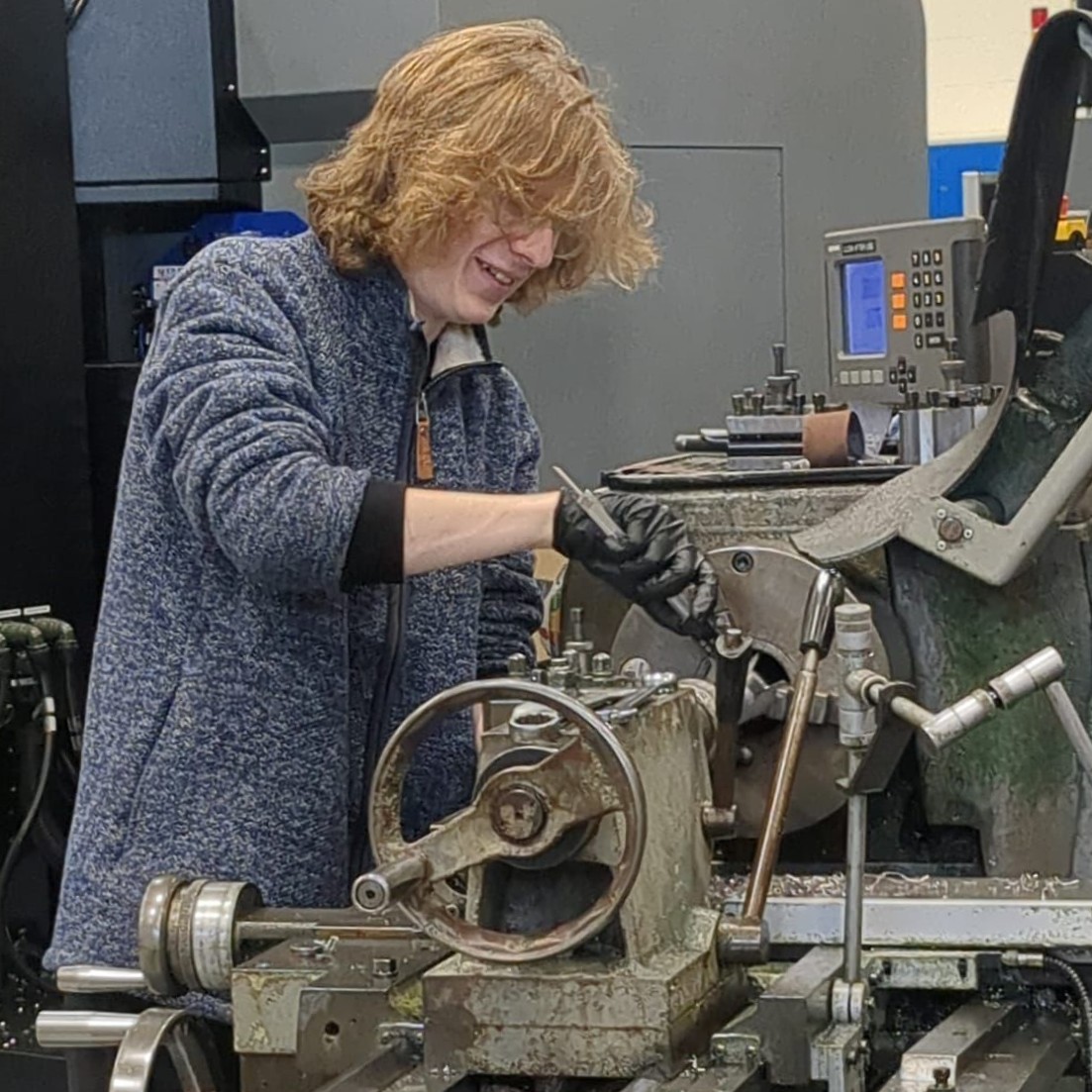
Maintenance and Operations Engineering Technician Ben, wearing latex gloves, using a tool to fix a machine.

What I love about my job

One of the best parts of my job is seeing how the things I make are used in experiments.

It’s a place where everyone is passionate about science and engineering, and that makes it really inspiring to work here.

During one placement, I worked near the target station of a synchrotron – a huge machine that uses powerful magnets to speed up tiny, charged particles so they produce useful beams of radiation for experiments. Scientists would come in with their equipment and experiments, and I would make the parts they needed.

Sometimes I would talk to the scientist, and they would show me how the part I made fitted into their experiment. That was really exciting because I could see exactly how my work helped them.

Another thing I love is the people. There are so many knowledgeable people working here and everyone is happy to explain what they’re doing. No one person could build something as complicated as a synchrotron – it takes lots of people working together.

The skills I use most

Patience is a really important skill in my job. Sometimes a part doesn’t work the way I expect and I have to start again. When that happens, I just remind myself that I’ll probably make it faster the second time, because now I know what I’m doing.

Problem solving is another big one. A lot of the work involves figuring out how to make something that hasn’t been made before. I might look at a drawing and think it’s simple, then realise there’s a tricky feature that needs a completely new approach.

Being practical and hands-on also helps. I enjoy working with machines, tools and materials, and figuring out how to turn a design into a real object.

A little more about my everyday role

The best bits about working in a team

Working in a team is great because everyone thinks about problems differently. In every workshop there’s usually someone who has been doing the job for years and has loads of experience.

Sometimes I might spend hours thinking about how to make a part. Then I take it to someone more experienced, and they immediately come up with a clever solution that I would never have thought of.

I learn a lot just by watching how other people work. I often stand nearby and see what techniques they use, then try those ideas in my own work later. Because of that, you learn much faster as part of a team than you would on your own.
My favourite piece of equipment

My favourite machine is a CNC mill. CNC stands for computer numerical control. That means the machine follows programmed instructions to cut materials very precisely.

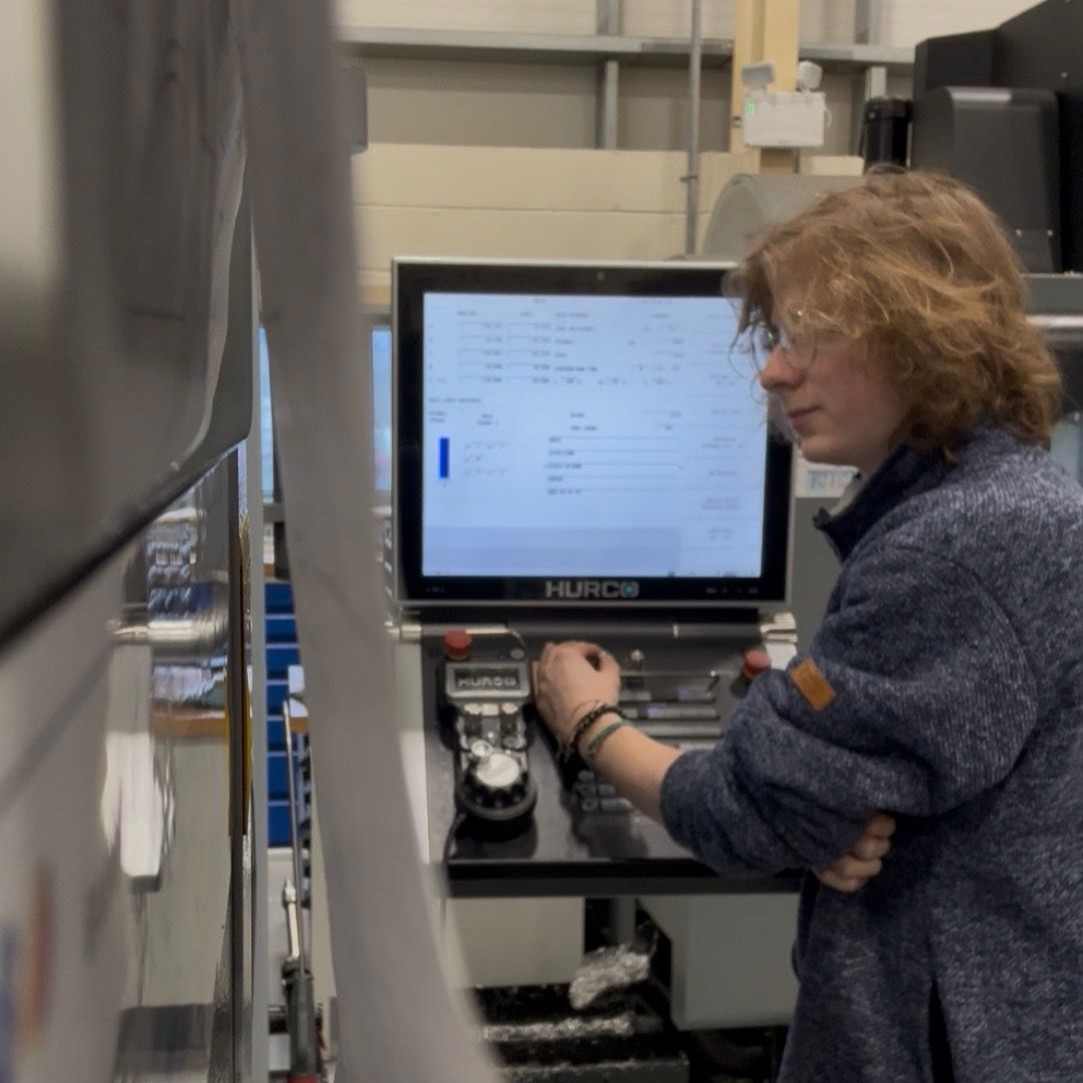
The machine I used had something called conversational software. Instead of writing complicated code on a computer, I could programme each step directly on the machine’s control panel. It had pictures showing what each setting did and even allowed me to run simulations before starting.

I loved using it because it made programming much more interactive and easier to understand. It also helped me see exactly how the tool would move and shape the material before the machine actually started cutting.

What I like to do in my spare time

Motorcycles are my biggest hobby. I’ve always enjoyed working with my hands and solving problems, so restoring bikes is perfect for me.

Right now, I have a few bikes that I’m working on. One is from 1986 and another from 1993. The older they are, the more work they need, but that’s part of the fun. I enjoy fixing them up and trying to get them running again.

I also love going for rides and planning trips. Sometimes I travel through Europe to meet friends and visit motorcycle festivals where we can test ride new bikes.

When I’m not working on bikes, I spend time with my girlfriend. We like going to the cinema and we love to build Lego together. It’s a pretty simple life, but I enjoy it.

The most exciting thing I’ve achieved so far in my job

One of the most exciting things I’ve done was making an extremely tiny part for a scientist. It was a plastic coil that had to be square instead of round and it had to measure just 1 millimetre by 1 millimetre. It was tiny. If you dropped it on the floor, you’d probably never find it again!

It was one of the first parts I ever programmed on a CNC machine and it was very tricky to make. I even had to create special tools to hold the piece while cutting it. After a lot of careful work, I finally managed to make it successfully, which felt like a big achievement.

A surprising fact about my job

One surprising thing about my job is how different every task can be. Sometimes I might make a part in just ten minutes. Other times I could spend days or even weeks working on a complicated component.

Also, making the part isn’t always the hardest part. Sometimes I have to design or build special tools just so I can make the actual component. For example, I once had to create a tool to hold a cutting device inside a machine press.

Without that tool, the cutting device would have flown out of the machine. A lot of engineering is really about solving problems and figuring out the best way to make something possible.

The next steps in my career journey

I’m doing a four-year apprenticeship, where I’ll keep rotating through different departments so I can learn new skills and find out about all the different types of work here.

Next, I’ll be working with the Central Laser Facility, which will be completely different from the departments I’ve worked in so far. I’ll also start studying for a Higher National Certificate, which is a Level 4 qualification.

Eventually I’d like to turn my apprenticeship into a Level 6 apprenticeship, which is a degree level apprenticeship.

The advice I’d give to someone younger

Always give your best effort. When I was younger, I didn’t always put my all into everything and looking back, I think I could have achieved even more if I had.

Now, I try to make sure that if I’m doing something, I’m really committing to it. Otherwise, I feel like I’m wasting my time.

I’d also say follow what interests you. When I chose economics instead of chemistry at A-level it turned out to be the subject I did best in, simply because I enjoyed it so much.

Maintenance and Operations Engineering Technician Ben, stood at the control panel screen of a large industrial CNC machine.

Think you could be a Mechanical Engineering Technician?

Discover what qualifications you’ll need, how much you can earn, and what the next steps are.

Like the sound of
this role?
Visit the
role detail page