Favourites

Meet Owen Hewitt

Research Laboratory Technician

Owen is an apprentice Research Laboratory Technician for the National Crystallography Service, at the University of Southampton

What I do

At the National Crystallography Service, we use powerful machines to study crystals sent to us from all over the UK. We do things like firing X-rays through the crystals to work out what they’re made of, using equipment that most universities don’t have, so we’re the only place in the country that can answer these questions. Our work helps scientists test their ideas and helps scientific research into crystals.

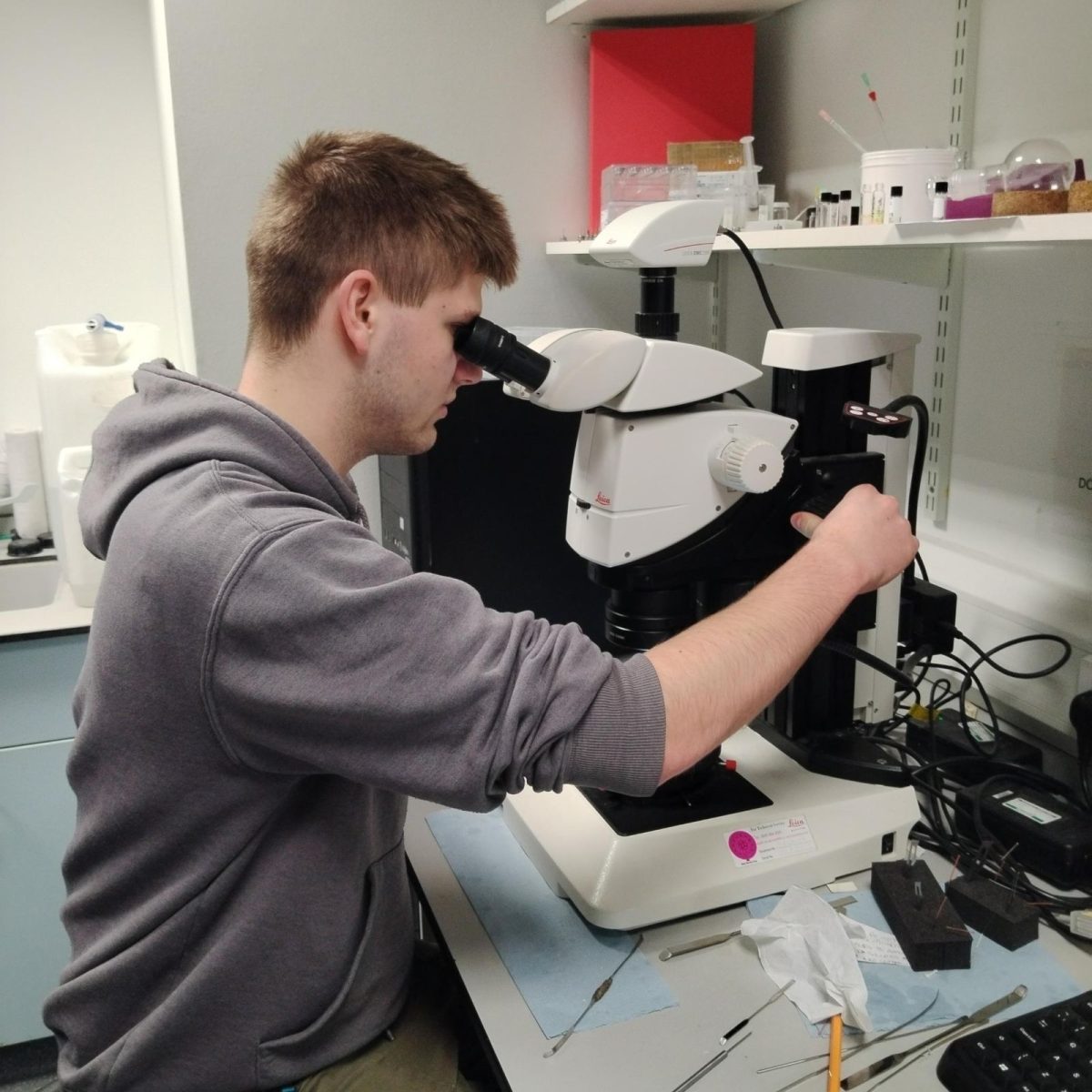
Owen looking at a sample through a microscope.
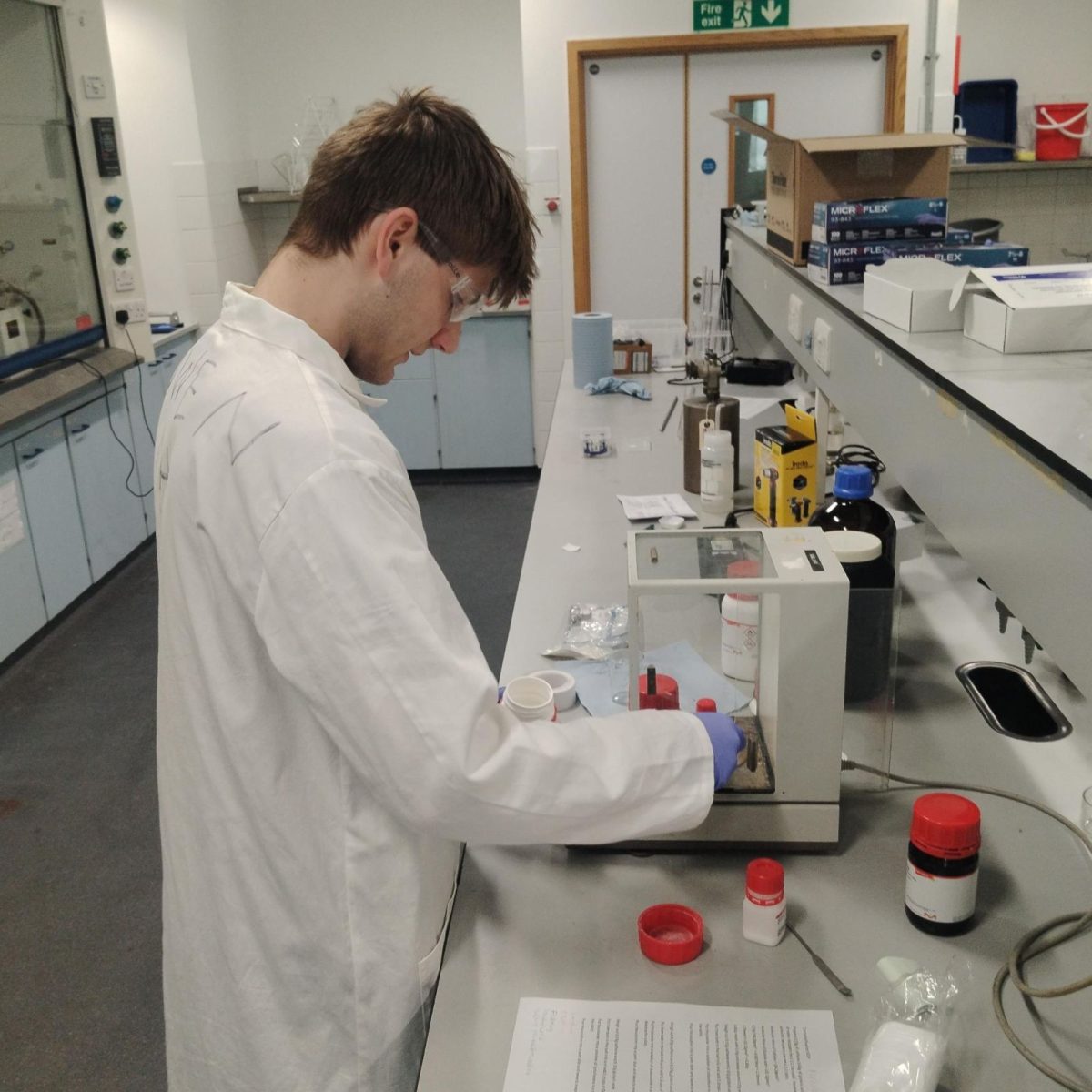
Owen in the lab, wearing a lab coat, gloves, and safety goggles, measuring out some samples.

What I love about my job

I love figuring out what crystals are made of. It’s a bit like solving a puzzle. Scientists send us crystals they’ve made in the lab, but they don’t always know exactly what they are, and they need proof of what they’ve made.

I test the samples by firing X-rays through the crystals and detecting the pattern that comes out the other side. From that, computer software is able to figure out the structure of the crystal’s atoms. This is called structural determination, and I think it’s amazing we can find out that much just from how X-rays move through a crystal.

The crystals are never perfect, so there’s always a problem to figure out or something to fix in the data. I love how my work helps other people’s scientific research. I also enjoy taking our machines into schools and showing students how to use them to test things like aspirin samples. It’s really rewarding helping people understand science better, especially when they get excited about it.

The skills I use most

Computer skills are really important because most of the analysis is done using specialist software. Problem solving is a big part of my job too, whether that’s fixing data that doesn’t look right, or working out what’s gone wrong with a machine.

I also need to be very precise. The crystals I work with can be smaller than a tenth of a millimetre, so picking them up takes practice and patience. Communication matters as well – I need to talk with lots of different people, like the researchers who send us their samples, the engineers who help fix equipment, or students and other people from across the university.

A little more about my everyday role

The best bits about working in a team

I work with an amazing team of about 15 people and we all help each other out. Most of them are experts in their field, with PhDs and years of experience in chemistry. Some of them are among the best crystallographers in the country.

I’ve learned so much from them – even though I’m still early in my career, they’re always happy to explain things and answer questions. It’s great to be surrounded by people who are passionate about what they do and I learn something new almost every day.
My favourite piece of equipment

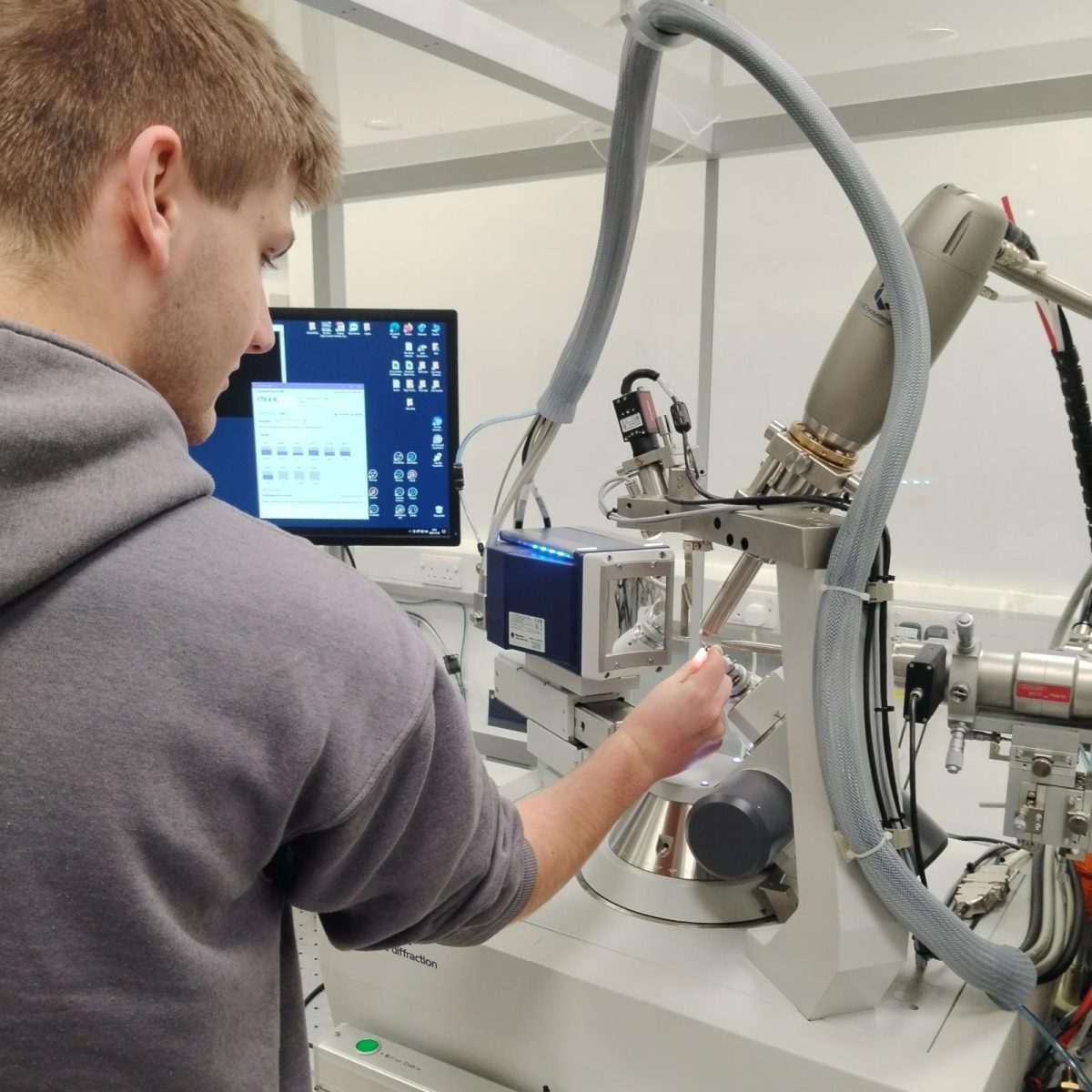
My favourite machines are our single crystal X-ray diffractometers. These are the machines we use to fire X-rays through crystals and collect the data we need. They’re huge, powerful and incredibly precise. It’s amazing what we can learn from crystal samples that are so small.

We’ve also got machines that work with powder samples and a hot stage microscope that shows us exactly when something melts, but crystallography is my favourite – the technique just fascinates me.

What I like to do in my spare time

When I was at school, football was my main hobby. I played for a local team until I was 18. These days I still enjoy watching it. I also really liked crime shows growing up – especially ones that involved forensics and solving mysteries. They probably helped spark my interest in science.

The most exciting thing I’ve achieved so far in my job

I was invited to the British Crystallography Conference in Leeds, where I presented a poster all about apprenticeships and my journey as a technician. I wanted to show the scientific community how valuable apprentices can be in their labs.

I actually won a prize for my poster, which led to me giving another talk at a science conference in Brighton. It was a great experience and I felt proud to represent apprentices and help raise awareness of apprenticeships.

A surprising fact about my job

The crystals I work with are often smaller than a grain of sand – less than a tenth of a millimetre wide. We use microscopes and a tiny, looped needle to pick out just one crystal shard from thousands. It’s very fiddly, but when everything works, it’s really satisfying.

The next steps in my career journey

I’ve finished my Level 3 apprenticeship and I’m about to start my Level 6 degree apprenticeship, which will take five years. I’m looking forward to building on what I’ve learnt already, and growing my skills and experience. One day, it would be amazing to become one of the experts that I work alongside now.

The advice I’d give to someone younger

Try to choose subjects that match what you enjoy and what you’re good at. Don’t feel like university is the only option, apprenticeships are a great way to learn and get real experience, whilst earning money at the same time. Look around, explore your options, and always ask questions – you don’t need to have everything figured out straight away.

Owen placing a crystal sample into an x-ray spectrometer.

Think you could be a Research Laboratory Technician?

Discover what qualifications you’ll need, how much you can earn, and what the next steps are.

Like the sound of
this role?
Visit the
role detail page