Favourites
A video camera capturing live flames on a film set.

Special Effects Technician

A Special Effects Technician creates real-world effects such as rain, smoke, moving props and explosions for film, TV and live productions.

How a Special Effects Technician makes a difference

Special Effects (SFX) Technicians make things happen for real in front of cameras or audiences.

They help turn an idea in a script into something people can actually see, from falling rain and moving objects, to smoke, fire or explosions.

Practical effects can make a scene feel believable, dramatic or surprising without adding the effect later on a computer.

Special Effects Technicians work with the rest of the production team so each effect happens as planned and equipment is handled safely.

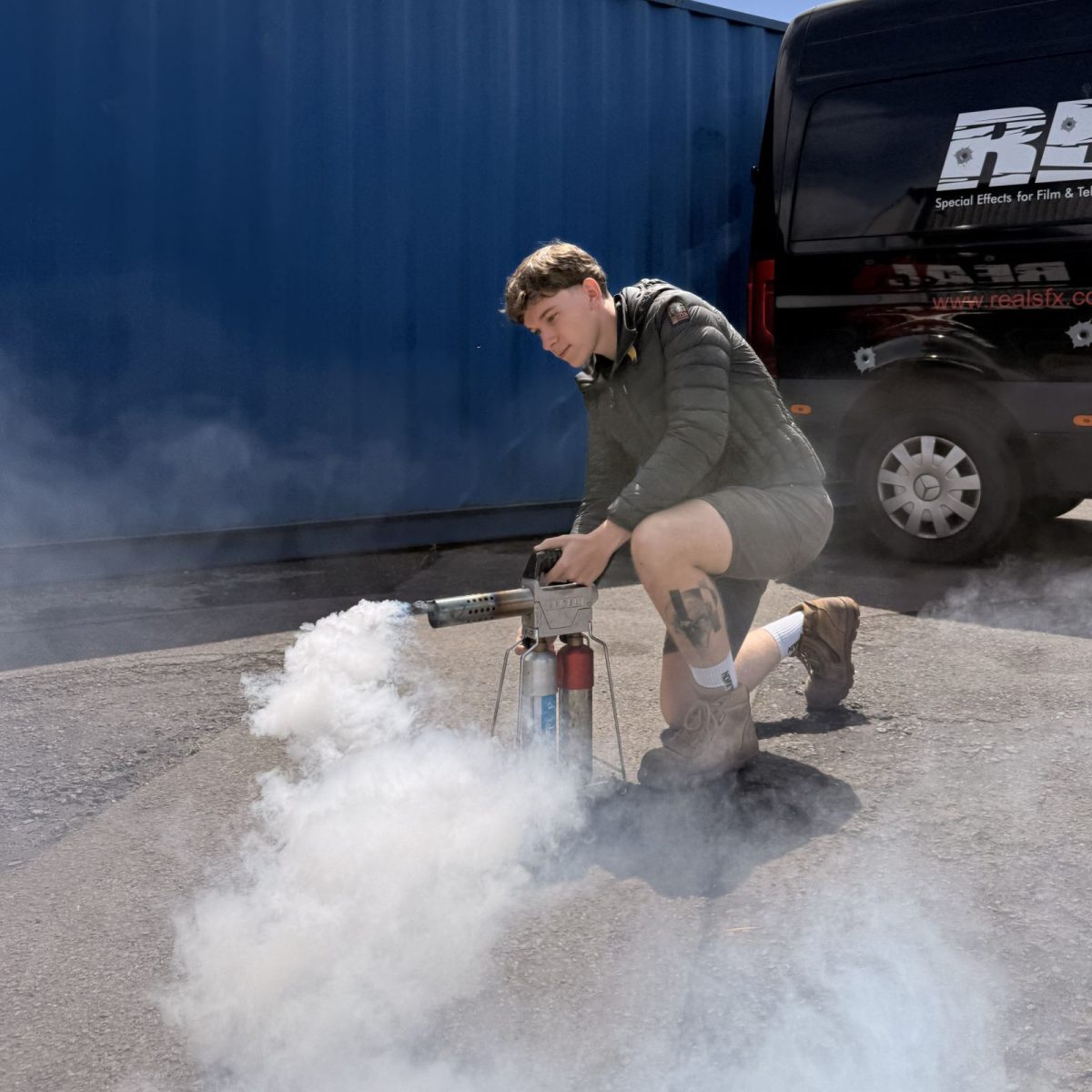
Special Effects Technician Griff, kneeling in a car park, testing a smoke machine, surrounded by smoke.

The type of work a Special Effects Technician will do

  • Plan and build equipment for effects, using wood, metal, electronics.
  • Assemble and check equipment before an effect is used.
  • Control effects using hydraulics, air pressure or electronic controls.
  • Safely set up smoke, fire or explosions when working on pyrotechnic effects.
  • Work with production teams to carry out planned effects.
  • Keep detailed records of the effects you work on and how they were made.
  • Disassemble, check and store equipment safely after filming or a performance.
Useful skills
Problem solving
Useful skills
Instructing others
Useful skills
Precise
£ 0 1 2 3 4 5 6 7 8 9 0 1 2 3 4 5 6 7 8 9 , 0 1 2 3 4 5 6 7 8 9 0 1 2 3 4 5 6 7 8 9 0 1 2 3 4 5 6 7 8 9
Average salary per year *
£ 0 1 2 3 4 5 6 7 8 9 , 0 1 2 3 4 5 6 7 8 9 0 1 2 3 4 5 6 7 8 9 0 1 2 3 4 5 6 7 8 9
Average salary per month *

Data from ONS

Future career opportunities for a Special Effects Technician

You might begin as a special effects trainee and, as you build experience and training, apply to become a technician.

Later, you could progress to senior technician and then special effects supervisor.

You may develop more experience in physical effects or in pyrotechnic effects involving fire, smoke and explosions.

There are specialist courses you can take to add to your skills.

How to become a Special Effects Technician

There’s no perfect career path or ideal way into your dream job.

But if you’re interested in education and training options that could be relevant to this role, you might want to consider:

Options available after GCSEs:

Schools and colleges each have their own career guidance plan and can provide detailed information, advice, and guidance on options and next steps.

A little more about the role

Exciting features...

You could work in a special effects studio that supplies lots of different films and shows, or could spend time on a film set, dedicated to one particular project.

The work may take place inside a studio, outdoors on location, or in a live performance space. You’ll learn how to use a range of specialist tools and work with diverse materials including rubber, wood, and metal.

Best of all, when films and shows are released, you’ll be able to see your creativity and hard work come to life on screen.


Other job titles

SFX technician