Favourites

How a Digital Forensic Technician makes a difference

Digital forensic technicians help keep people and organisations safe. They look for clues on computers, mobile phones and online systems to help solve crimes or understand what went wrong after a cyber-attack.


Their work can support police investigations, protect businesses from hackers and help courts make fair decisions. By carefully handling digital evidence, they help make sure the truth is found and that evidence can be trusted.

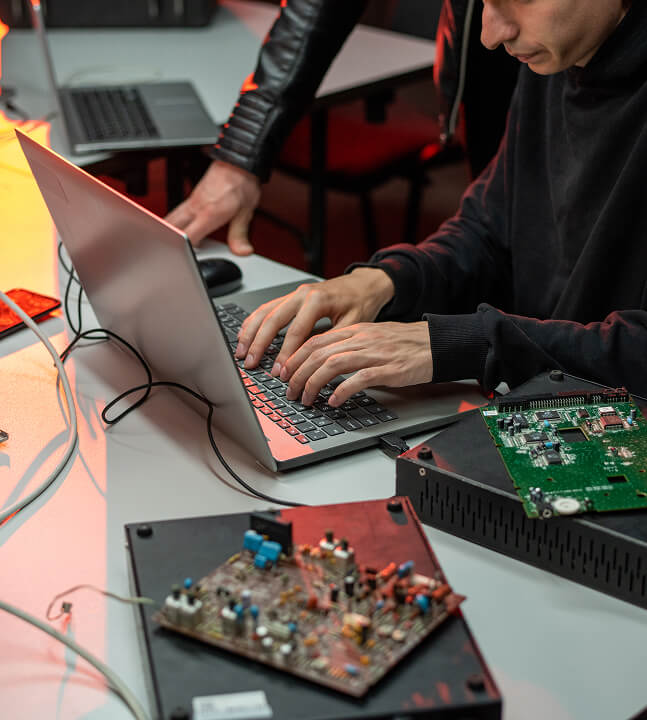
2 people working on one laptop with electronic devices around them.

The type of work a Digital Forensic Technician will do

  • Investigate digital devices like laptops, phones and tablets
  • Study usage, like internet history and app activity
  • Use specialist software to look for deleted files, messages and pictures
  • Make safe copies of data and store evidence securely
  • Keep clear notes of everything you do
  • Work with police or security teams
  • Write up reports of findings
Useful skills
Attention to detail
Useful skills
Critical thinking
Useful skills
Decisive
Useful skills
Logical thinking
Useful skills
Practical application
Useful skills
Precise
Useful skills
Technologically minded
£ 0 1 2 3 4 5 6 7 8 9 0 1 2 3 4 5 6 7 8 9 , 0 1 2 3 4 5 6 7 8 9 0 1 2 3 4 5 6 7 8 9 0 1 2 3 4 5 6 7 8 9
Average salary per year *
£ 0 1 2 3 4 5 6 7 8 9 , 0 1 2 3 4 5 6 7 8 9 0 1 2 3 4 5 6 7 8 9 0 1 2 3 4 5 6 7 8 9
Average salary per month *

Data powered by LMI for all
*according to ONS

Future career opportunities for a Digital Forensic Technician

With experience, you could become a senior digital forensic analyst or move into cyber security roles. Some people specialise in mobile devices or online investigations. Others move into training, management or work as expert witnesses in court. There are also opportunities to work in policing, private companies or government organisations.

How to become a Digital Forensic Technician

There’s no perfect career path or ideal way into your dream job.

But if you’re interested in education and training options that could be relevant to this role, you might want to consider:

Options available after GCSEs:

  • A T-level in Digital Support and Security
  • An apprenticeship as a Data Technician

More options available after that:

  • An apprenticeship as a Digital Forensic Technician

Schools and colleges each have their own career guidance plan and can provide detailed information, advice, and guidance on options and next steps.

A little more about the role

Exciting features...

You might be working on a criminal investigation one day and helping a company recover from a cyber-attack the next. You get to use advanced tools to uncover hidden information and solve real-world problems. Your work can have a big impact, helping to protect people, money and important systems.

Other job titles...

You might also see this role listed under different job titles, including:

Digital forensic analyst
Digital forensics investigator
Cyber forensic technician
Computer forensic analyst

How an IT Network Technician makes a difference

IT Network Technicians help schools, businesses and organisations stay connected. They make sure computers, Wi-Fi and other devices can talk to each other safely and reliably.

Without networks, people could not send emails, join online lessons, access files or use many everyday digital services. This role helps others do their jobs properly and keeps important systems running. When something goes wrong, the technician steps in to fix it so work can continue.

A young man working on the back of a computer monitor attempting to fix it

The type of work an IT Network Technician will do

  • Set up and maintain network hardware, like servers and Wi-Fi systems
  • Check networks are running smoothly
  • Find and fix problems when things stop working
  • Replace or upgrade network equipment
  • Help keep data secure
  • Connect devices like computers and printers
Useful skills
Critical thinking
Useful skills
Attention to detail
Useful skills
Problem solving
£ 0 1 2 3 4 5 6 7 8 9 0 1 2 3 4 5 6 7 8 9 , 0 1 2 3 4 5 6 7 8 9 0 1 2 3 4 5 6 7 8 9 0 1 2 3 4 5 6 7 8 9
Average salary per year *
£ 0 1 2 3 4 5 6 7 8 9 , 0 1 2 3 4 5 6 7 8 9 0 1 2 3 4 5 6 7 8 9 0 1 2 3 4 5 6 7 8 9
Average salary per month *

Data powered by LMI for all
*according to ONS

Future career opportunities for an IT Network Technician

With experience, an IT Network Technician can move into more senior IT roles. This could include becoming a Network Engineer, working on larger and more complex networks, or moving into specialist areas of IT support. Some people continue learning while working and progress into higher-level technical or management roles.

How to become an IT Network Technician

There’s no perfect career path or ideal way into your dream job.

But if you’re interested in education and training options that could be relevant to this role, you might want to consider:

Options available after GCSEs:

  • A T-level in Digital Support and Security
  • An apprenticeship as an Information Communications Technician

More options available after that:

  • An apprenticeship as a Network Engineer
  • A Higher Technical Qualification (HTQ) in Computing

Schools and colleges each have their own career guidance plan and can provide detailed information, advice, and guidance on options and next steps.

A little more about the role

Exciting features...

This role mixes hands-on work with problem solving. One day you might be setting up new equipment and the next day fixing a tricky network fault. You get to see the results of your work straight away when systems start working again. IT Network Technicians are needed in many different places, so the skills you learn can take you in lots of directions

Other job titles...

You might also see this role listed under different job titles, including:

Network Support Technician
IT Support Technician
Network Support Engineer
Information Communications Technician

How a Data and AI Technician makes a difference

Data and AI Technicians help organisations save time and reduce mistakes. They look at everyday tasks and help improve how they are done using smart digital tools and data.

AI means computers that can learn from data and make decisions. Automation means setting up systems that carry out tasks on their own. By doing this work, Data and AI Technicians help teams focus on more interesting and meaningful jobs, improve services for customers and use technology in a safe and responsible way.

A compute screen with code on it

The type of work a Data and AI Technician will do

  • Use existing AI and automation tools to design processes and reduce errors
  • Collect and analyse data to spot errors and fix problems
  • Test systems to make sure they work properly
  • Fix issues when things do not work as planned
  • Keep data safe and use AI responsibly
  • Talk to colleagues to understand problems and feed back
  • Help others learn how to use new tools
Useful skills
Technologically minded
Useful skills
Problem solving
Useful skills
Critical thinking
£ 0 1 2 3 4 5 6 7 8 9 0 1 2 3 4 5 6 7 8 9 , 0 1 2 3 4 5 6 7 8 9 0 1 2 3 4 5 6 7 8 9 0 1 2 3 4 5 6 7 8 9
Average salary per year *
£ 0 1 2 3 4 5 6 7 8 9 , 0 1 2 3 4 5 6 7 8 9 0 1 2 3 4 5 6 7 8 9 0 1 2 3 4 5 6 7 8 9
Average salary per month *

Data powered by LMI for all
*according to ONS

Future career opportunities for a Data and AI Technician

With experience, you could move into roles like automation specialist, data analyst or digital transformation lead. Some people go on to manage projects or teams. Others specialise in AI systems or business improvement. This role can also lead to higher level digital or data apprenticeships.

How to become a Data and AI Technician

There’s no perfect career path or ideal way into your dream job.

But if you’re interested in education and training options that could be relevant to this role, you might want to consider:

Options available after GCSEs:

  • A T-level in Digital Production, Design and Development

More options available after that:

  • An apprenticeship as an Artificial intelligence (AI) and Automation Practitioner

Schools and colleges each have their own career guidance plan and can provide detailed information, advice, and guidance on options and next steps.

A little more about the role

Exciting features...

This job lets you work with cutting edge technology without needing to be a coding expert. You get to see your ideas make a real difference to how people work. No two days are the same because every organisation has different challenges. You also play a part in making sure AI is used fairly, safely and responsibly, which is becoming more important every year.

Other job titles...

You might also see this role listed under different job titles, including:

Automation practitioner
AI automation specialist
Digital automation practitioner
Process automation analyst

How a Gaming Audio Technician makes a difference

If you’re a gamer, you know how much thought goes into the whole experience of a game. Not only to the storyline, characters, script, visuals, and the action that’s in the hands of the gamer, but also to the sounds. Animal squeals, explosions, gun shots, electric storms, car screeches and crashes: all need to be created and programmed to happen at exactly the right time.

A lot of creativity and precision goes into making these sounds. A gaming audio technician helps to record material that can be manipulated to make the best possible sound effect. They’re also involved in putting character’s voices into games. With nearly three billion gamers all over the world, you could be the technician who helps create the excitement and atmosphere of the next big game they play.

A sound mixing desk with dials and buttons.

The type of work a Gaming Audio Technician will do

  • Assessing the needs of a game and planning the type of audio it will require
  • Sourcing existing sound effects from sound libraries
  • Layering sounds together to produce the sound required
  • Manipulating sound files digitally
  • Recording new material to add to sounds or to create a new one
  • Programming sounds to happen in time with the action
  • Recording actors’ voice overs and adjusting recordings suit the character they’re playing
  • Listening in detail to every sound that’s created to make sure it is perfect and seamlessly integrated into the sound track
Useful skills
Technologically minded
Useful skills
Attention to detail
Useful skills
Precise
Useful skills
Problem solving
£ 0 1 2 3 4 5 6 7 8 9 0 1 2 3 4 5 6 7 8 9 , 0 1 2 3 4 5 6 7 8 9 0 1 2 3 4 5 6 7 8 9 0 1 2 3 4 5 6 7 8 9
Average salary per year *
£ 0 1 2 3 4 5 6 7 8 9 , 0 1 2 3 4 5 6 7 8 9 0 1 2 3 4 5 6 7 8 9 0 1 2 3 4 5 6 7 8 9
Average salary per month *

Data powered by LMI for all
*according to ONS

Future career opportunities for a Gaming Audio Technician

With experience you could become a senior audio designer and eventually an audio director. Alternatively you could choose to be a freelance sound designer, working with a range of gaming design studios. Another option is transferring your skills to the film and TV industries and focussing on editing either sound effects, music, or dialogue.

How to become a Gaming Audio Technician

There’s no perfect career path or ideal way into your dream job.

But if you’re interested in education and training options that could be relevant to this role, you might want to consider:

Options available after GCSEs:

Schools and colleges each have their own career guidance plan and can provide detailed information, advice, and guidance on options and next steps.

A little more about the role

Exciting features...

You will work with a big team of designers and programmers to plan and create the soundtrack for a game. You might also run auditions to find voice actors you need and then work with them to record their lines with the right energy, style and tone to match the action of the game.

How a Games Designer makes a difference

Did you know there are nearly 3 billion gamers around the world? Gaming used to be an activity enjoyed by a smaller community, but today, because of the range of games available and the ease of accessing them, on our mobile phones as well as games consoles, it’s hard to avoid gaming.

A games designer helps to generate the ideas for a game, builds prototypes – small scale versions of a game concept – creates the game storyline, decides on the points of interaction with a gamer, and plans the game mechanics. You could be the technician who helps to invent whole new gaming worlds that millions of people explore for fun and entertainment.

A person playing a game on their mobile phone.

The type of work a Games Designer will do

  • Designing games for a range of devices and platforms
  • Finding ways to capture the imagination of a gamer
  • Planning in detail every element of a new game, including the setting, rules, story flow, props, vehicles, characters and mode of play
  • Presenting your ideas to people in your game development team
  • Carrying out market research to learn what your target audience wants from a game
  • Transforming your initial ideas into a detailed concept, then implementing the concept
  • Writing scripts and designing storyboards
  • Developing design specifications and adapting them as the game progresses
  • Planning the overall user experience
Useful skills
Technologically minded
Useful skills
Attention to detail
Useful skills
Communicating complex ideas
Useful skills
Problem solving
£ 0 1 2 3 4 5 6 7 8 9 0 1 2 3 4 5 6 7 8 9 , 0 1 2 3 4 5 6 7 8 9 0 1 2 3 4 5 6 7 8 9 0 1 2 3 4 5 6 7 8 9
Average salary per year *
£ 0 1 2 3 4 5 6 7 8 9 , 0 1 2 3 4 5 6 7 8 9 0 1 2 3 4 5 6 7 8 9 0 1 2 3 4 5 6 7 8 9
Average salary per month *

Data powered by LMI for all
*according to ONS

Future career opportunities for a Games Designer

After gaining experience as a junior games designer, you could get promoted to a quality assurance (QA) testing role. In this role you would be involved in testing applications and games to confirm they reach the right standards and operate well properly across different platforms.

You can progress into a senior creative or technological role, subject to the training and experience you have. You might prefer to be involved in developing the storylines and working out how to make them a great gaming experience, or it could be the programming and build of the games you enjoy more.

How to become a Games Designer

There’s no perfect career path or ideal way into your dream job.

But if you’re interested in education and training options that could be relevant to this role, you might want to consider:

Options available after GCSEs:

More options available after that:

  • An apprenticeship as a Junior VFX Artist.

Schools and colleges each have their own career guidance plan and can provide detailed information, advice, and guidance on options and next steps.

A little more about the role

Exciting features...

You’ll work in a creative and technologically-advanced environment, interacting with game developers, programmers, game artists, animators and quality assurance testers. You’ll brainstorm together all the different ways a game could work in order to create the best gaming experience possible. Your role could include interface or content design. In smaller teams you will tend to get involved in a range of work, whereas bigger companies often have specialists focused on each element of game design.

How a Logistics Technician makes a difference

With the massive growth of the internet and online shopping, we’re all familiar with deliveries arriving at our door, sometimes only hours after we’ve ordered them. Of course, goods and produce have been delivered all over the world for hundreds of years, but the difference today is the speed with which this happens and the volume of goods being distributed.

A logistics technician is responsible for overseeing the automated systems involved in processing, selecting, packing, distributing and tracking items. They create streamlined processes that make distribution more efficient and help to minimise environmental impacts. You could be the technician who makes sure deliveries reach their destination and who reduces carbon emissions in the process.

The type of work a Logistics Technician will do

  • Create and manage processes to ensure the efficient receipt and distribution of goods
  • Monitoring how processes are working to ensure the right amount of stock is maintained
  • Checking inventory
  • Maintaining certain machines, troubleshooting errors, and fixing sensors
  • Maintaining and analysing logistics records
  • Providing data reports on the speed, cost and accuracy of deliveries
  • Coordinating with warehouse and depot managers
Useful skills
Precise
Useful skills
Logical thinking
Useful skills
Critical thinking
Useful skills
Communicating complex ideas
Useful skills
Technologically minded
Useful skills
Instructing others
Useful skills
Problem solving
£ 0 1 2 3 4 5 6 7 8 9 0 1 2 3 4 5 6 7 8 9 , 0 1 2 3 4 5 6 7 8 9 0 1 2 3 4 5 6 7 8 9 0 1 2 3 4 5 6 7 8 9
Average salary per year *
£ 0 1 2 3 4 5 6 7 8 9 , 0 1 2 3 4 5 6 7 8 9 0 1 2 3 4 5 6 7 8 9 0 1 2 3 4 5 6 7 8 9
Average salary per month *

Data powered by LMI for all
*according to ONS

Future career opportunities for a Logistics Technician

You could begin your career in a logistics company that supports other businesses, or start in the logistics team of a big manufacturer with sites all over the world.

Once you’ve learned your trade, you could become responsible for a wider geographical area and the distribution of more goods. Or you could progress to leading a team and designing the systems that improve processes and efficiency.

How to become a Logistics Technician

There’s no perfect career path or ideal way into your dream job.

But if you’re interested in education and training options that could be relevant to this role, you might want to consider:

Options available after GCSEs:

  • An apprenticeship as a Transport and Warehouse Operations Supervisor.

Schools and colleges each have their own career guidance plan and can provide detailed information, advice, and guidance on options and next steps.

A little more about the role

Exciting features...

Large logistics environments are very high-tech environments, with robots and people working together to fulfil orders accurately and as quickly as possible. Every manufacturer has a logistics department, both to bring components or ingredients to their sites and to distribute finished products. Logistics teams are relied upon to keep businesses and manufacturing processes running smoothly.

How a Software Tester makes a difference

Software is used in many different situations, on our mobiles phones, desktop computers, to run machinery, gather data, and to design things. It’s relied upon by individuals and businesses who use software to work properly to complete what they need to do.

New digital products also need new software to go with them and there are frequent updates to improve performance and product functionality. You could be the technician that tests software and tries to break it, so the final version is as perfect as possible.

The type of work a Software Tester will do

  • Designing and building test cases
  • Checking software meets security, performance, and usability requirements
  • Carrying out manual and automated tests
  • Finding bugs and issues with how software works, so they can be fixed
  • Contributing to software development
  • Working independently to complete tests
  • Working collaboratively to develop solutions
Useful skills
Technologically minded
Useful skills
Communicating complex ideas
Useful skills
Attention to detail
Useful skills
Precise
Useful skills
Problem solving
£ 0 1 2 3 4 5 6 7 8 9 0 1 2 3 4 5 6 7 8 9 , 0 1 2 3 4 5 6 7 8 9 0 1 2 3 4 5 6 7 8 9 0 1 2 3 4 5 6 7 8 9
Average salary per year *
£ 0 1 2 3 4 5 6 7 8 9 , 0 1 2 3 4 5 6 7 8 9 0 1 2 3 4 5 6 7 8 9 0 1 2 3 4 5 6 7 8 9
Average salary per month *

Data powered by LMI for all
*according to ONS

Future career opportunities for a Software Tester

You will have the option to apply your software testing skills to many different environments based on the products and services you find most interesting.

Teaching others how to test software and record findings could be another step in your career, or you could progress to designing software yourself.

How to become a Software Tester

There’s no perfect career path or ideal way into your dream job.

But if you’re interested in education and training options that could be relevant to this role, you might want to consider:

Options available after GCSEs:

More options available after that:

  • A Higher Technical Qualification in Computing or Software Development.
  • An apprenticeship as a Software Tester.

Schools and colleges each have their own career guidance plan and can provide detailed information, advice, and guidance on options and next steps.

A little more about the role

Exciting features...

You can be a software tester in many kinds of organisation, from a big tech brand that creates consumer products, to a large multinational organisation focused on business applications, to a smaller consulting firm that works on a contract basis, perhaps for the government, on health, education or defence projects.

Other job titles...

This role can also be known by some other job titles including:

Software Test Analyst
Software QA (Quality Assurance) Tester
Automation Tester
Integration Tester
Penetration Tester

How a Smart Home Technician makes a difference

Nowadays, homes are often full of complex technology with audio, video, home cinema, security systems, blinds, heating and ventilation all connecting to the internet and being controllable through apps.

When these smart systems and appliances are installed, they need to be configured and connected to the network without disrupting any other item’s performance. You could be the technician who ensures simple, secure and reliable technology experiences that let people enjoy and manage their lives.

The type of work a Smart Home Technician will do

  • Understanding architect’s plans, technical drawings, product specifications and wiring schedules
  • Installing and upgrading networks
  • Installing a variety of systems, from lighting to entertainment to security
  • Enabling automation and control of devices through home computers and apps
  • Collaborating with other construction trades
Useful skills
Attention to detail
Useful skills
Communicating complex ideas
Useful skills
Instructing others
£ 0 1 2 3 4 5 6 7 8 9 0 1 2 3 4 5 6 7 8 9 , 0 1 2 3 4 5 6 7 8 9 0 1 2 3 4 5 6 7 8 9 0 1 2 3 4 5 6 7 8 9
Average salary per year *
£ 0 1 2 3 4 5 6 7 8 9 , 0 1 2 3 4 5 6 7 8 9 0 1 2 3 4 5 6 7 8 9 0 1 2 3 4 5 6 7 8 9
Average salary per month *

Data powered by LMI for all
*according to ONS

Future career opportunities for a Smart Home Technician

Initially you’ll be working with senior colleagues at different sites, supporting installations and the maintenance of systems.

As your experience grows, you may specialise in a specific technology, lead a team or design the networks that others install.

How to become a Smart Home Technician

There’s no perfect career path or ideal way into your dream job.

But if you’re interested in education and training options that could be relevant to this role, you might want to consider:

Options available after GCSEs:

Schools and colleges each have their own career guidance plan and can provide detailed information, advice, and guidance on options and next steps.

A little more about the role

Exciting features...

You’ll create integrated systems using a variety of equipment and services from a range of suppliers, and deliver projects that vary in size and scale. You could be on a construction site one day connecting multiple homes, on another you might be connecting equipment on a luxury yacht, or installing the very latest digital appliances in a mansion.

Other job titles...

This role can also be known by some other job titles including:

Smart Home Installation Technician
Residential Network Installer
Audio/Video Installer

How an IT Technician makes a difference

Every organisation today – from schools to hospitals, banks to manufacturers – relies on IT (information technology) to share information, communicate, and collaborate. IT includes infrastructure, such as servers, and software including operating systems and apps.

The installation of new IT can transform a business, but when IT doesn’t work it causes problems. You could be the technician who fixes IT issues, improves processes, creates efficiencies, and enables new ways of working.

The type of work an IT Technician will do

  • Testing IT systems and diagnosing issues
  • Changing system and application settings
  • Installing software and security systems
  • Training people on IT software and systems
  • Upgrading network infrastructure and software
  • Enabling remote mobile working
  • Supporting colleagues with IT issues
Useful skills
Technologically minded
Useful skills
Problem solving
Useful skills
Logical thinking
Useful skills
Instructing others
Useful skills
Precise
£ 0 1 2 3 4 5 6 7 8 9 0 1 2 3 4 5 6 7 8 9 , 0 1 2 3 4 5 6 7 8 9 0 1 2 3 4 5 6 7 8 9 0 1 2 3 4 5 6 7 8 9
Average salary per year *
£ 0 1 2 3 4 5 6 7 8 9 , 0 1 2 3 4 5 6 7 8 9 0 1 2 3 4 5 6 7 8 9 0 1 2 3 4 5 6 7 8 9
Average salary per month *

Data powered by LMI for all
*according to ONS

Future career opportunities for an IT Technician

You could become a specialist who focuses on a specific network or software solution. Or you might concentrate on an individual industry, learning about the particular IT challenges it needs to solve.

With experience, you’ll also have the opportunity to move from IT support to more senior roles, perhaps in an IT consultancy or in a major organisation, moving up to an IT manager, supervisor, or director position.

How to become an IT Technician

There’s no perfect career path or ideal way into your dream job.

But if you’re interested in education and training options that could be relevant to this role, you might want to consider:

Options available after GCSEs:

Schools and colleges each have their own career guidance plan and can provide detailed information, advice, and guidance on options and next steps.

A little more about the role

Exciting features...

There are wide-ranging opportunities in IT: working on the front line providing IT support to colleagues or customers, or in network design and implementation, bringing new infrastructure and software to organisations that want to improve how they operate. With the growth of robotics, automation and artificial intelligence, you could also be involved in developing and maintaining high-tech manufacturing plants.

Other job titles...

This role can also be known by some other job titles including:

IT Solutions Technician
Technical Analyst
Service Analyst
IT Systems Support
IT Support Technician
IT Services Desk
Technical Service Desk

How a Data Technician makes a difference

Over the last twenty years, a large proportion of our lives and business activity has become digitalised. On an individual level, every app, purchase, video stream, online search, and social media post we make generates huge amounts of data about how we think and behave. Businesses analyse our data to understand and serve us better, and to offer us products and services that will appeal to us.

They also gather data on other factors that impact their business, such as prices, populations, energy use, and weather conditions. You could be the technician who helps to source, format, and present data securely, to help generate insights that lead to improved services and product innovations.

The type of work a Data Technician will do

  • Blending data from multiple sources
  • Following legal and ethical principles of data collection
  • Explaining the insights the data generated
  • Producing reports containing data and insights
  • Interacting with a wide range of people who have an interest in the data
  • Understanding the types of insights people need to collect appropriate data
  • Processing data using computers
  • Storing and managing data
Useful skills
Technologically minded
Useful skills
Precise
Useful skills
Problem solving
Useful skills
Logical thinking
Useful skills
Critical thinking
Useful skills
Instructing others
Useful skills
Communicating complex ideas
£ 0 1 2 3 4 5 6 7 8 9 0 1 2 3 4 5 6 7 8 9 , 0 1 2 3 4 5 6 7 8 9 0 1 2 3 4 5 6 7 8 9 0 1 2 3 4 5 6 7 8 9
Average salary per year *
£ 0 1 2 3 4 5 6 7 8 9 , 0 1 2 3 4 5 6 7 8 9 0 1 2 3 4 5 6 7 8 9 0 1 2 3 4 5 6 7 8 9
Average salary per month *

Data powered by LMI for all
*according to ONS

Future career opportunities for a Data Technician

You could build a career in data analytics in a large accounting or consulting firm, so teams can serve and inform clients in diverse sectors. As your experience grows, you can lead a team of analysts.

Alternatively you might join a consumer retail, marketing agency, or public sector organisation, and use data to develop products, campaigns or services.

How to become a Data Technician

There’s no perfect career path or ideal way into your dream job.

But if you’re interested in education and training options that could be relevant to this role, you might want to consider:

Options available after GCSEs:

More options available after that:

  • A Higher Technical Qualification in Computer Science or Data Analytics.
  • An apprenticeship as a Data Analyst.

Schools and colleges each have their own career guidance plan and can provide detailed information, advice, and guidance on options and next steps.

A little more about the role

Exciting features...

Data collection and analytics is a big part of many industries, including finance, retail, education, health, media, manufacturing, and hospitality. As a Data Technician you will be required to present data securely in a relevant way, so other people understand the insights the data has generated and the outcomes it can help them achieve.

Other job titles...

This role can also be known by some other job titles including:

Data Engineer
Data and Reporting Analyst
Security Architect