Favourites

How a Structural Engineering Technician makes a difference

Structural engineering technicians help check the places we live, work and travel in are safe and strong. They work with engineers to plan and draw parts of buildings and bridges.

Their work helps stop structures from failing and keeps people protected. By checking designs and materials, they make sure projects follow safety rules. Without this role, buildings and structures might not be tested properly, which could put people at risk.

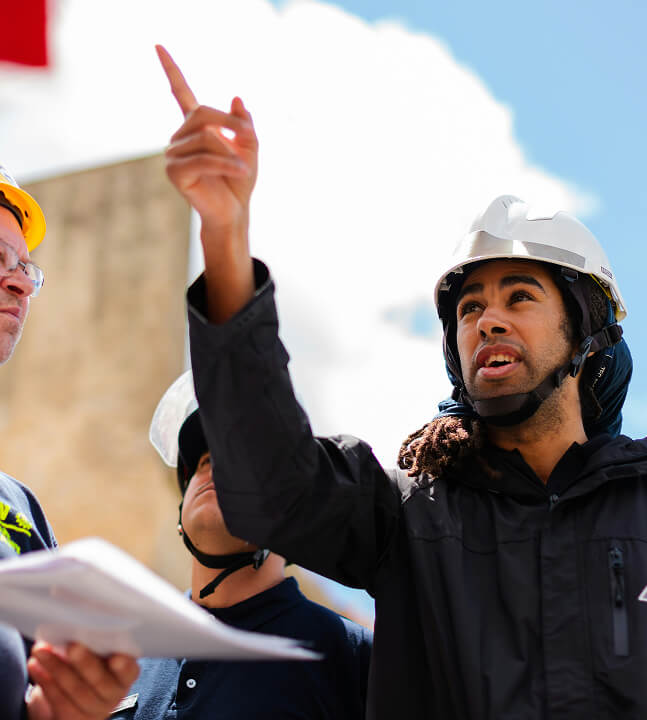
A mean wearing a hard hat on a building site.

The type of work a Structural Engineering Technician will do

  • Support engineers to design parts of buildings and structures
  • Create drawings and plans using computers
  • Check materials like steel and concrete
  • Visit building sites to inspect work
  • Use software to test how structures behave under weight
  • Measure forces acting on buildings and bridges
  • Work with engineers, architects and builders
Useful skills
Attention to detail
Useful skills
Communicating complex ideas
Useful skills
Precise
Useful skills
Problem solving
£ 0 1 2 3 4 5 6 7 8 9 0 1 2 3 4 5 6 7 8 9 , 0 1 2 3 4 5 6 7 8 9 0 1 2 3 4 5 6 7 8 9 0 1 2 3 4 5 6 7 8 9
Average salary per year *
£ 0 1 2 3 4 5 6 7 8 9 , 0 1 2 3 4 5 6 7 8 9 0 1 2 3 4 5 6 7 8 9 0 1 2 3 4 5 6 7 8 9
Average salary per month *

Data powered by LMI for all
*according to ONS

Future career opportunities for a Structural Engineering Technician

With experience and further study, structural engineering technicians can become senior technicians or team leaders. Some move on to become structural or civil engineers. Others go into areas like building design, surveying or project management as they gain more skills and qualifications.

How to become a Structural Engineering Technician

There’s no perfect career path or ideal way into your dream job.

But if you’re interested in education and training options that could be relevant to this role, you might want to consider:

Options available after GCSEs:

  • A T-level in Design, Surveying and Planning for Construction
  • An apprenticeship as an Engineering Design Technician or Structural Design Technician

Schools and colleges each have their own career guidance plan and can provide detailed information, advice, and guidance on options and next steps.

A little more about the role

Exciting features...

This role lets you help create real things like bridges, stadiums, tall buildings and homes. You will see projects grow from ideas on a screen to real structures on site. You use modern technology to test designs and solve problems. Some days are spent in an office and others out on site. You play an important part in keeping people safe by safe by helping check that structural designs are carried out properly.

Other job titles...

You might also see this role listed under different job titles, including:

Structural technician
Structural CAD technician
Engineering design technician
BIM technician

How a Games Designer makes a difference

Did you know there are nearly 3 billion gamers around the world? Gaming used to be an activity enjoyed by a smaller community, but today, because of the range of games available and the ease of accessing them, on our mobile phones as well as games consoles, it’s hard to avoid gaming.

A games designer helps to generate the ideas for a game, builds prototypes – small scale versions of a game concept – creates the game storyline, decides on the points of interaction with a gamer, and plans the game mechanics. You could be the technician who helps to invent whole new gaming worlds that millions of people explore for fun and entertainment.

A person playing a game on their mobile phone.

The type of work a Games Designer will do

  • Designing games for a range of devices and platforms
  • Finding ways to capture the imagination of a gamer
  • Planning in detail every element of a new game, including the setting, rules, story flow, props, vehicles, characters and mode of play
  • Presenting your ideas to people in your game development team
  • Carrying out market research to learn what your target audience wants from a game
  • Transforming your initial ideas into a detailed concept, then implementing the concept
  • Writing scripts and designing storyboards
  • Developing design specifications and adapting them as the game progresses
  • Planning the overall user experience
Useful skills
Technologically minded
Useful skills
Attention to detail
Useful skills
Communicating complex ideas
Useful skills
Problem solving
£ 0 1 2 3 4 5 6 7 8 9 0 1 2 3 4 5 6 7 8 9 , 0 1 2 3 4 5 6 7 8 9 0 1 2 3 4 5 6 7 8 9 0 1 2 3 4 5 6 7 8 9
Average salary per year *
£ 0 1 2 3 4 5 6 7 8 9 , 0 1 2 3 4 5 6 7 8 9 0 1 2 3 4 5 6 7 8 9 0 1 2 3 4 5 6 7 8 9
Average salary per month *

Data powered by LMI for all
*according to ONS

Future career opportunities for a Games Designer

After gaining experience as a junior games designer, you could get promoted to a quality assurance (QA) testing role. In this role you would be involved in testing applications and games to confirm they reach the right standards and operate well properly across different platforms.

You can progress into a senior creative or technological role, subject to the training and experience you have. You might prefer to be involved in developing the storylines and working out how to make them a great gaming experience, or it could be the programming and build of the games you enjoy more.

How to become a Games Designer

There’s no perfect career path or ideal way into your dream job.

But if you’re interested in education and training options that could be relevant to this role, you might want to consider:

Options available after GCSEs:

More options available after that:

  • An apprenticeship as a Junior VFX Artist.

Schools and colleges each have their own career guidance plan and can provide detailed information, advice, and guidance on options and next steps.

A little more about the role

Exciting features...

You’ll work in a creative and technologically-advanced environment, interacting with game developers, programmers, game artists, animators and quality assurance testers. You’ll brainstorm together all the different ways a game could work in order to create the best gaming experience possible. Your role could include interface or content design. In smaller teams you will tend to get involved in a range of work, whereas bigger companies often have specialists focused on each element of game design.

How a Textile Technician makes a difference

Upholstery, fashion styles and work wear all require fabrics that not only look good but perform well, keeping people comfortable, dry, safe, and secure, as well as feeling great.

There are many technicalities involved in getting different fabrics to perform to their best and be manufactured in high volumes. You could be the technician that knows how to make fabric concepts a reality by understanding what they’re made of and how that affects the way they behave.

The type of work a Textile Technician will do

  • Listening to customers’ needs and producing fabrics to their requirements
  • Developing technical reports on textile performance
  • Calculating production requirements
  • Planning and maintaining schedules
  • Managing the maintenance of machines
  • Maintaining quality control when fabrics are in production
Useful skills
Precise
Useful skills
Logical thinking
Useful skills
Technologically minded
Useful skills
Instructing others
Useful skills
Communicating complex ideas
£ 0 1 2 3 4 5 6 7 8 9 0 1 2 3 4 5 6 7 8 9 , 0 1 2 3 4 5 6 7 8 9 0 1 2 3 4 5 6 7 8 9 0 1 2 3 4 5 6 7 8 9
Average salary per year *
£ 0 1 2 3 4 5 6 7 8 9 , 0 1 2 3 4 5 6 7 8 9 0 1 2 3 4 5 6 7 8 9 0 1 2 3 4 5 6 7 8 9
Average salary per month *

Data powered by LMI for all
*according to ONS

Future career opportunities for a Textile Technician

The many different applications of fabric mean there’s a wide variety of companies you could work for.

Working for a fabric manufacturer you could have clients in several sectors. Alternatively, you might end up working for a big fashion brand producing exactly the fabric they need.

How to become a Textile Technician

There’s no perfect career path or ideal way into your dream job.

But if you’re interested in education and training options that could be relevant to this role, you might want to consider:

Options available after GCSEs:

More options available after that:

  • An apprenticeship as a Textile Technical Specialist.
  • An apprenticeship as a Fashion and Textiles Product Technologist.

Schools and colleges each have their own career guidance plan and can provide detailed information, advice, and guidance on options and next steps.

A little more about the role

Exciting features...

You’ll be a specialist in fabric, advising clients on how to achieve their ambitions. This involves using specialist textile machinery and equipment and working with global supply chains to access the raw materials that are vital to the material you’re producing.

Other job titles...

This role can also be known by some other job titles including:

Technical Weaver
Textile Technologist
Weaving Manager
Weaving Technician
Finishing Manager
Finishing Technician
Weaving Overlooker
Production Manager

How a Colour and Dye Technician makes a difference

Colours of all kinds are everywhere, in textiles, work clothing, fashion fabrics, and upholstery. Highly specialised colour and dye chemistry ensures the right colours can be achieved across all kinds of materials.

Colour trends come and go, however, and new fabrics are being developed all the time to make furniture, clothing and products of all kinds that are better for the planet. You could be the technician that brings colour to the world, applying your colour and dye chemistry to new and planet-friendly materials.

The type of work a Colour and Dye Technician will do

  • Creating recipes for specific shades of colour
  • Scheduling machine time
  • Programming the computers that control the containers of ingredients
  • Controlling stock and ordering dyes
  • Meeting environmental controls for chemicals usage
  • Liaising with clients on their colour objectives and production timelines
  • Carrying out colour test to make sure colour lasts
Useful skills
Attention to detail
Useful skills
Precise
Useful skills
Technologically minded
£ 0 1 2 3 4 5 6 7 8 9 0 1 2 3 4 5 6 7 8 9 , 0 1 2 3 4 5 6 7 8 9 0 1 2 3 4 5 6 7 8 9 0 1 2 3 4 5 6 7 8 9
Average salary per year *
£ 0 1 2 3 4 5 6 7 8 9 , 0 1 2 3 4 5 6 7 8 9 0 1 2 3 4 5 6 7 8 9 0 1 2 3 4 5 6 7 8 9
Average salary per month *

Data powered by LMI for all
*according to ONS

Future career opportunities for a Colour and Dye Technician

Your skills in dye production can take you in lots of different directions, first working in and then leading a team.

You could help to create luxury fabrics for a fashion brand, hard-wearing comfortable fabrics for furniture or develop a whole range of colours on an industrial scale for different kinds of manufacturers.

How to become a Colour and Dye Technician

There’s no perfect career path or ideal way into your dream job.

But if you’re interested in education and training options that could be relevant to this role, you might want to consider:

Options available after GCSEs:

  • A T-level in Craft and Design.
  • An apprenticeship as a Craft Assistant Dye and Print Technician.

Schools and colleges each have their own career guidance plan and can provide detailed information, advice, and guidance on options and next steps.

A little more about the role

Exciting features...

Working as a colour and dye technician involves moving between manufacturing facilities and laboratories and working with customers to achieve their colour goals. You’ll be responsible for colour trials, production and the ultimate quality of colour.

Other job titles...

This role can also be known by some other job titles including:

Colour Chemist
Colour Scientist
Dye Technologist
Dye-House Technician
Laboratory Technician
Manufacturing Managers

How a Prosthetic and Orthotic Technician makes a difference

Prosthetics is the clinical term used for making artificial limbs (prostheses). Orthotics is the clinical term used for making a range of devices (orthoses), everything from technical footwear to back braces.

Working in these areas involves developing an understanding of the different conditions people have that can lead to them needing an artificial limb or device.

Specifications are provided to make sure each item fits comfortably and functions properly, enabling people to do what they want to do. You could be the technician who gives children and adults freedom of movement and their independence again.

The type of work a Prosthetic and Orthotic Technician will do

  • Interacting with clinical staff, patients and families
  • Understanding requirements and following specifications
  • Taking measurements and producing moulds
  • Planning out designs and making limbs and devices
  • Fitting and fixing limbs and devices
  • Providing advice on technical solutions
  • Using computers to support customised manufacture and fitting
Useful skills
Attention to detail
Useful skills
Logical thinking
£ 0 1 2 3 4 5 6 7 8 9 0 1 2 3 4 5 6 7 8 9 , 0 1 2 3 4 5 6 7 8 9 0 1 2 3 4 5 6 7 8 9 0 1 2 3 4 5 6 7 8 9
Average salary per year *
£ 0 1 2 3 4 5 6 7 8 9 , 0 1 2 3 4 5 6 7 8 9 0 1 2 3 4 5 6 7 8 9 0 1 2 3 4 5 6 7 8 9
Average salary per month *

Data powered by LMI for all
*according to ONS

Future career opportunities for a Prosthetic and Orthotic Technician

You could work in a team in the NHS, supporting clinicians and meeting with patients. You could also develop your skills working for a private manufacturing company.

Some companies work with patients directly, developing specialised devices. With experience you could lead a design team, working for the NHS or in a consultancy.

How to become a Prosthetic and Orthotic Technician

There’s no perfect career path or ideal way into your dream job.

But if you’re interested in education and training options that could be relevant to this role, you might want to consider:

Options available after GCSEs:

Schools and colleges each have their own career guidance plan and can provide detailed information, advice, and guidance on options and next steps.

A little more about the role

Exciting features...

You’ll be making things that will have a huge impact on people’s lives and could even produce limbs or devices that enable Paralympians to compete. You’ll meet with patients to help with the fitting of their device and will often be able to see the difference you make almost immediately. You could be changing the lives of young children born with missing limbs, people who have been in accidents or suffered injuries serving in the military, or those that have clinical conditions that restrict them.

How a Print Technician makes a difference

Even though communications are increasingly digital, there are still many different items that are printed. That’s everything from leaflets, birthday cards and wrapping paper, to product packaging, billboard advertising and money.

The printing industry is technologically advanced and as well as printing designs and colours, some printers also produce textures and even print different smells. You could be the technician who helps to bring creative design ideas to life, with accurate printing that achieves exactly the right standard on every printed item.

The type of work a Print Technician will do

  • Understanding customers’ print specifications
  • Preparing printing presses for new projects
  • Making sure colours match the required standards
  • Carrying out quality checks as presses are running
  • Maintaining machinery
  • Working to strict delivery deadlines
Useful skills
Logical thinking
Useful skills
Instructing others
Useful skills
Decisive
Useful skills
Precise
Useful skills
Attention to detail
£ 0 1 2 3 4 5 6 7 8 9 0 1 2 3 4 5 6 7 8 9 , 0 1 2 3 4 5 6 7 8 9 0 1 2 3 4 5 6 7 8 9 0 1 2 3 4 5 6 7 8 9
Average salary per year *
£ 0 1 2 3 4 5 6 7 8 9 , 0 1 2 3 4 5 6 7 8 9 0 1 2 3 4 5 6 7 8 9 0 1 2 3 4 5 6 7 8 9
Average salary per month *

Data powered by LMI for all
*according to ONS

Future career opportunities for a Print Technician

You can choose to focus on one of three areas in the early stages of your printing career, making sure everything is technically correct either before you print, as you print, or afterwards.

With experience, you could become a production manager or take on a sales and management role in a major UK or worldwide printer. Alternatively you could become involved in print innovation, helping to push the industry forward and solve new creative challenges.

How to become a Print Technician

There’s no perfect career path or ideal way into your dream job.

But if you’re interested in education and training options that could be relevant to this role, you might want to consider:

Options available after GCSEs:

Schools and colleges each have their own career guidance plan and can provide detailed information, advice, and guidance on options and next steps.

A little more about the role

Exciting features...

You’ll see the items you help to print all around you, in marketing and advertising campaigns, in shops, or even – if you print money – in people’s wallets! You’ll get to know different print materials and inks, how to programme large printing presses and how digital design files become a printed item.

Other job titles...

This role can also be known by some other job titles including:

Pre-Press Technician
Press Technician
Post-Press Technician

How an Animation Technician makes a difference

When you first think of animation, you probably imagine big feature films with quirky characters, hilarious stories, and funny voice overs. Films are one of the places where animation is used today but there are also many others.

Organisations of all kinds use animation to bring products, services and experiences to life, in short information films, advertising and computer games. You could be the technician who helps brands, charities, campaigners, game designers, and filmmakers to tell their stories in a fresh and engaging way.

The type of work an Animation Technician will do

  • Creating images that help to tell a story
  • Using different illustration processes – hand drawn, computer generated or 3D objects
  • Interpreting a story board and characters
  • Producing characters’ motions, gestures and expressions
  • Presenting creative ideas
  • Producing repeats of images with minor changes
Useful skills
Attention to detail
Useful skills
Communicating complex ideas
Useful skills
Precise
Useful skills
Technologically minded

Future career opportunities for an Animation Technician

You could work in an animation studio that specialises in a particular animation style and become a creative director who leads a team. 

Alternatively, you might want to develop your own animation style and  become a freelance animator who is used for a range of projects.

£ 0 1 2 3 4 5 6 7 8 9 0 1 2 3 4 5 6 7 8 9 , 0 1 2 3 4 5 6 7 8 9 0 1 2 3 4 5 6 7 8 9 0 1 2 3 4 5 6 7 8 9
Average salary per year *
£ 0 1 2 3 4 5 6 7 8 9 , 0 1 2 3 4 5 6 7 8 9 0 1 2 3 4 5 6 7 8 9 0 1 2 3 4 5 6 7 8 9
Average salary per month *

Data powered by LMI for all
*according to ONS

How to become an Animation Technician

There’s no perfect career path or ideal way into your dream job.

But if you’re interested in education and training options that could be relevant to this role, you might want to consider:

Options available after GCSEs:

More options available after that:

Schools and colleges each have their own career guidance plan and can provide detailed information, advice, and guidance on options and next steps.

A little more about the role

Exciting features...

Working in animation involves creating alternative worlds and deciding how to communicate messages simply. You’ll be involved in producing a series of still images that will be shown in a rapid sequence to create the illusion of movement. These can be combined with live action, real actors, visual effects, and interactive content to create visual communication that’s really exciting.

How a Creative Venue Technician makes a difference

If you’ve ever been to a concert, the theatre or even a show on ice, you probably remember the performers most of all. However, every production – whether it’s live, for the radio, or on film – involves a large back stage crew who take care of the scenery, lights, cameras, sound and smooth running of a performance.

Some members of the crew will be specialists in a specific area while others are multi-skilled, working across a range of technical disciplines. This could be anything from constructing scenery to moving it around set, repairing equipment to adapting venues for touring shows. You could be the technician who helps to create the magic of performances and ensures audiences are fully entertained.

The type of work a Creative Venue Technician will do

  • Assembling and installing stage scenery
  • Maintaining scenery, equipment and props
  • Working with the creative team to deliver staging ideas
  • Programming lighting, audio, video and automation
  • Carrying out repairs to a venue
  • Working with a group to deliver projects on time
  • Interacting with a diverse range of technical and creative people
Useful skills
Attention to detail
Useful skills
Instructing others
Useful skills
Communicating complex ideas
Useful skills
Problem solving
£ 0 1 2 3 4 5 6 7 8 9 0 1 2 3 4 5 6 7 8 9 , 0 1 2 3 4 5 6 7 8 9 0 1 2 3 4 5 6 7 8 9 0 1 2 3 4 5 6 7 8 9
Average salary per year *
£ 0 1 2 3 4 5 6 7 8 9 , 0 1 2 3 4 5 6 7 8 9 0 1 2 3 4 5 6 7 8 9 0 1 2 3 4 5 6 7 8 9
Average salary per month *

Data powered by LMI for all
*according to ONS

Future career opportunities for a Creative Venue Technician

Once you’ve developed an all-round understanding of stage craft and how different teams work together, you may decide to specialise in one area, whether that’s lighting, sound, scenery or stage management.

Even if you choose to continue as a multi-skilled technician, you can progress to being a team leader, responsible for project management, training other people, and the quality of delivery. Eventually you could reach the position of producer and have overall control of how a show is put together.

How to become a Creative Venue Technician

There’s no perfect career path or ideal way into your dream job.

But if you’re interested in education and training options that could be relevant to this role, you might want to consider:

Options available after GCSEs:

  • A T-level in Media, Broadcast and Production.
  • An apprenticeship as a Creative Industries Production Technician.
  • An apprenticeship as a Scenic Automation Technician.

Schools and colleges each have their own career guidance plan and can provide detailed information, advice, and guidance on options and next steps.

A little more about the role

Exciting features...

There are many kinds of creative venue. Not only theatres and concert halls, but arts centres, broadcast studios, recording studios and festivals. The stagecraft you learn, including carpentry, operating stage machinery, and performing scene changes, will be transferrable to lots of different shows and environments, and could allow you to travel the world.

Other job titles...

This role can also be known by some other job titles including:

Venue Technician
Theatre Technician
Stage Technician
Lighting Technician
Sound Technician
Video Technician
Automation Technician

How a Building Design Technician makes a difference

When you imagine a building being constructed, you probably think about its exterior and maybe the shapes of the rooms inside. But there is much more to a building than simply its bricks and mortar.

For a building to really come to life, it needs to be connected to resources and services people use, and to meet safety, security, efficiency, and environmental standards. You could be the technician who designs these resources, services, and standards into many kinds of buildings, giving people a high quality of life.

Useful skills
Attention to detail
Useful skills
Problem solving
Useful skills
Precise
Useful skills
Technologically minded

The type of work a Building Design Technician will do

  • Supporting the design of building services system
  • Making sure designs meet the relevant building and environmental standards
  • Capturing data and carrying out calculations to define the best design solution
  • Using data analysis and digital modelling software
  • Understanding the risks involved with different services and controlling the risks within your designs
  • Project management of your designs and proposals
  • Presenting your ideas and solutions to other people
£ 0 1 2 3 4 5 6 7 8 9 0 1 2 3 4 5 6 7 8 9 , 0 1 2 3 4 5 6 7 8 9 0 1 2 3 4 5 6 7 8 9 0 1 2 3 4 5 6 7 8 9
Average salary per year *
£ 0 1 2 3 4 5 6 7 8 9 , 0 1 2 3 4 5 6 7 8 9 0 1 2 3 4 5 6 7 8 9 0 1 2 3 4 5 6 7 8 9
Average salary per month *

Data powered by LMI for all
*according to ONS

Future career opportunities for a Building Design Technician

With experience you could become a design engineer, or a site manager with responsibility for overseeing design implementation.

Another option is working in design and construction management and leading a technical team. Alternatively, you could move into a head of facilities position and manage building operations.

How to become a Building Design Technician

There’s no perfect career path or ideal way into your dream job. But if you're interested in education and training options that could be relevant to this role, you might want to consider:  

But if you’re interested in education and training options that could be relevant to this role, you might want to consider:

Options available after GCSEs:

More options available after that:

  • A Higher Technical Qualification, such as a Higher National Certificate in Architectural Technology for England.
  • An apprenticeship as a Construction Design and Build Technician.

Schools and colleges each have their own career guidance plan and can provide detailed information, advice, and guidance on options and next steps.

A little more about the role

Exciting features...

As a building design technician you plan how heating, ventilation and cooling, electrical power, water, and drainage systems all operate in a building. You need to consider comfort and control, safety and security, efficiency and sustainability, and access, to make it easy for systems to be fixed and maintained.

Other job titles...

This role can also be known by some other job titles including:

Building Services Technician
Building Services Engineering Technician

How a CAD Technician makes a difference

Machinery, goods, components, and structures are all developed using computer-aided design (CAD).

CAD brings ideas to life, tests concepts and produces detailed drawings that direct how things need to be made.

There are different software packages for designing different types of product or structure. The accuracy of the drawings produced helps people to imagine what’s possible. You could be the technician who helps to make great ideas a reality.

The type of work a CAD Technician will do

  • Using 2D or 3D software to produce sketches, models and drawings
  • Checking that drawings meet quality and technical standards
  • Finding and fixing inaccuracies or mistakes
  • Communicating with engineers, designers and project managers
  • Reading and interpreting engineers’ drawings
  • Undertaking calculations to work out angles, weights and costs
  • Keeping accurate records of different versions of your design work
Useful skills
Logical thinking
Useful skills
Critical thinking
Useful skills
Technologically minded
£ 0 1 2 3 4 5 6 7 8 9 0 1 2 3 4 5 6 7 8 9 , 0 1 2 3 4 5 6 7 8 9 0 1 2 3 4 5 6 7 8 9 0 1 2 3 4 5 6 7 8 9
Average salary per year *
£ 0 1 2 3 4 5 6 7 8 9 , 0 1 2 3 4 5 6 7 8 9 0 1 2 3 4 5 6 7 8 9 0 1 2 3 4 5 6 7 8 9
Average salary per month *

Data powered by LMI for all
*according to ONS

Future career opportunities for a CAD Technician

You could become a design manager leading a team or project, work as a freelance designer or, with further training, become a design or software engineer.

With experience you could also become an engineer, registering with the Engineering Council to get Engineering Technician status.

How to become a CAD Technician

There’s no perfect career path or ideal way into your dream job.

But if you’re interested in education and training options that could be relevant to this role, you might want to consider:

Options available after GCSEs:

More options available after that:

  • A Higher Technical Qualification such as a Higher National Certificate in Manufacturing Engineering for England.

Schools and colleges each have their own career guidance plan and can provide detailed information, advice, and guidance on options and next steps.

A little more about the role

Exciting features...

Building information modelling (BIM) is a growing field of work in the construction industry that you could get involved in. BIM doesn’t produce a single visual of a building, it produces detailed insights on how a building will be used and the resources it requires, at every stage from design through to construction and live operations. This analysis enables more control over the use of resources.

Other job titles...

This role can also be known by some other job titles including:

Design Technician
Structural Technician
BIM Technician
Digital Design Technician
Engineering Design Technician