Favourites

How a Broadcast Technician makes a difference

Broadcast Technicians help TV, radio, and online shows get from the studio to your screens and speakers. They make sure things like cameras, microphones and other equipment are working to capture, record and transmit high quality sound and picture. 
Without them, live sport, news, podcasts and music wouldn’t work properly. They set things up, check equipment and keep things running during broadcasts. They need to be able to spot and fix problems fast. Their work helps people stay informed, entertained and connected every day.

A camera on a tripod in a studio

The type of work a Broadcast Technician will do

  • Set up equipment like cameras and microphones
  • Test sound and picture quality
  • Run equipment during live broadcasts
  • Monitor signals and spot faults
  • Fix problems quickly when things go wrong
  • Work with presenters and producers
Useful skills
Logical thinking
Useful skills
Technologically minded
Useful skills
Practical application
£ 0 1 2 3 4 5 6 7 8 9 0 1 2 3 4 5 6 7 8 9 , 0 1 2 3 4 5 6 7 8 9 0 1 2 3 4 5 6 7 8 9 0 1 2 3 4 5 6 7 8 9
Average salary per year *
£ 0 1 2 3 4 5 6 7 8 9 , 0 1 2 3 4 5 6 7 8 9 0 1 2 3 4 5 6 7 8 9 0 1 2 3 4 5 6 7 8 9
Average salary per month *

Data powered by LMI for all
*according to ONS

Future career opportunities for a Broadcast Technician

With experience, you could become a senior broadcast technician or a technical supervisor. Some people move into sound, lighting or camera roles. Others go into engineering, systems design or training apprentices. You could also work on bigger live events or specialise in TV, radio or online streaming.

How to become a Broadcast Technician

There’s no perfect career path or ideal way into your dream job.

But if you’re interested in education and training options that could be relevant to this role, you might want to consider:

Options available after GCSEs:

  • A T-level in Media, broadcast and production
  • An apprenticeship as a Broadcast and media systems technical operator

More options available after that:

  • An apprenticeship as a Broadcast and media systems technician

Schools and colleges each have their own career guidance plan and can provide detailed information, advice, and guidance on options and next steps.

A little more about the role

Exciting features...

Every day can be different. One day you might be in a TV studio and the next at a live event. You get to work behind the scenes on shows people love. Live broadcasts can be exciting because you have to think fast and fix problems quickly. New technology is always coming in, so there is always something new to learn. You also get to work with lots of creative people.

Other job titles...

You might also see this role listed under different job titles, including:

Broadcast and Media Systems Technician
Broadcast Engineer
Media Technician
Studio Technician
Outside Broadcast Technician

How a Sound Technician makes a difference

If you listen to a film or tv programme instead of watching it, you’ll notice how sounds communicate important elements of the story. Film and programme makers design these sounds to produce the right atmosphere, just like sets are designed to create the right environments.

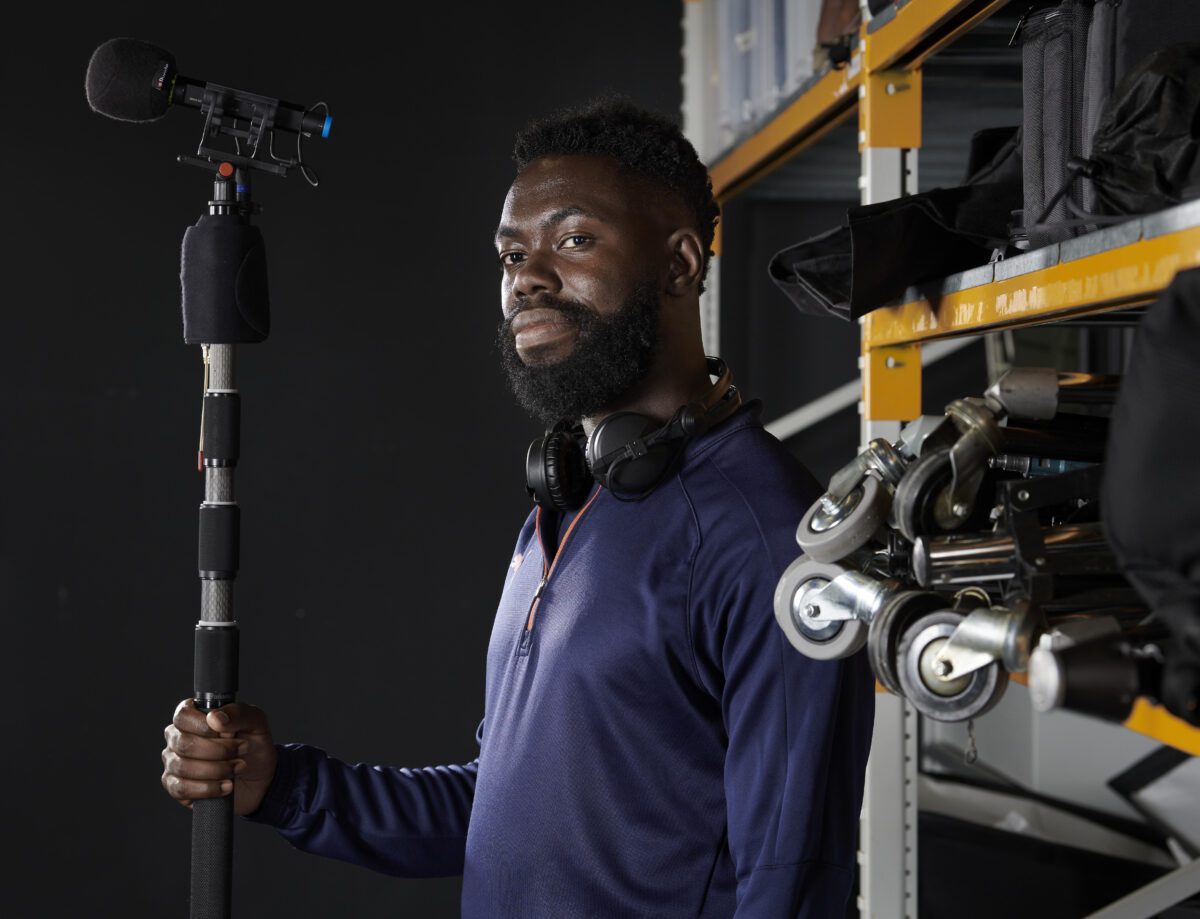
A sound technician is involved in capturing this atmosphere. They work in a studio or on location. Before filming starts, they help to produce the right acoustics, based on the sound designer’s instructions, and during filming they need to capture actors’ voices clearly. You could be the technician who helps to capture beautiful atmospheres on films and tv programmes that increase people’s enjoyment of what they’re watching.

A sound technician holding a boom mic.

The type of work a Sound Technician will do

  • Setting up equipment to suit the acoustics and the sound designer’s instructions
  • Selecting and placing microphones
  • Operating the boom (microphone on a pole)
  • Checking sound quality
  • Recording sound onto digital devices
  • Servicing and repairing equipment
  • Playing music or sound effects into a live programme
  • Carrying out post production tasks, including mixing and balancing speech, effects and background music
  • Creating extra sound effects and adding them to the soundtrack
Useful skills
Attention to detail
Useful skills
Instructing others
Useful skills
Technologically minded
Useful skills
Precise
£ 0 1 2 3 4 5 6 7 8 9 0 1 2 3 4 5 6 7 8 9 , 0 1 2 3 4 5 6 7 8 9 0 1 2 3 4 5 6 7 8 9 0 1 2 3 4 5 6 7 8 9
Average salary per year *
£ 0 1 2 3 4 5 6 7 8 9 , 0 1 2 3 4 5 6 7 8 9 0 1 2 3 4 5 6 7 8 9 0 1 2 3 4 5 6 7 8 9
Average salary per month *

Data powered by LMI for all
*according to ONS

Future career opportunities for a Sound Technician

You could decide to work in a small TV studio and work up to a national one. Or you could specialise in one area of sound and use that skill to work as a freelancer, getting contracts on films and programmes made all over the world.

There is also a career path you can follow from trainee level to assistant sound, to first assistant sound, and then sound mixer. Another option is broadening out from sound and moving into studio management.

How to become a Sound Technician

There’s no perfect career path or ideal way into your dream job.

But if you’re interested in education and training options that could be relevant to this role, you might want to consider:

Options available after GCSEs:

More options available after that:

  • An apprenticeship as a Broadcast and Media Systems Technician.

Schools and colleges each have their own career guidance plan and can provide detailed information, advice, and guidance on options and next steps.

A little more about the role

Exciting features...

In this role you use lots of technical equipment to capture sounds clearly, including a boom (a microphone on a pole that can get close to the sound source) and microphone transmitters. Very large rigs of kit can be used to ensure the acoustics and sounds are just right, and to enable directors and sound teams to hear what actors are saying as films and programmes are being made.

How a Museum and Galleries Technician makes a difference

Exhibitions in museums and galleries are increasingly interactive, with moving parts, controllers, audio visual elements, and digital components all helping to build engagement with people of all ages.

Displays need to be built within strict deadlines and, once an exhibition is open to the public, it needs to be maintained. You could be the technician who makes sure every moving and interactive part in an exhibition works perfectly, enabling greater learning opportunities and enjoyment for visitors.

The type of work a Museum and Galleries Technician will do

  • Planning and maintaining technical elements of exhibitions
  • Producing documentation on how different features work
  • Assessing the risk involved in different display approaches
  • Handling precious objects and preparing them for transportation
  • Maintaining tools and equipment
  • Fixing displays while the museum or exhibition is open to the public
  • Working with exhibition designers on how displays should work
Visitors exploring the interactive Technicians gallery, at the Science Museum in London.
Useful skills
Problem solving
Useful skills
Critical thinking
Useful skills
Instructing others
Useful skills
Attention to detail

Future career opportunities for a Museum and Galleries Technician

You might decide to specialise in a particular technical area or alternatively develop a broad range of skills working in an agency that helps to bring exhibitions to life.

As your skills develop, you could end up leading a technical team in a world famous museum or gallery or work as a freelancer, taking your technical skills to exhibitions all over the world.

£ 0 1 2 3 4 5 6 7 8 9 0 1 2 3 4 5 6 7 8 9 , 0 1 2 3 4 5 6 7 8 9 0 1 2 3 4 5 6 7 8 9 0 1 2 3 4 5 6 7 8 9
Average salary per year *
£ 0 1 2 3 4 5 6 7 8 9 , 0 1 2 3 4 5 6 7 8 9 0 1 2 3 4 5 6 7 8 9 0 1 2 3 4 5 6 7 8 9
Average salary per month *

Data powered by LMI for all
*according to ONS

How to become a Museum and Galleries Technician

There’s no perfect career path or ideal way into your dream job.

But if you’re interested in education and training options that could be relevant to this role, you might want to consider:

Options available after GCSEs:

  • A T-level in Craft and Design.
  • An apprenticeship as a Museum and Galleries Technician.

Schools and colleges each have their own career guidance plan and can provide detailed information, advice, and guidance on options and next steps.

A little more about the role

Exciting features...

You’ll support exhibition designers with the realisation of their creative vision and might work in an environment that contains priceless artefacts or world famous works of art. You’ll also use wide-ranging materials and will get involved in different kinds of technical projects.

Other job titles...

Advanced Operators
Manufacturing Technician
Process Development Technician
Process Technician
Technical Operator

How a Gaming Audio Technician makes a difference

If you’re a gamer, you know how much thought goes into the whole experience of a game. Not only to the storyline, characters, script, visuals, and the action that’s in the hands of the gamer, but also to the sounds. Animal squeals, explosions, gun shots, electric storms, car screeches and crashes: all need to be created and programmed to happen at exactly the right time.

A lot of creativity and precision goes into making these sounds. A gaming audio technician helps to record material that can be manipulated to make the best possible sound effect. They’re also involved in putting character’s voices into games. With nearly three billion gamers all over the world, you could be the technician who helps create the excitement and atmosphere of the next big game they play.

A sound mixing desk with dials and buttons.

The type of work a Gaming Audio Technician will do

  • Assessing the needs of a game and planning the type of audio it will require
  • Sourcing existing sound effects from sound libraries
  • Layering sounds together to produce the sound required
  • Manipulating sound files digitally
  • Recording new material to add to sounds or to create a new one
  • Programming sounds to happen in time with the action
  • Recording actors’ voice overs and adjusting recordings suit the character they’re playing
  • Listening in detail to every sound that’s created to make sure it is perfect and seamlessly integrated into the sound track
Useful skills
Technologically minded
Useful skills
Attention to detail
Useful skills
Precise
Useful skills
Problem solving
£ 0 1 2 3 4 5 6 7 8 9 0 1 2 3 4 5 6 7 8 9 , 0 1 2 3 4 5 6 7 8 9 0 1 2 3 4 5 6 7 8 9 0 1 2 3 4 5 6 7 8 9
Average salary per year *
£ 0 1 2 3 4 5 6 7 8 9 , 0 1 2 3 4 5 6 7 8 9 0 1 2 3 4 5 6 7 8 9 0 1 2 3 4 5 6 7 8 9
Average salary per month *

Data powered by LMI for all
*according to ONS

Future career opportunities for a Gaming Audio Technician

With experience you could become a senior audio designer and eventually an audio director. Alternatively you could choose to be a freelance sound designer, working with a range of gaming design studios. Another option is transferring your skills to the film and TV industries and focussing on editing either sound effects, music, or dialogue.

How to become a Gaming Audio Technician

There’s no perfect career path or ideal way into your dream job.

But if you’re interested in education and training options that could be relevant to this role, you might want to consider:

Options available after GCSEs:

Schools and colleges each have their own career guidance plan and can provide detailed information, advice, and guidance on options and next steps.

A little more about the role

Exciting features...

You will work with a big team of designers and programmers to plan and create the soundtrack for a game. You might also run auditions to find voice actors you need and then work with them to record their lines with the right energy, style and tone to match the action of the game.

How a Games Designer makes a difference

Did you know there are nearly 3 billion gamers around the world? Gaming used to be an activity enjoyed by a smaller community, but today, because of the range of games available and the ease of accessing them, on our mobile phones as well as games consoles, it’s hard to avoid gaming.

A games designer helps to generate the ideas for a game, builds prototypes – small scale versions of a game concept – creates the game storyline, decides on the points of interaction with a gamer, and plans the game mechanics. You could be the technician who helps to invent whole new gaming worlds that millions of people explore for fun and entertainment.

A person playing a game on their mobile phone.

The type of work a Games Designer will do

  • Designing games for a range of devices and platforms
  • Finding ways to capture the imagination of a gamer
  • Planning in detail every element of a new game, including the setting, rules, story flow, props, vehicles, characters and mode of play
  • Presenting your ideas to people in your game development team
  • Carrying out market research to learn what your target audience wants from a game
  • Transforming your initial ideas into a detailed concept, then implementing the concept
  • Writing scripts and designing storyboards
  • Developing design specifications and adapting them as the game progresses
  • Planning the overall user experience
Useful skills
Technologically minded
Useful skills
Attention to detail
Useful skills
Communicating complex ideas
Useful skills
Problem solving
£ 0 1 2 3 4 5 6 7 8 9 0 1 2 3 4 5 6 7 8 9 , 0 1 2 3 4 5 6 7 8 9 0 1 2 3 4 5 6 7 8 9 0 1 2 3 4 5 6 7 8 9
Average salary per year *
£ 0 1 2 3 4 5 6 7 8 9 , 0 1 2 3 4 5 6 7 8 9 0 1 2 3 4 5 6 7 8 9 0 1 2 3 4 5 6 7 8 9
Average salary per month *

Data powered by LMI for all
*according to ONS

Future career opportunities for a Games Designer

After gaining experience as a junior games designer, you could get promoted to a quality assurance (QA) testing role. In this role you would be involved in testing applications and games to confirm they reach the right standards and operate well properly across different platforms.

You can progress into a senior creative or technological role, subject to the training and experience you have. You might prefer to be involved in developing the storylines and working out how to make them a great gaming experience, or it could be the programming and build of the games you enjoy more.

How to become a Games Designer

There’s no perfect career path or ideal way into your dream job.

But if you’re interested in education and training options that could be relevant to this role, you might want to consider:

Options available after GCSEs:

More options available after that:

  • An apprenticeship as a Junior VFX Artist.

Schools and colleges each have their own career guidance plan and can provide detailed information, advice, and guidance on options and next steps.

A little more about the role

Exciting features...

You’ll work in a creative and technologically-advanced environment, interacting with game developers, programmers, game artists, animators and quality assurance testers. You’ll brainstorm together all the different ways a game could work in order to create the best gaming experience possible. Your role could include interface or content design. In smaller teams you will tend to get involved in a range of work, whereas bigger companies often have specialists focused on each element of game design.

How a Special Effects Technician makes a difference

Have you ever wondered how filmmakers create snow when they need it, produce an explosion that looks real, have tea pots that talk, or show hundreds of imaginary creatures flying through the sky? These sorts of magical moments are achieved through the work of highly skilled technicians who know how to add visual, physical, and explosive special effects to films.

While some special effects are filmed live, in front of the camera, others can be added in later using digital techniques such as animation and CGI. Physical special effects involve the creation of props, mechanical tricks and models. You could be the technician who helps to create blockbuster films everyone loves because the special effects are amazing!

The type of work a Special Effects Technician will do

  • Brainstorming ideas and solutions with creative and technical teams
  • Proposing ideas to film makers
  • Building new equipment and props
  • Assembling and checking models and mechanical items
  • Working on a computer to model or trigger effects
  • Introducing props and other special effects on the film set and making sure they work
  • Repairing parts or mechanics that break
  • Safely removing and storing props and equipment after use
Useful skills
Problem solving
Useful skills
Instructing others
Useful skills
Precise

Data powered by LMI for all
*according to ONS

Future career opportunities for a Special Effects Technician

Once you’ve gained general experience in a broad range of special effects, you can start to focus on those you like most and are best at. There are specialist courses you can take to add to your skills.

After about ten years in the industry, you could become a senior technician, and after a few more you could be promoted to the role of special effects supervisor. Beyond that, you might decide to set up your own special effects company.

How to become a Special Effects Technician

There’s no perfect career path or ideal way into your dream job.

But if you’re interested in education and training options that could be relevant to this role, you might want to consider:

Options available after GCSEs:

More options available after that:

  • An apprenticeship as an Assistant Technical Director (Visual Effects).

Schools and colleges each have their own career guidance plan and can provide detailed information, advice, and guidance on options and next steps.

A little more about the role

Exciting features...

You could work in a special effects studio that supplies lots of different films, or could spend time on a film set, dedicated to one particular film. You’ll learn how to use a range of specialist tools and work with diverse materials including rubber, wood, and metal. Best of all, when films are launched, you’ll be able to see your creativity and hard work come to life on the big screen.

How a Post Production Technician makes a difference

You’ve probably seen footage of directors making films and directing the actors on set, but you might be less familiar with the work that goes on afterwards to create the final film.

This stage of work is called post production. It involves precision fine-tuning of colour, audio and special effects. It’s part of the process for several media industries – advertising, radio and tv, as well as film. You could be the technician who helps make remarkable creative work.

The type of work a Post Production Technician will do

  • Supporting the transition of raw footage or audio into the finished product
  • Making sure people have the right files to work on
  • Saving files, labelling them and storing them securely
  • Helping to calibrate machines
  • Applying technical specifications
  • Being responsible for high profile material
  • Engaging with clients and creative teams
Useful skills
Instructing others
Useful skills
Technologically minded
£ 0 1 2 3 4 5 6 7 8 9 0 1 2 3 4 5 6 7 8 9 , 0 1 2 3 4 5 6 7 8 9 0 1 2 3 4 5 6 7 8 9 0 1 2 3 4 5 6 7 8 9
Average salary per year *
£ 0 1 2 3 4 5 6 7 8 9 , 0 1 2 3 4 5 6 7 8 9 0 1 2 3 4 5 6 7 8 9 0 1 2 3 4 5 6 7 8 9
Average salary per month *

Data powered by LMI for all
*according to ONS

Future career opportunities for a Post Production Technician

At the beginning of your post production career you could focus on learning one specialist technique or get to know several and specialise later on.

With some experience behind you, you might decide you want to work freelance, getting contracts for post production work on a variety of tv programmes, ads and films. 

How to become a Post Production Technician

There’s no perfect career path or ideal way into your dream job.

But if you’re interested in education and training options that could be relevant to this role, you might want to consider:

Options available after GCSEs:

More options available after that:

  • An apprenticeship as a Junior Production Coordinator.
  • An apprenticeship as a Post Production Technical Operator.
  • An apprenticeship as a Post Production Engineer.

Schools and colleges each have their own career guidance plan and can provide detailed information, advice, and guidance on options and next steps.

A little more about the role

Exciting features...

You’ll engage with a wide range of people including directors, clients, production teams and technical operators, who all work together to achieve the same creative goal. You’ll spend time on set to understand what the visual or audio objectives are and be responsible for calibrating the machines that make them achievable.

Other job titles...

This role can also be known by some other job titles including:

Dailies Operator
Digital Imaging Technician
Data Wrangler
Grade/Edit assistant
Input/Output Operator
MCR Operator
Media Operator
Offline Assistant
Quality Control Operator
Technical Operator

How a Lighting Technician makes a difference

Lighting is used to create atmosphere and dramatic effects in a wide range of situations, from concerts to conferences, theatre performances to exhibitions, film and tv productions to advertising.

Working with a lighting designer, the lighting crew make sure the stage or set is lit correctly and safely. They also make adjustments as filming and rehearsals progress, to support the designer’s creative vision. You could be the technician who brings light to film and theatre, enabling performances of all kinds to be visually striking.

Lauren operating a flood light.

The type of work a Lighting Technician will do

  • Interpreting a lighting designer’s plan
  • Planning where to run cables and place lights
  • Helping to set up the rig and check equipment
  • Taking instructions from the stage manager in the theatre or the floor manager in TV on what they want to achieve
  • Programming and operating manual or computer controlled lighting systems
  • Carrying out risk assessments for health and safety purposes
  • Taking down and storing equipment after shows or filming
Useful skills
Precise
Useful skills
Decisive
Useful skills
Instructing others
£ 0 1 2 3 4 5 6 7 8 9 0 1 2 3 4 5 6 7 8 9 , 0 1 2 3 4 5 6 7 8 9 0 1 2 3 4 5 6 7 8 9 0 1 2 3 4 5 6 7 8 9
Average salary per year *
£ 0 1 2 3 4 5 6 7 8 9 , 0 1 2 3 4 5 6 7 8 9 0 1 2 3 4 5 6 7 8 9 0 1 2 3 4 5 6 7 8 9
Average salary per month *

Data powered by LMI for all
*according to ONS

Future career opportunities for a Lighting Technician

Once you’ve gained experience in a supporting role you could progress to leading a team of lighting technicians and managing the logistics for ordering and delivering of lighting.

More experience will also allow you to work on bigger and more complex projects, and to specialise in areas such as electrical safety, inspection and testing, pyrotechnics or rigging.

How to become a Lighting Technician

There’s no perfect career path or ideal way into your dream job.

But if you’re interested in education and training options that could be relevant to this role, you might want to consider:

Options available after GCSEs:

  • A T-level in Media, Broadcast and Production.
  • An apprenticeship as a Live Event Rigger.
  • An apprenticeship as a Creative Industries Production Technician.

Schools and colleges each have their own career guidance plan and can provide detailed information, advice, and guidance on options and next steps.

A little more about the role

Exciting features...

Films, advertising shoots, conferences, and theatre shows take place in lots of different locations, so you’ll have the opportunity to travel around and gain access to places you may not otherwise visit. You’ll also meet a wide variety of people, some of whom could be famous performers and actors.

Other job titles...

This role can also be known by some other job titles including:

Gaffer

How an Animation Technician makes a difference

When you first think of animation, you probably imagine big feature films with quirky characters, hilarious stories, and funny voice overs. Films are one of the places where animation is used today but there are also many others.

Organisations of all kinds use animation to bring products, services and experiences to life, in short information films, advertising and computer games. You could be the technician who helps brands, charities, campaigners, game designers, and filmmakers to tell their stories in a fresh and engaging way.

The type of work an Animation Technician will do

  • Creating images that help to tell a story
  • Using different illustration processes – hand drawn, computer generated or 3D objects
  • Interpreting a story board and characters
  • Producing characters’ motions, gestures and expressions
  • Presenting creative ideas
  • Producing repeats of images with minor changes
Useful skills
Attention to detail
Useful skills
Communicating complex ideas
Useful skills
Precise
Useful skills
Technologically minded

Future career opportunities for an Animation Technician

You could work in an animation studio that specialises in a particular animation style and become a creative director who leads a team. 

Alternatively, you might want to develop your own animation style and  become a freelance animator who is used for a range of projects.

£ 0 1 2 3 4 5 6 7 8 9 0 1 2 3 4 5 6 7 8 9 , 0 1 2 3 4 5 6 7 8 9 0 1 2 3 4 5 6 7 8 9 0 1 2 3 4 5 6 7 8 9
Average salary per year *
£ 0 1 2 3 4 5 6 7 8 9 , 0 1 2 3 4 5 6 7 8 9 0 1 2 3 4 5 6 7 8 9 0 1 2 3 4 5 6 7 8 9
Average salary per month *

Data powered by LMI for all
*according to ONS

How to become an Animation Technician

There’s no perfect career path or ideal way into your dream job.

But if you’re interested in education and training options that could be relevant to this role, you might want to consider:

Options available after GCSEs:

More options available after that:

Schools and colleges each have their own career guidance plan and can provide detailed information, advice, and guidance on options and next steps.

A little more about the role

Exciting features...

Working in animation involves creating alternative worlds and deciding how to communicate messages simply. You’ll be involved in producing a series of still images that will be shown in a rapid sequence to create the illusion of movement. These can be combined with live action, real actors, visual effects, and interactive content to create visual communication that’s really exciting.

How a Creative Venue Technician makes a difference

If you’ve ever been to a concert, the theatre or even a show on ice, you probably remember the performers most of all. However, every production – whether it’s live, for the radio, or on film – involves a large back stage crew who take care of the scenery, lights, cameras, sound and smooth running of a performance.

Some members of the crew will be specialists in a specific area while others are multi-skilled, working across a range of technical disciplines. This could be anything from constructing scenery to moving it around set, repairing equipment to adapting venues for touring shows. You could be the technician who helps to create the magic of performances and ensures audiences are fully entertained.

The type of work a Creative Venue Technician will do

  • Assembling and installing stage scenery
  • Maintaining scenery, equipment and props
  • Working with the creative team to deliver staging ideas
  • Programming lighting, audio, video and automation
  • Carrying out repairs to a venue
  • Working with a group to deliver projects on time
  • Interacting with a diverse range of technical and creative people
Useful skills
Attention to detail
Useful skills
Instructing others
Useful skills
Communicating complex ideas
Useful skills
Problem solving
£ 0 1 2 3 4 5 6 7 8 9 0 1 2 3 4 5 6 7 8 9 , 0 1 2 3 4 5 6 7 8 9 0 1 2 3 4 5 6 7 8 9 0 1 2 3 4 5 6 7 8 9
Average salary per year *
£ 0 1 2 3 4 5 6 7 8 9 , 0 1 2 3 4 5 6 7 8 9 0 1 2 3 4 5 6 7 8 9 0 1 2 3 4 5 6 7 8 9
Average salary per month *

Data powered by LMI for all
*according to ONS

Future career opportunities for a Creative Venue Technician

Once you’ve developed an all-round understanding of stage craft and how different teams work together, you may decide to specialise in one area, whether that’s lighting, sound, scenery or stage management.

Even if you choose to continue as a multi-skilled technician, you can progress to being a team leader, responsible for project management, training other people, and the quality of delivery. Eventually you could reach the position of producer and have overall control of how a show is put together.

How to become a Creative Venue Technician

There’s no perfect career path or ideal way into your dream job.

But if you’re interested in education and training options that could be relevant to this role, you might want to consider:

Options available after GCSEs:

  • A T-level in Media, Broadcast and Production.
  • An apprenticeship as a Creative Industries Production Technician.
  • An apprenticeship as a Scenic Automation Technician.

Schools and colleges each have their own career guidance plan and can provide detailed information, advice, and guidance on options and next steps.

A little more about the role

Exciting features...

There are many kinds of creative venue. Not only theatres and concert halls, but arts centres, broadcast studios, recording studios and festivals. The stagecraft you learn, including carpentry, operating stage machinery, and performing scene changes, will be transferrable to lots of different shows and environments, and could allow you to travel the world.

Other job titles...

This role can also be known by some other job titles including:

Venue Technician
Theatre Technician
Stage Technician
Lighting Technician
Sound Technician
Video Technician
Automation Technician