Favourites

How a Retrofit Technician makes a difference

Retrofit Technicians help to fight climate change in the UK by cutting energy waste and reducing carbon emissions at home and work.
They help people save money on energy bills, keep homes warmer and help the country meet net-zero targets by improving how buildings use energy. This work supports healthier, more comfortable spaces and a greener future while supporting growth in construction and sustainable technology.

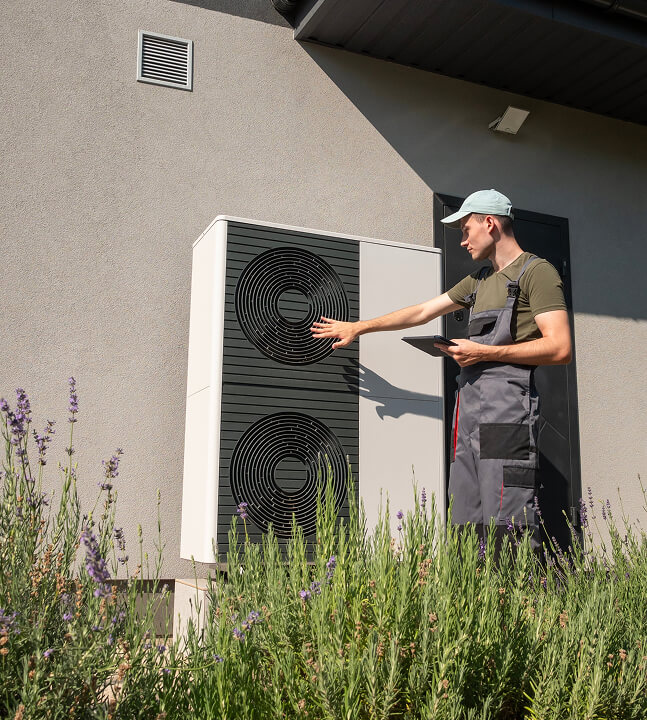
A man holding a tablet in one hand and reaching out to an external fan unit on the outside of a building.

The type of work a Retrofit Technician will do

  • Help install low-carbon heating like heat pumps and solar thermal systems
  • Fit insulation in walls, roofs and floors to stop heat escaping
  • Install energy-saving systems in buildings
  • Carry out measurements and support retrofit plans for a building
  • Use tools and equipment safely on site
  • Check systems are working correctly after installation
Useful skills
Problem solving
Useful skills
Technologically minded
Useful skills
Precise
Useful skills
Practical application
Useful skills
Logical thinking
£ 0 1 2 3 4 5 6 7 8 9 0 1 2 3 4 5 6 7 8 9 , 0 1 2 3 4 5 6 7 8 9 0 1 2 3 4 5 6 7 8 9 0 1 2 3 4 5 6 7 8 9
Average salary per year *
£ 0 1 2 3 4 5 6 7 8 9 , 0 1 2 3 4 5 6 7 8 9 0 1 2 3 4 5 6 7 8 9 0 1 2 3 4 5 6 7 8 9
Average salary per month *

Data powered by LMI for all
*according to ONS

Future career opportunities for a Retrofit Technician

Starting as a Retrofit Technician can lead to specialist jobs like Retrofit Coordinator or Domestic Energy Assessor, where you design and check retrofit plans. With more training, you could become a supervisor, trainer or even set up your own green retrofit business helping more homes improve their energy efficiency.

How to become a Retrofit Technician

There’s no perfect career path or ideal way into your dream job.

But if you’re interested in education and training options that could be relevant to this role, you might want to consider:

Options available after GCSEs:

  • A T-level in Building Services Engineering for Construction
  • An apprenticeship as a Low Carbon Heating Technician
  • An apprenticeship as an Insulation Technician

Schools and colleges each have their own career guidance plan and can provide detailed information, advice, and guidance on options and next steps.

A little more about the role

Exciting features...

Retrofit Technicians work on cutting-edge green technologies that help tackle climate change and make buildings greener. You’ll use tools and tech to install things like insulation, heat pumps and solar-thermal systems that help homes stay warm using less energy. Every day is different because each building has its own challenges and you’ll get to learn new skills on the job. You also work outdoors, meet lots of people, and can see the difference you make straight away when homes become more comfortable and cheaper to run.

Other job titles...

You might also see this role listed under different job titles, including:

Heat pump installer
Insulation installer
Renewable heating technician
Retrofit installer
Energy efficiency technician

How a HVAC Technician makes a difference

HVAC stands for heating, ventilation and air conditioning. HVAC technicians help people stay warm in winter and cool in summer.

By keeping equipment running efficiently, and by replacing older systems, they also help to reduce energy use and lower carbon emissions. This role supports health, comfort and the environment, making homes, schools, and workplaces better for everyone.

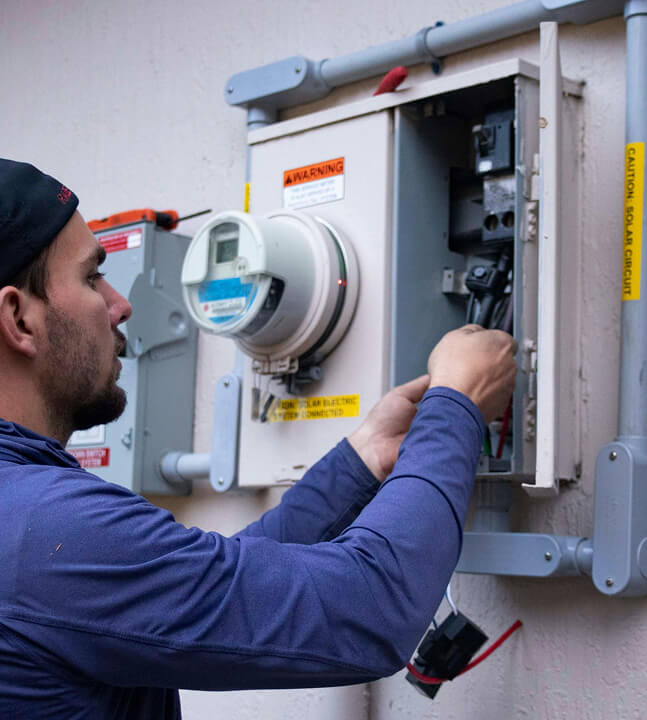
A man wearing blue, stood outside working with electrics.

The type of work a HVAC Technician will do

  • Install heating, ventilation and air conditioning systems
  • Carry out regular maintenance checks
  • Test systems to make sure they work safely
  • Diagnose and repair faults
  • Read and follow technical drawings and plans
  • Use tools to measure temperature, pressure and airflow
  • Replace worn or damaged parts
Useful skills
Logical thinking
Useful skills
Practical application
Useful skills
Precise
Useful skills
Problem solving
Useful skills
Technologically minded
£ 0 1 2 3 4 5 6 7 8 9 0 1 2 3 4 5 6 7 8 9 , 0 1 2 3 4 5 6 7 8 9 0 1 2 3 4 5 6 7 8 9 0 1 2 3 4 5 6 7 8 9
Average salary per year *
£ 0 1 2 3 4 5 6 7 8 9 , 0 1 2 3 4 5 6 7 8 9 0 1 2 3 4 5 6 7 8 9 0 1 2 3 4 5 6 7 8 9
Average salary per month *

Data powered by LMI for all
*according to ONS

Future career opportunities for a HVAC Technician

With experience, you could become a senior technician or supervisor. You might specialise in areas like refrigeration or energy-efficient systems (like heat pumps).

There are opportunities to move into design, project management or start your own business. You could also train others, or work on large-scale commercial or industrial projects.

How to become a HVAC Technician

There’s no perfect career path or ideal way into your dream job.

But if you’re interested in education and training options that could be relevant to this role, you might want to consider:

Options available after GCSEs:

  • A T-level in Building Services Engineering for Construction
  • An apprenticeship as a Refrigeration air conditioning and heat pump engineering technician

Schools and colleges each have their own career guidance plan and can provide detailed information, advice, and guidance on options and next steps.

A little more about the role

Exciting features...

This role is varied. You might work in homes one day and large office buildings the next. Technology is always improving, so you will keep learning new skills, especially around greener energy systems. You get to solve real problems and see the results of your work straight away.

Other job titles...

This role can also be known by some other job titles including:

Air conditioning engineer
Refrigeration engineer
HVAC engineer
Building services technician
Cooling systems installer
Maintenance engineer

How a Structural Engineering Technician makes a difference

Structural engineering technicians help check the places we live, work and travel in are safe and strong. They work with engineers to plan and draw parts of buildings and bridges.

Their work helps stop structures from failing and keeps people protected. By checking designs and materials, they make sure projects follow safety rules. Without this role, buildings and structures might not be tested properly, which could put people at risk.

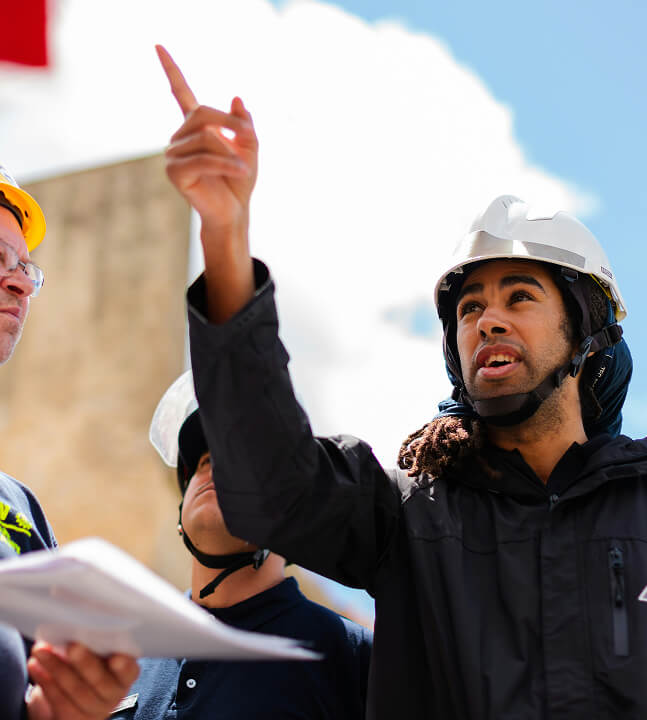
A mean wearing a hard hat on a building site.

The type of work a Structural Engineering Technician will do

  • Support engineers to design parts of buildings and structures
  • Create drawings and plans using computers
  • Check materials like steel and concrete
  • Visit building sites to inspect work
  • Use software to test how structures behave under weight
  • Measure forces acting on buildings and bridges
  • Work with engineers, architects and builders
Useful skills
Attention to detail
Useful skills
Communicating complex ideas
Useful skills
Precise
Useful skills
Problem solving
£ 0 1 2 3 4 5 6 7 8 9 0 1 2 3 4 5 6 7 8 9 , 0 1 2 3 4 5 6 7 8 9 0 1 2 3 4 5 6 7 8 9 0 1 2 3 4 5 6 7 8 9
Average salary per year *
£ 0 1 2 3 4 5 6 7 8 9 , 0 1 2 3 4 5 6 7 8 9 0 1 2 3 4 5 6 7 8 9 0 1 2 3 4 5 6 7 8 9
Average salary per month *

Data powered by LMI for all
*according to ONS

Future career opportunities for a Structural Engineering Technician

With experience and further study, structural engineering technicians can become senior technicians or team leaders. Some move on to become structural or civil engineers. Others go into areas like building design, surveying or project management as they gain more skills and qualifications.

How to become a Structural Engineering Technician

There’s no perfect career path or ideal way into your dream job.

But if you’re interested in education and training options that could be relevant to this role, you might want to consider:

Options available after GCSEs:

  • A T-level in Design, Surveying and Planning for Construction
  • An apprenticeship as an Engineering Design Technician or Structural Design Technician

Schools and colleges each have their own career guidance plan and can provide detailed information, advice, and guidance on options and next steps.

A little more about the role

Exciting features...

This role lets you help create real things like bridges, stadiums, tall buildings and homes. You will see projects grow from ideas on a screen to real structures on site. You use modern technology to test designs and solve problems. Some days are spent in an office and others out on site. You play an important part in keeping people safe by safe by helping check that structural designs are carried out properly.

Other job titles...

You might also see this role listed under different job titles, including:

Structural technician
Structural CAD technician
Engineering design technician
BIM technician

How a Broadcast Technician makes a difference

Broadcast Technicians help TV, radio, and online shows get from the studio to your screens and speakers. They make sure things like cameras, microphones and other equipment are working to capture, record and transmit high quality sound and picture. 

Without them, live sport, news, podcasts and music wouldn’t work properly. They set things up, check equipment and keep things running during broadcasts. They need to be able to spot and fix problems fast. Their work helps people stay informed, entertained and connected every day.

A camera on a tripod in a studio

The type of work a Broadcast Technician will do

  • Set up equipment like cameras and microphones
  • Test sound and picture quality
  • Run equipment during live broadcasts
  • Monitor signals and spot faults
  • Fix problems quickly when things go wrong
  • Work with presenters and producers
Useful skills
Logical thinking
Useful skills
Technologically minded
Useful skills
Practical application
£ 0 1 2 3 4 5 6 7 8 9 0 1 2 3 4 5 6 7 8 9 , 0 1 2 3 4 5 6 7 8 9 0 1 2 3 4 5 6 7 8 9 0 1 2 3 4 5 6 7 8 9
Average salary per year *
£ 0 1 2 3 4 5 6 7 8 9 , 0 1 2 3 4 5 6 7 8 9 0 1 2 3 4 5 6 7 8 9 0 1 2 3 4 5 6 7 8 9
Average salary per month *

Data powered by LMI for all
*according to ONS

Future career opportunities for a Broadcast Technician

With experience, you could become a senior broadcast technician or a technical supervisor. Some people move into sound, lighting or camera roles. Others go into engineering, systems design or training apprentices. You could also work on bigger live events or specialise in TV, radio or online streaming.

How to become a Broadcast Technician

There’s no perfect career path or ideal way into your dream job.

But if you’re interested in education and training options that could be relevant to this role, you might want to consider:

Options available after GCSEs:

  • A T-level in Media, broadcast and production
  • An apprenticeship as a Broadcast and media systems technical operator

More options available after that:

  • An apprenticeship as a Broadcast and media systems technician

Schools and colleges each have their own career guidance plan and can provide detailed information, advice, and guidance on options and next steps.

A little more about the role

Exciting features...

Every day can be different. One day you might be in a TV studio and the next at a live event. You get to work behind the scenes on shows people love. Live broadcasts can be exciting because you have to think fast and fix problems quickly. New technology is always coming in, so there is always something new to learn. You also get to work with lots of creative people.

Other job titles...

You might also see this role listed under different job titles, including:

Broadcast and Media Systems Technician
Broadcast Engineer
Media Technician
Studio Technician
Outside Broadcast Technician

How an Environmental Technician makes a difference

Making sure we take care of the environment is something we all think about today. But did you know, environmental laws were first introduced in the UK over 150 years ago, through the Public Health Act 1848? This Act put controls on our sewers, water supply, and street cleaning, and environmental law has expanded ever since to address air quality, waste, and environmental protection.

Today, many different devices and equipment are used to help prevent, control and address environmental problems. These all need to be operated and have data collected from them, to ensure the right environmental standards are achieved. You could be the technician who helps to analyse data and drive higher standards of environmental performance.

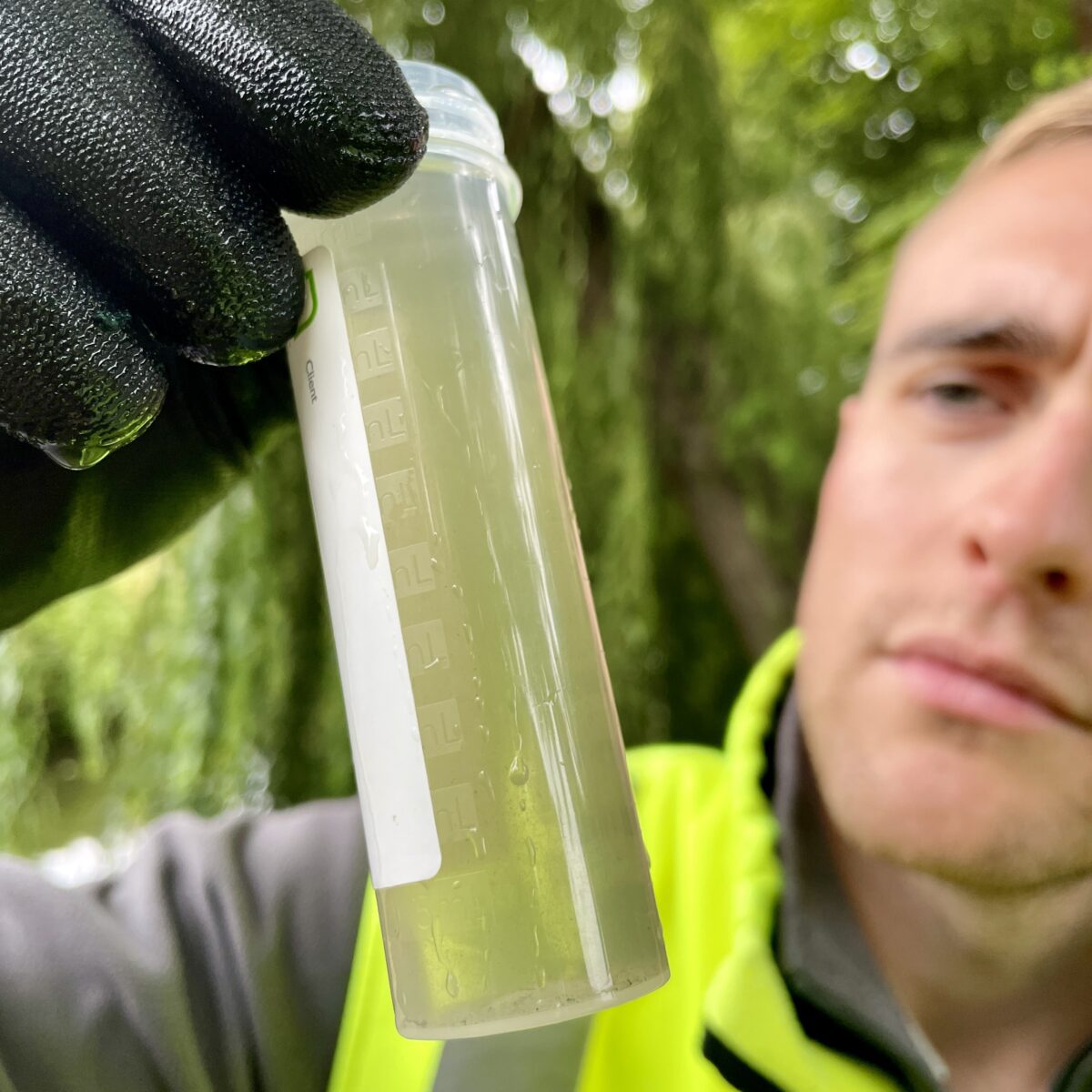
A technician wearing gloves and a hi vis jacket inspects a test tube of water.

The type of work an Environmental Technician will do

  • Carrying out environmental tests at an outside location or in a laboratory
  • Collecting and analysing pollution samples
  • Recording test data, collecting photographs and making visual observations
  • Using scientific and data analytics software to analyse test results
  • Producing environmental assessment reports with charts, graphs and sketches
  • Presenting and sharing information with members of your team
  • Inspecting test equipment and making sure everything is operating correctly
Useful skills
Attention to detail
Useful skills
Precise
Useful skills
Technologically minded
Useful skills
Instructing others
Useful skills
Problem solving

What you can bring to the Environmental Technician role

  • A passion for helping to improve environmental practices
  • A willingness to spend some of your time working outside
  • A precise approach to your work and the recording of detailed information
  • The natural ability to focus, make sound judgements and accurate decisions
  • The ability to work well in a team, share information and instruct others effectively
  • A knack for learning new software and creating things on computers
  • This role could also be right for you if you have any of the following interests:
    • Science
    • Sustainability
    • Exploring problems and finding answers
£ 0 1 2 3 4 5 6 7 8 9 0 1 2 3 4 5 6 7 8 9 , 0 1 2 3 4 5 6 7 8 9 0 1 2 3 4 5 6 7 8 9 0 1 2 3 4 5 6 7 8 9
Average salary per year *
£ 0 1 2 3 4 5 6 7 8 9 , 0 1 2 3 4 5 6 7 8 9 0 1 2 3 4 5 6 7 8 9 0 1 2 3 4 5 6 7 8 9
Average salary per month *

Data powered by LMI for all
*according to ONS

Future career opportunities for an Environmental Technician

Early on in your career you may specialise in one area of environmental management, focussing for example on air, waste, or water. You could work for a consultancy that provides environmental services or for a local government organisation.

With experience, you could progress to becoming a team leader, overseeing the operation of equipment and data collection. Or you could progress to being an environmental inspector, making sure organisations meet the right environmental standards.

How to become an Environmental Technician

There’s no perfect career path or ideal way into your dream job.

But if you’re interested in education and training options that could be relevant to this role, you might want to consider:

Options available after GCSEs:

More options available after that:

  • An apprenticeship as a Assistant Ecologist.

Schools and colleges each have their own career guidance plan and can provide detailed information, advice, and guidance on options and next steps.

A little more about the role

Exciting features...

Scientific understanding of the impacts of pollution, buildings, and human activity, continues to grow, making this an exciting field of work to be part of. You could be involved in air quality control monitoring, assessing smoke, dust, and odour pollution, evaluating land contamination, as well as undertaking emergency pollution incident investigations.

Other job titles...

This role can also be known by some other job titles including:

Environmental engineering technician
Environmental engineering technologist
Environmental engineering assistant
Air quality instrument specialists

How a Power Networks Technician makes a difference

The electricity we receive in our homes, schools, factories, shops and offices is transported to us through a vast network of high-voltage power cables, transformers and storage facilities. This network needs to be planned, managed and maintained, as more places need electricity and parts of the network get old.

The energy that creates the electricity comes from several different sources, including fossil fuel power stations and increasingly renewable sources of energy, including solar farms, and wind and wave turbines. You could be the technician who helps to connect the new, cleaner sources and contributes to greener energy supply.

A power network technician doing maintenance in an electrical substation.

The type of work a Power Networks Technician will do

  • Using electrical testing and measuring equipment
  • Following the correct procedures for completing checks
  • Maintaining key interconnecting points on the network
  • Stripping machinery down and putting it back together
  • Installing new equipment
  • Completing reports on the work carried out
  • Providing accurate and reliable data to support business decisions
Useful skills
Precise
Useful skills
Logical thinking
Useful skills
Instructing others
£ 0 1 2 3 4 5 6 7 8 9 0 1 2 3 4 5 6 7 8 9 , 0 1 2 3 4 5 6 7 8 9 0 1 2 3 4 5 6 7 8 9 0 1 2 3 4 5 6 7 8 9
Average salary per year *
£ 0 1 2 3 4 5 6 7 8 9 , 0 1 2 3 4 5 6 7 8 9 0 1 2 3 4 5 6 7 8 9 0 1 2 3 4 5 6 7 8 9
Average salary per month *

Data powered by LMI for all
*according to ONS

Future career opportunities for a Power Networks Technician

You will begin your career working in a team, learning how different parts of power networks connect and operate. With experience you may become a specialist in a particular area, with responsibility for training others.

You might choose to specialise in renewable energy because of your commitment to combatting climate change. Or you could become involved in the commissioning of new technologically-advanced kit that is more energy efficient and reliable.

How to become a Power Networks Technician

There’s no perfect career path or ideal way into your dream job. But if you're interested in education and training options that could be relevant to this role, you might want to consider:

But if you’re interested in education and training options that could be relevant to this role, you might want to consider:

Options available after GCSEs:

More options available after that:

  • An apprenticeship as a Junior Production Coordinator.
  • An apprenticeship as a Post Production Technical Operator.
  • An apprenticeship as a Post Production Engineer.

Schools and colleges each have their own career guidance plan and can provide detailed information, advice, and guidance on options and next steps.

A little more about the role

Exciting features...

The network that electricity travels across is known as the National Grid. If one part of it breaks down, the grid will continue to supply electricity from other power stations on the grid. Through the maintenance work you do, you’ll help to ensure people don’t lose their electricity supply. Or if extreme weather conditions mean electric power is down, you’ll be part of the team making sure it is supplied again quickly.

Other job titles...

This role can also be known by some other job titles including:

Substation Engineer
Asset Management Engineer
Planning Engineer
Design Engineer
Control Engineer
Electrical Project Engineer
Operational Delivery Manager

How a Compressed Air and Vacuum Technician makes a difference

If air is kept at a pressure that is greater than normal air pressure (atmospheric), it is defined as compressed air. If it is kept at a pressure that is less than normal air pressure, it is defined as a vacuum. Compressed air and vacuums are used in a range of products and services including power tools, cleaning systems, gas generation, and air cylinders that enable automation.

Technicians support the effective operations of these tools and systems, by diagnosing faults, repairing equipment, and carrying out maintenance to ensure optimum efficiency. A wide range of industries need this support, including manufacturing, pharmaceutical, oil and gas, power stations, hospitals, and transportation. You could be the technician who carries out specialist repairs and installations to keep operations running smoothly.

Three canisters of compressed air.

The type of work a Compressed Air and Vacuum Technician will do

  • Installing and servicing equipment
  • Diagnosing faults and completing repairs
  • Monitoring processes and energy performance
  • Adjusting controls to ensure equipment is operating at optimum efficiency
  • Providing technical advice to customers
  • Planning and organising work to meet customers’ priorities and schedules
  • Producing job reports and maintaining stock control records
Useful skills
Logical thinking
Useful skills
Attention to detail
Useful skills
Instructing others
Useful skills
Communicating complex ideas
Useful skills
Precise
£ 0 1 2 3 4 5 6 7 8 9 0 1 2 3 4 5 6 7 8 9 , 0 1 2 3 4 5 6 7 8 9 0 1 2 3 4 5 6 7 8 9 0 1 2 3 4 5 6 7 8 9
Average salary per year *
£ 0 1 2 3 4 5 6 7 8 9 , 0 1 2 3 4 5 6 7 8 9 0 1 2 3 4 5 6 7 8 9 0 1 2 3 4 5 6 7 8 9
Average salary per month *

Data powered by LMI for all
*according to ONS

Future career opportunities for a Compressed Air and Vacuum Technician

You could begin your career working in a specialist engineering services business, where you’ll provide technical support to a range of customers. 

Alternatively, many industrial businesses have their own technicians to provide continuous technical advice and services. You could progress to being a team leader, running a group of engineers and training other people.

How to become a Compressed Air and Vacuum Technician

There’s no perfect career path or ideal way into your dream job.

But if you’re interested in education and training options that could be relevant to this role, you might want to consider:

Options available after GCSEs:

Schools and colleges each have their own career guidance plan and can provide detailed information, advice, and guidance on options and next steps.

A little more about the role

Exciting features...

The latest examples of compressed air and vacuum equipment are highly innovative, using information technology (IT) control systems and internet connectivity to ensure cutting edge efficiency. Automation is also rapidly expanding, particularly in industrial environments, with air cylinders helping to create force and different directions of motion. There are many great opportunities to be involved in exciting innovation.

Other job titles...

This role can also be known by some other job titles including:

Air Treatment Engineer
Air Treatment Technician
Commissioning Engineer
Electrical Engineer
Electrical Technician
Installation Engineer
Mechanical Engineer
Pressure Systems Competent Person
Product Support Engineer
Service Engineer
Service Technician

How a Civil Engineering Technician makes a difference

Every bridge, building, road, or tunnel we use has the expertise of civil engineers built into it. Their expertise helps to make the villages, towns and cities we all live and work in, and they play an ever-increasing role safeguarding and improving environments to preserve them for future generations.

Civil engineering technicians support this design and creation process. They plan, manage, and coordinate the building phase of civil engineering projects, and provide construction teams with project specifications and information. You could be the technician who contributes to remarkable things being built that improve people’s lives, while also considering the environment.

A man and woman discussing and annotating engineering drawings.

The type of work a Civil Engineering Technician will do

  • Producing and modifying engineering diagrams and models
  • Collecting and interpreting technical information and carrying out calculations
  • Using digital technologies to prepare and present designs and visualisations
  • Confirming designs meet all health, safety and welfare requirements
  • Following environmental policies and finding ways to achieve environmental ambitions
  • Supporting construction projects with relevant technical information
  • Meeting with clients, architects, building contractors, and local authorities to present and collaborate on plans
Useful skills
Logical thinking
Useful skills
Communicating complex ideas
Useful skills
Problem solving
Useful skills
Technologically minded
£ 0 1 2 3 4 5 6 7 8 9 0 1 2 3 4 5 6 7 8 9 , 0 1 2 3 4 5 6 7 8 9 0 1 2 3 4 5 6 7 8 9 0 1 2 3 4 5 6 7 8 9
Average salary per year *
£ 0 1 2 3 4 5 6 7 8 9 , 0 1 2 3 4 5 6 7 8 9 0 1 2 3 4 5 6 7 8 9 0 1 2 3 4 5 6 7 8 9
Average salary per month *

Data powered by LMI for all
*according to ONS

Future career opportunities for a Civil Engineering Technician

You could start your career in a consultancy where you work on a range of different projects for UK and international clients. Or you might decide to work for a large building contractor responsible for overseeing the delivery of major projects.

With experience you could lead a team of technicians, or decide to specialise in the planning of a specific kind of infrastructure or building. Alternatively, you could decide to become a programme manager, overseeing implementation of every part of the process from design to delivery.

How to become a Civil Engineering Technician

There’s no perfect career path or ideal way into your dream job.

But if you’re interested in education and training options that could be relevant to this role, you might want to consider:

Options available after GCSEs:

More options available after that:

  • A Higher Technical Qualification, such as a Higher National Certificate in Civil Engineering for England.
  • An apprenticeship as a Civil Engineering Senior Technician.

Schools and colleges each have their own career guidance plan and can provide detailed information, advice, and guidance on options and next steps.

A little more about the role

Exciting features...

The range of building and infrastructure projects civil engineering technicians can get involved in is extensive. Parks and public spaces need planning, just as much as tunnels and roads. Schools, hospitals, and museums need just as much thought as bridges and offices. Water, waste and coastal engineering systems require just as much civil engineering expertise. And with the constant evolution of technology, such as augmented reality, designs can be experienced in full before they are built.

Other job titles...

This role can also be known by some other job titles including:

Civil Infrastructure Technician
Structural Technician
Construction Technician
Design Technician
Engineering Technician
Site Technician

How a Building Services Technician makes a difference

Industrial, commercial and public buildings all have mechanical, electrical, and HVAC (heating, ventilation and air conditioning) systems, which are used to create safe, comfortable, and effective operating environments for people and products.

The role of a Building Services Technician is defining and managing where and how these systems are used, to ensure easy access and control, reliable performance, and high levels of energy efficiency. Design and operation decisions need to balance cost, comfort, safety, health and wellbeing. You could be the technician that helps to create positive working environments and to reduce energy consumption.

A heated towel rail in a bathroom.

The type of work a Building Services Technician will do

  • Designing and creating building systems technical information
  • Creating wiring and power plans
  • Designing and writing software for control systems to industry approved standards
  • Designing interfaces for the operation of different systems
  • Reviewing control panel drawings and specifications
  • Installing system control equipment and wiring systems
  • Carrying out a maintenance review of an installed control system
  • Working with a wide range of people including owners and operators of buildings, facilities management, and diverse businesses using office spaces and buildings
Useful skills
Attention to detail
Useful skills
Communicating complex ideas
Useful skills
Logical thinking
£ 0 1 2 3 4 5 6 7 8 9 0 1 2 3 4 5 6 7 8 9 , 0 1 2 3 4 5 6 7 8 9 0 1 2 3 4 5 6 7 8 9 0 1 2 3 4 5 6 7 8 9
Average salary per year *
£ 0 1 2 3 4 5 6 7 8 9 , 0 1 2 3 4 5 6 7 8 9 0 1 2 3 4 5 6 7 8 9 0 1 2 3 4 5 6 7 8 9
Average salary per month *

Data powered by LMI for all
*according to ONS

Future career opportunities for a Building Services Technician

With experience, you could lead a building system design team. This could be for an engineering consultancy, a national or international building firm, or in central and local government.

There are also career opportunities inside organisations that do their own construction work, such as major retailers, energy and water companies, and the NHS.

How to become a Building Services Technician

There’s no perfect career path or ideal way into your dream job.

But if you’re interested in education and training options that could be relevant to this role, you might want to consider:

Options available after GCSEs:

More options available after that:

  • A Higher Technical Qualification, such as a Higher National Certificate in Building Services Engineering for England.
  • An apprenticeship as a Building Energy Management Systems Control Engineer.

Schools and colleges each have their own career guidance plan and can provide detailed information, advice, and guidance on options and next steps.

A little more about the role

Exciting features...

As well as being involved in the design of building systems, you could also write related software, produce control system graphics, and be involved in the installation and maintenance of control systems. As technology evolves, more buildings are connecting and integrating electrical, mechanical, and security systems to create ‘Smart Buildings’. So you could get involved in analysing data and developing very energy efficient environments.

Other job titles...

This role can also be known by some other job titles including:

BEMS (Building Energy Management System) Engineer
BEMS Control Engineer

How a Water Quality Technician makes a difference

Did you know, on average one person uses 152 litres of water per day? Multiply that by an average family of four and by 28 million households and you get an idea of just how much water we all use. We need our water to be readily available – at work, in our homes and for our public services – and rely on our water being clean and safe.

High quality water comes from large water processing plants that need to be continuously maintained. This involves reactive and routine repairs on water treatment systems and the fixing of leaks. You could be the technician who processes and protects our water to make sure it never stops running from our taps.

The type of work a Water Quality Technician will do

  • Following the procedures for regular checks
  • Carrying out tests on equipment, instruments and IT systems
  • Finding out the causes of faults and dealing with leaks in the system
  • Confirming the correct use of chemicals
  • Communicating to others the maintenance and repair works taking place
  • Working as a team to complete repairs
  • Maintaining records of the work carried out
Useful skills
Critical thinking
Useful skills
Attention to detail
Useful skills
Communicating complex ideas
Useful skills
Problem solving
£ 0 1 2 3 4 5 6 7 8 9 0 1 2 3 4 5 6 7 8 9 , 0 1 2 3 4 5 6 7 8 9 0 1 2 3 4 5 6 7 8 9 0 1 2 3 4 5 6 7 8 9
Average salary per year *
£ 0 1 2 3 4 5 6 7 8 9 , 0 1 2 3 4 5 6 7 8 9 0 1 2 3 4 5 6 7 8 9 0 1 2 3 4 5 6 7 8 9
Average salary per month *

Data powered by LMI for all
*according to ONS

Future career opportunities for a Water Quality Technician

As you progress in your water quality career, you could become more focused on plant equipment and the water network, or become more involved in the science of treating water.

Depending on the path you chose, you might move into a specialised engineering role or spend your days in a lab, completing tests or carrying out research.

How to become a Water Quality Technician

There’s no perfect career path or ideal way into your dream job. But if you're interested in education and training options that could be relevant to this role, you might want to consider:

But if you’re interested in education and training options that could be relevant to this role, you might want to consider:

Options available after GCSEs:

More options available after that:

  • An apprenticeship as a Water Operations Manager.

Schools and colleges each have their own career guidance plan and can provide detailed information, advice, and guidance on options and next steps.

A little more about the role

Exciting features...

Water processing plants are connected to water networks – miles of pipes that deliver water to different premises – and used water goes into the sewerage system. The pipe and sewerage networks also need to be monitored and maintained. As a water technician you’ll learn how water and waste water is managed across our whole country, how it connects to lakes, rivers, reservoirs and the sea, and how water resources are redirected around the country.

Other job titles...

This role can also be known by some other job titles including:

Water treatment process technician
Water treatment network technician
Water Distribution Network Technician
Water Distribution Leakage Technician
Waste Water Sewerage Technician
Waste Water Treatment Technician