Favourites

How a Welding Technician makes a difference

Welding is a way to make high strength joints between two or more parts. It is used extensively in almost every industry, including automotive, marine, transport and construction, and results in components for cars, ships and rail vehicles, as well as simple metallic containers and steelwork for bridges and buildings.

Making sure a joint is safe and strong is the primary role of a welder. Joints need to meet exact quality standards so that the finished products they are part of function correctly and can be relied upon. Fixing worn out joints is just as essential. You could be the technician who makes sure products, transport and processes are safe and contribute to a high quality of life.

The type of work a Welding Technician will do

  • Preparing and checking welding equipment
  • Ensuring your materials and work area are ready for welding
  • Operating tooling machines
  • Carrying out cutting, shaping and welding processes
  • Using a range of welding processes and joint types
  • Understanding the major components of welding equipment
  • Identifying welding defects
  • Preventing defects by using the right materials for each application
Useful skills
Technologically minded
Useful skills
Attention to detail
Useful skills
Precise
Useful skills
Instructing others
£ 0 1 2 3 4 5 6 7 8 9 0 1 2 3 4 5 6 7 8 9 , 0 1 2 3 4 5 6 7 8 9 0 1 2 3 4 5 6 7 8 9 0 1 2 3 4 5 6 7 8 9
Average salary per year *
£ 0 1 2 3 4 5 6 7 8 9 , 0 1 2 3 4 5 6 7 8 9 0 1 2 3 4 5 6 7 8 9 0 1 2 3 4 5 6 7 8 9
Average salary per month *

Data powered by LMI for all
*according to ONS

Future career opportunities for a Welding Technician

There are several different pathways you can follow as a welder, including becoming a specialist in a particular industry, working on more complex construction projects, including those underwater, and teaching other people how to weld.

You could also become a welding inspector, helping to make sure quality and safety standards are maintained and improved upon.

How to become a Welding Technician

There’s no perfect career path or ideal way into your dream job.

But if you’re interested in education and training options that could be relevant to this role, you might want to consider:

Options available after GCSEs:

Schools and colleges each have their own career guidance plan and can provide detailed information, advice, and guidance on options and next steps.

A little more about the role

Exciting features...

Welders use high electrical energy to form an arc. This arc is used to melt metals and to fuse them together to form a structurally sound weld. Controlling the arc requires a lot of skill that is in high demand. There are opportunities to work all over the world and in different environments, including offshore windfarms and oil rigs.

How a Water Process Technician makes a difference

Every time people flush toilets or use sinks, dirty water needs cleaning before it goes back into nature. Water Process Technicians help make sure this happens.

They help maintain the equipment that removes rubbish, germs and harmful chemicals from wastewater, so it is safe for our rivers and seas. This protects fish and plants and keeps beaches and drinking water sources cleaner. Their work also helps communities stay healthy and supports a cleaner future for everyone.

Industrial bridge in water unit.

The type of work a Water Process Technician will do

  • Maintain machines that clean wastewater
  • Take samples of water to test how clean it is
  • Spot problems like faulty equipment or leaks and help fix them
  • Measure and add treatment chemicals to kill germs
  • Keep records of tests and results
  • Work both indoors and outdoors at treatment sites
  • Help respond to emergencies such as floods or pollution incidents
Useful skills
Attention to detail
Useful skills
Decisive
Useful skills
Logical thinking
Useful skills
Precise
£ 0 1 2 3 4 5 6 7 8 9 0 1 2 3 4 5 6 7 8 9 , 0 1 2 3 4 5 6 7 8 9 0 1 2 3 4 5 6 7 8 9 0 1 2 3 4 5 6 7 8 9
Average salary per year *
£ 0 1 2 3 4 5 6 7 8 9 , 0 1 2 3 4 5 6 7 8 9 0 1 2 3 4 5 6 7 8 9 0 1 2 3 4 5 6 7 8 9
Average salary per month *

Data powered by LMI for all
*according to ONS

Future career opportunities for a Water Process Technician

With experience, you could become a senior technician or team leader. Some people move into managing whole treatment sites. Others train in areas like water quality, environmental protection or engineering. You could also work on new green technologies that help reuse water and reduce pollution.

How to become a Water Process Technician

There’s no perfect career path or ideal way into your dream job.

But if you’re interested in education and training options that could be relevant to this role, you might want to consider:

Options available after GCSEs:

More options available after that:

  • An apprenticeship as a Water Operations Manager.

Schools and colleges each have their own career guidance plan and can provide detailed information, advice, and guidance on options and next steps.

A little more about the role

Exciting features...

No two days are the same in this job. You might be testing water one day and helping solve a big problem the next. You get to see real results from your work when cleaner water flows back into rivers. The job mixes science, teamwork and practical skills. You are doing something that really matters for people and the planet. It is a role where you can learn on the job and build a long term career.

Other job titles...

You might also see this role listed under different job titles, including:

Wastewater Treatment Technician
Sewage Works Technician
Water Treatment Operative
Process Plant Technician
Environmental Water Technician

How a Logistics Technician makes a difference

With the massive growth of the internet and online shopping, we’re all familiar with deliveries arriving at our door, sometimes only hours after we’ve ordered them. Of course, goods and produce have been delivered all over the world for hundreds of years, but the difference today is the speed with which this happens and the volume of goods being distributed.

A logistics technician is responsible for overseeing the automated systems involved in processing, selecting, packing, distributing and tracking items. They create streamlined processes that make distribution more efficient and help to minimise environmental impacts. You could be the technician who makes sure deliveries reach their destination and who reduces carbon emissions in the process.

The type of work a Logistics Technician will do

  • Create and manage processes to ensure the efficient receipt and distribution of goods
  • Monitoring how processes are working to ensure the right amount of stock is maintained
  • Checking inventory
  • Maintaining certain machines, troubleshooting errors, and fixing sensors
  • Maintaining and analysing logistics records
  • Providing data reports on the speed, cost and accuracy of deliveries
  • Coordinating with warehouse and depot managers
Useful skills
Precise
Useful skills
Logical thinking
Useful skills
Critical thinking
Useful skills
Communicating complex ideas
Useful skills
Technologically minded
Useful skills
Instructing others
Useful skills
Problem solving
£ 0 1 2 3 4 5 6 7 8 9 0 1 2 3 4 5 6 7 8 9 , 0 1 2 3 4 5 6 7 8 9 0 1 2 3 4 5 6 7 8 9 0 1 2 3 4 5 6 7 8 9
Average salary per year *
£ 0 1 2 3 4 5 6 7 8 9 , 0 1 2 3 4 5 6 7 8 9 0 1 2 3 4 5 6 7 8 9 0 1 2 3 4 5 6 7 8 9
Average salary per month *

Data powered by LMI for all
*according to ONS

Future career opportunities for a Logistics Technician

You could begin your career in a logistics company that supports other businesses, or start in the logistics team of a big manufacturer with sites all over the world.

Once you’ve learned your trade, you could become responsible for a wider geographical area and the distribution of more goods. Or you could progress to leading a team and designing the systems that improve processes and efficiency.

How to become a Logistics Technician

There’s no perfect career path or ideal way into your dream job.

But if you’re interested in education and training options that could be relevant to this role, you might want to consider:

Options available after GCSEs:

  • An apprenticeship as a Transport and Warehouse Operations Supervisor.

Schools and colleges each have their own career guidance plan and can provide detailed information, advice, and guidance on options and next steps.

A little more about the role

Exciting features...

Large logistics environments are very high-tech environments, with robots and people working together to fulfil orders accurately and as quickly as possible. Every manufacturer has a logistics department, both to bring components or ingredients to their sites and to distribute finished products. Logistics teams are relied upon to keep businesses and manufacturing processes running smoothly.

How a Textile Technician makes a difference

Upholstery, fashion styles and work wear all require fabrics that not only look good but perform well, keeping people comfortable, dry, safe, and secure, as well as feeling great.

There are many technicalities involved in getting different fabrics to perform to their best and be manufactured in high volumes. You could be the technician that knows how to make fabric concepts a reality by understanding what they’re made of and how that affects the way they behave.

The type of work a Textile Technician will do

  • Listening to customers’ needs and producing fabrics to their requirements
  • Developing technical reports on textile performance
  • Calculating production requirements
  • Planning and maintaining schedules
  • Managing the maintenance of machines
  • Maintaining quality control when fabrics are in production
Useful skills
Precise
Useful skills
Logical thinking
Useful skills
Technologically minded
Useful skills
Instructing others
Useful skills
Communicating complex ideas
£ 0 1 2 3 4 5 6 7 8 9 0 1 2 3 4 5 6 7 8 9 , 0 1 2 3 4 5 6 7 8 9 0 1 2 3 4 5 6 7 8 9 0 1 2 3 4 5 6 7 8 9
Average salary per year *
£ 0 1 2 3 4 5 6 7 8 9 , 0 1 2 3 4 5 6 7 8 9 0 1 2 3 4 5 6 7 8 9 0 1 2 3 4 5 6 7 8 9
Average salary per month *

Data powered by LMI for all
*according to ONS

Future career opportunities for a Textile Technician

The many different applications of fabric mean there’s a wide variety of companies you could work for.

Working for a fabric manufacturer you could have clients in several sectors. Alternatively, you might end up working for a big fashion brand producing exactly the fabric they need.

How to become a Textile Technician

There’s no perfect career path or ideal way into your dream job.

But if you’re interested in education and training options that could be relevant to this role, you might want to consider:

Options available after GCSEs:

More options available after that:

  • An apprenticeship as a Textile Technical Specialist.
  • An apprenticeship as a Fashion and Textiles Product Technologist.

Schools and colleges each have their own career guidance plan and can provide detailed information, advice, and guidance on options and next steps.

A little more about the role

Exciting features...

You’ll be a specialist in fabric, advising clients on how to achieve their ambitions. This involves using specialist textile machinery and equipment and working with global supply chains to access the raw materials that are vital to the material you’re producing.

Other job titles...

This role can also be known by some other job titles including:

Technical Weaver
Textile Technologist
Weaving Manager
Weaving Technician
Finishing Manager
Finishing Technician
Weaving Overlooker
Production Manager

How a Colour and Dye Technician makes a difference

Colours of all kinds are everywhere, in textiles, work clothing, fashion fabrics, and upholstery. Highly specialised colour and dye chemistry ensures the right colours can be achieved across all kinds of materials.

Colour trends come and go, however, and new fabrics are being developed all the time to make furniture, clothing and products of all kinds that are better for the planet. You could be the technician that brings colour to the world, applying your colour and dye chemistry to new and planet-friendly materials.

The type of work a Colour and Dye Technician will do

  • Creating recipes for specific shades of colour
  • Scheduling machine time
  • Programming the computers that control the containers of ingredients
  • Controlling stock and ordering dyes
  • Meeting environmental controls for chemicals usage
  • Liaising with clients on their colour objectives and production timelines
  • Carrying out colour test to make sure colour lasts
Useful skills
Attention to detail
Useful skills
Precise
Useful skills
Technologically minded
£ 0 1 2 3 4 5 6 7 8 9 0 1 2 3 4 5 6 7 8 9 , 0 1 2 3 4 5 6 7 8 9 0 1 2 3 4 5 6 7 8 9 0 1 2 3 4 5 6 7 8 9
Average salary per year *
£ 0 1 2 3 4 5 6 7 8 9 , 0 1 2 3 4 5 6 7 8 9 0 1 2 3 4 5 6 7 8 9 0 1 2 3 4 5 6 7 8 9
Average salary per month *

Data powered by LMI for all
*according to ONS

Future career opportunities for a Colour and Dye Technician

Your skills in dye production can take you in lots of different directions, first working in and then leading a team.

You could help to create luxury fabrics for a fashion brand, hard-wearing comfortable fabrics for furniture or develop a whole range of colours on an industrial scale for different kinds of manufacturers.

How to become a Colour and Dye Technician

There’s no perfect career path or ideal way into your dream job.

But if you’re interested in education and training options that could be relevant to this role, you might want to consider:

Options available after GCSEs:

  • A T-level in Craft and Design.
  • An apprenticeship as a Craft Assistant Dye and Print Technician.

Schools and colleges each have their own career guidance plan and can provide detailed information, advice, and guidance on options and next steps.

A little more about the role

Exciting features...

Working as a colour and dye technician involves moving between manufacturing facilities and laboratories and working with customers to achieve their colour goals. You’ll be responsible for colour trials, production and the ultimate quality of colour.

Other job titles...

This role can also be known by some other job titles including:

Colour Chemist
Colour Scientist
Dye Technologist
Dye-House Technician
Laboratory Technician
Manufacturing Managers

How a Smart Home Technician makes a difference

Nowadays, homes are often full of complex technology with audio, video, home cinema, security systems, blinds, heating and ventilation all connecting to the internet and being controllable through apps.

When these smart systems and appliances are installed, they need to be configured and connected to the network without disrupting any other item’s performance. You could be the technician who ensures simple, secure and reliable technology experiences that let people enjoy and manage their lives.

The type of work a Smart Home Technician will do

  • Understanding architect’s plans, technical drawings, product specifications and wiring schedules
  • Installing and upgrading networks
  • Installing a variety of systems, from lighting to entertainment to security
  • Enabling automation and control of devices through home computers and apps
  • Collaborating with other construction trades
Useful skills
Attention to detail
Useful skills
Communicating complex ideas
Useful skills
Instructing others
£ 0 1 2 3 4 5 6 7 8 9 0 1 2 3 4 5 6 7 8 9 , 0 1 2 3 4 5 6 7 8 9 0 1 2 3 4 5 6 7 8 9 0 1 2 3 4 5 6 7 8 9
Average salary per year *
£ 0 1 2 3 4 5 6 7 8 9 , 0 1 2 3 4 5 6 7 8 9 0 1 2 3 4 5 6 7 8 9 0 1 2 3 4 5 6 7 8 9
Average salary per month *

Data powered by LMI for all
*according to ONS

Future career opportunities for a Smart Home Technician

Initially you’ll be working with senior colleagues at different sites, supporting installations and the maintenance of systems.

As your experience grows, you may specialise in a specific technology, lead a team or design the networks that others install.

How to become a Smart Home Technician

There’s no perfect career path or ideal way into your dream job.

But if you’re interested in education and training options that could be relevant to this role, you might want to consider:

Options available after GCSEs:

Schools and colleges each have their own career guidance plan and can provide detailed information, advice, and guidance on options and next steps.

A little more about the role

Exciting features...

You’ll create integrated systems using a variety of equipment and services from a range of suppliers, and deliver projects that vary in size and scale. You could be on a construction site one day connecting multiple homes, on another you might be connecting equipment on a luxury yacht, or installing the very latest digital appliances in a mansion.

Other job titles...

This role can also be known by some other job titles including:

Smart Home Installation Technician
Residential Network Installer
Audio/Video Installer

How a Science Manufacturing Technician makes a difference

All manufacturing processes today are very precisely configured to ensure products are made accurately and as efficiently as possible. In industries such as pharmaceuticals, biotechnology, and chemicals, maintaining accuracy ensures the quality, effectiveness, and safety of products, while efficiency ensures the timeliness and cost effectiveness of delivery.

A science manufacturing technician monitors the manufacturing process, collecting data from different stages to establish where efficiencies can be gained, errors have happened, and problems have been overlooked. You could be the technician who helps to control production, to monitor quality and efficiency, and to help make sure final products are safe.

The type of work a Science Manufacturing Technician will do

  • Setting up manufacturing processes and collecting performance data from different stages
  • Following quality procedures set by the law and your workplace
  • Monitoring processing equipment
  • Highlighting abnormal activity or conditions
  • Collaborating with different specialisms in the manufacturing team to understand why problems have occurred
  • Findings ways to solve problems
  • Developing ways to improve all areas of the manufacturing process
Useful skills
Communicating complex ideas
Useful skills
Precise
Useful skills
Technologically minded
£ 0 1 2 3 4 5 6 7 8 9 0 1 2 3 4 5 6 7 8 9 , 0 1 2 3 4 5 6 7 8 9 0 1 2 3 4 5 6 7 8 9 0 1 2 3 4 5 6 7 8 9
Average salary per year *
£ 0 1 2 3 4 5 6 7 8 9 , 0 1 2 3 4 5 6 7 8 9 0 1 2 3 4 5 6 7 8 9 0 1 2 3 4 5 6 7 8 9
Average salary per month *

Data powered by LMI for all
*according to ONS

Future career opportunities for a Science Manufacturing Technician

As your experience grows, you will take on more responsibility for data analysis as well as data capture, and could become a senior manager leading a team of technicians.

Your specialist knowledge in developing efficiencies and continuous improvements in manufacturing, could lead you to working in a consultancy, advising a range of companies on how to achieve high standards in manufacturing.

How to become a Science Manufacturing Technician

There’s no perfect career path or ideal way into your dream job.

But if you’re interested in education and training options that could be relevant to this role, you might want to consider:

Options available after GCSEs:

Schools and colleges each have their own career guidance plan and can provide detailed information, advice, and guidance on options and next steps.

A little more about the role

Exciting features...

You will work with specialist systems and equipment to capture data in a range of different conditions, including on the production line. Many sectors have laws that control how things are made and you will share responsibility for making sure the right standards are maintained.

Other job titles...

This role can also be known by some other job titles including:

Chemical Plan Process Workers
Polymer Technician
Pharmaceutical Technician
Chemical Engineering Technician

How a Refrigeration Engineering Technician makes a difference

There are many industries that use climate control systems to maintain a steady or cool temperature, either to protect their goods or services, or to create comfortable leisure and work environments. Industries include food production, product distribution, retail storage, hospitality, transport, office spaces, manufacturing, IT/data centres, and medical healthcare services.

A refrigeration technician is involved in the design, installation, maintenance and repair of refrigeration, air conditioning, and heat pump systems. This involves understanding technology and mechanics and making sure refrigeration systems are as efficient as possible. You could be the technician who helps to preserve food and products, keeps people comfortable, and who installs new energy-efficient technology. 

The type of work a Refrigeration Engineering Technician will do

  • Installation and testing of cooling systems
  • Fault diagnosis and repairing of systems
  • Component selection and installation
  • Assessing risks and hazards and putting the right safety measures in place
  • Setting and testing electrical and electronic control systems
  • Positioning and fixing pipework and electrical circuits
  • Understanding manufacturers’ product manuals and instructions
  • Setting the parameters for energy efficient performance
Useful skills
Precise
Useful skills
Problem solving
Useful skills
Instructing others
Useful skills
Logical thinking
Useful skills
Attention to detail
£ 0 1 2 3 4 5 6 7 8 9 0 1 2 3 4 5 6 7 8 9 , 0 1 2 3 4 5 6 7 8 9 0 1 2 3 4 5 6 7 8 9 0 1 2 3 4 5 6 7 8 9
Average salary per year *
£ 0 1 2 3 4 5 6 7 8 9 , 0 1 2 3 4 5 6 7 8 9 0 1 2 3 4 5 6 7 8 9 0 1 2 3 4 5 6 7 8 9
Average salary per month *

Data powered by LMI for all
*according to ONS

Future career opportunities for a Refrigeration Engineering Technician

You could join a small team focused on serving local businesses. Or you might prefer being part of a large UK firm involved in big installations and maintenance contracts all over the UK.

Further on in your career, you could progress to designing cooling systems, decide to set up your own business, or move into building services engineering or plumbing.

How to become a Refrigeration Engineering Technician

There’s no perfect career path or ideal way into your dream job.

But if you’re interested in education and training options that could be relevant to this role, you might want to consider:

Options available after GCSEs:

Schools and colleges each have their own career guidance plan and can provide detailed information, advice, and guidance on options and next steps.

A little more about the role

Exciting features...

Changes to environmental laws and new innovative technology mean refrigeration challenges and systems are always evolving. Refrigeration is estimated to be responsible for an estimated 10% of UK greenhouse gas emissions and 16% of electricity use, so there is a continuous emphasis on making systems more efficient. Refrigeration technicians have important responsibilities for minimising the environmental impact of cooling systems.

Other job titles...

This role can also be known by some other job titles including:

Refrigeration Engineer
Air Conditioning Technician
Service Technician
Maintenance Technician
Commissioning Engineer

How a Rail Engineering Technician makes a difference

In the UK we have a large network of trains and railway tracks that run up, down and across the country. Millions of people rely on trains to take them to work every day, to visit friends and family, and to take them on holiday.

There are many components to the rail network. The main infrastructure includes railway stations, trains and tracks, overhead lines, and signalling and telecommunications systems. A rail engineering technician helps to repair and maintain several elements. You could be the technician who helps railway journeys to run without a hitch, making sure people reach their destination safely, comfortably, and on time.

The type of work a Rail Engineering Technician will do

  • Constructing and updating parts of the railway network
  • Monitoring infrastructure and finding faults
  • Diagnosing the reasons for failures and completing fixes
  • Using hand and power tools, including welding kit
  • Repairing and replacing parts
  • Helping to build new carriages and engines
  • Testing equipment
  • Maintaining records and writing reports
Useful skills
Attention to detail
Useful skills
Precise
Useful skills
Problem solving
Useful skills
Communicating complex ideas
£ 0 1 2 3 4 5 6 7 8 9 0 1 2 3 4 5 6 7 8 9 , 0 1 2 3 4 5 6 7 8 9 0 1 2 3 4 5 6 7 8 9 0 1 2 3 4 5 6 7 8 9
Average salary per year *
£ 0 1 2 3 4 5 6 7 8 9 , 0 1 2 3 4 5 6 7 8 9 0 1 2 3 4 5 6 7 8 9 0 1 2 3 4 5 6 7 8 9
Average salary per month *

Data powered by LMI for all
*according to ONS

Future career opportunities for a Rail Engineering Technician

Over time you will pick up a range of skills in testing, maintenance, installation, and safety, and could progress to a management position, such as a maintenance team leader or engineering workshop manager.

You might decide you want to focus on vehicle engineering or move into consultancy, working for an engineering firm that helps to design and project manage the delivery of new railways.

How to become a Rail Engineering Technician

There’s no perfect career path or ideal way into your dream job.

But if you’re interested in education and training options that could be relevant to this role, you might want to consider:

Options available after GCSEs:

More options available after that:

  • An apprenticeship as a Rail Engineering Advanced Technician.
  • An apprenticeship as a Rail and Rail Systems Engineer.

Schools and colleges each have their own career guidance plan and can provide detailed information, advice, and guidance on options and next steps.

A little more about the role

Exciting features...

As well as maintaining existing railway tracks and trains, you could be involved in restoring vintage train vehicles. There are also several new railway lines being planned which involve more energy-efficient vehicles and complex engineering projects.

Other job titles...

This role can also be known by some other job titles including:

Track Technician
Overhead Line Technician
Electrification Technician
Traction and Rolling Stock Technician
Signalling Technician
Telecoms Technician
Rail Systems Technician

How a Propulsion Technician makes a difference

Propulsion is a force that pushes something forward. A propulsion system – like an engine in a car, boat, or space ship  – combines mechanical power with a propulsor. The propulsor converts mechanical power into a forward moving force.

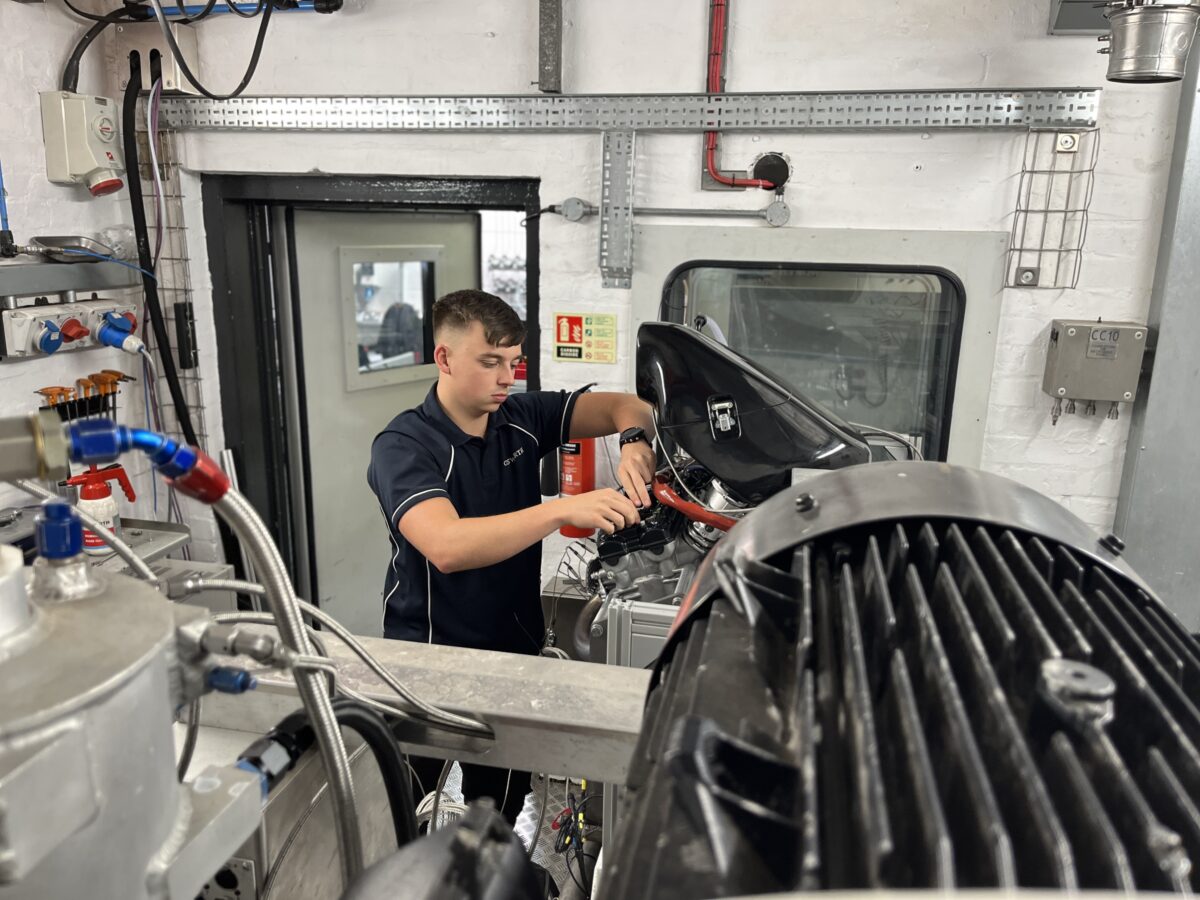
A propulsion technician helps to build, test, and assess the quality of propulsion systems in combustion engines, hybrid and electric propulsion technology, and in advanced control systems. You could be the technician who ensures thousands of vehicles move forward safely, quickly and efficiently.

A propulsion technician undertaking maintenance on aviation machinery.

The type of work a Propulsion Technician will do

  • Carrying out checks on propulsion systems
  • Identifying issues and fixing problems
  • Setting up equipment and ancillary systems used for build and testing
  • Checking instrumentation is capturing high quality data
  • Confirming calibration activities and reading measurements
  • Implementing modifications
  • Producing modification and design proposals
  • Liaising with internal teams and external customers
Useful skills
Problem solving
Useful skills
Precise
Useful skills
Communicating complex ideas
Useful skills
Critical thinking
Useful skills
Technologically minded
Useful skills
Instructing others
£ 0 1 2 3 4 5 6 7 8 9 0 1 2 3 4 5 6 7 8 9 , 0 1 2 3 4 5 6 7 8 9 0 1 2 3 4 5 6 7 8 9 0 1 2 3 4 5 6 7 8 9
Average salary per year *
£ 0 1 2 3 4 5 6 7 8 9 , 0 1 2 3 4 5 6 7 8 9 0 1 2 3 4 5 6 7 8 9 0 1 2 3 4 5 6 7 8 9
Average salary per month *

Data powered by LMI for all
*according to ONS

Future career opportunities for a Propulsion Technician

As you gain experience, you can take on more responsibility for managing bigger and more complex projects and teams of technicians and engineers.

There are opportunities to work in engineering consultancies, but you could also choose to become a freelancer, taking on contract work for a range of different projects and industries.

How to become a Propulsion Technician

There’s no perfect career path or ideal way into your dream job.

But if you’re interested in education and training options that could be relevant to this role, you might want to consider:

Options available after GCSEs:

More options available after that:

  • An apprenticeship as a Propulsion Technician.

Schools and colleges each have their own career guidance plan and can provide detailed information, advice, and guidance on options and next steps.

A little more about the role

Exciting features...

Propulsion technicians play a critical role in the engineering and design of propulsion systems, typically for the automotive, marine, and power equipment sectors. However they can also support the development of new and alternative technologies for other applications, including manufacturing and assembly processes.

Other job titles...

This role can also be known by some other job titles including:

Propulsion Test Engineer
Propulsion Test Technician
Engine Build and Process Technician
Product Analysis and Verification Technician
Engine Test Technician