Favourites

How a Sound Technician makes a difference

If you listen to a film or tv programme instead of watching it, you’ll notice how sounds communicate important elements of the story. Film and programme makers design these sounds to produce the right atmosphere, just like sets are designed to create the right environments.

A sound technician is involved in capturing this atmosphere. They work in a studio or on location. Before filming starts, they help to produce the right acoustics, based on the sound designer’s instructions, and during filming they need to capture actors’ voices clearly. You could be the technician who helps to capture beautiful atmospheres on films and tv programmes that increase people’s enjoyment of what they’re watching.

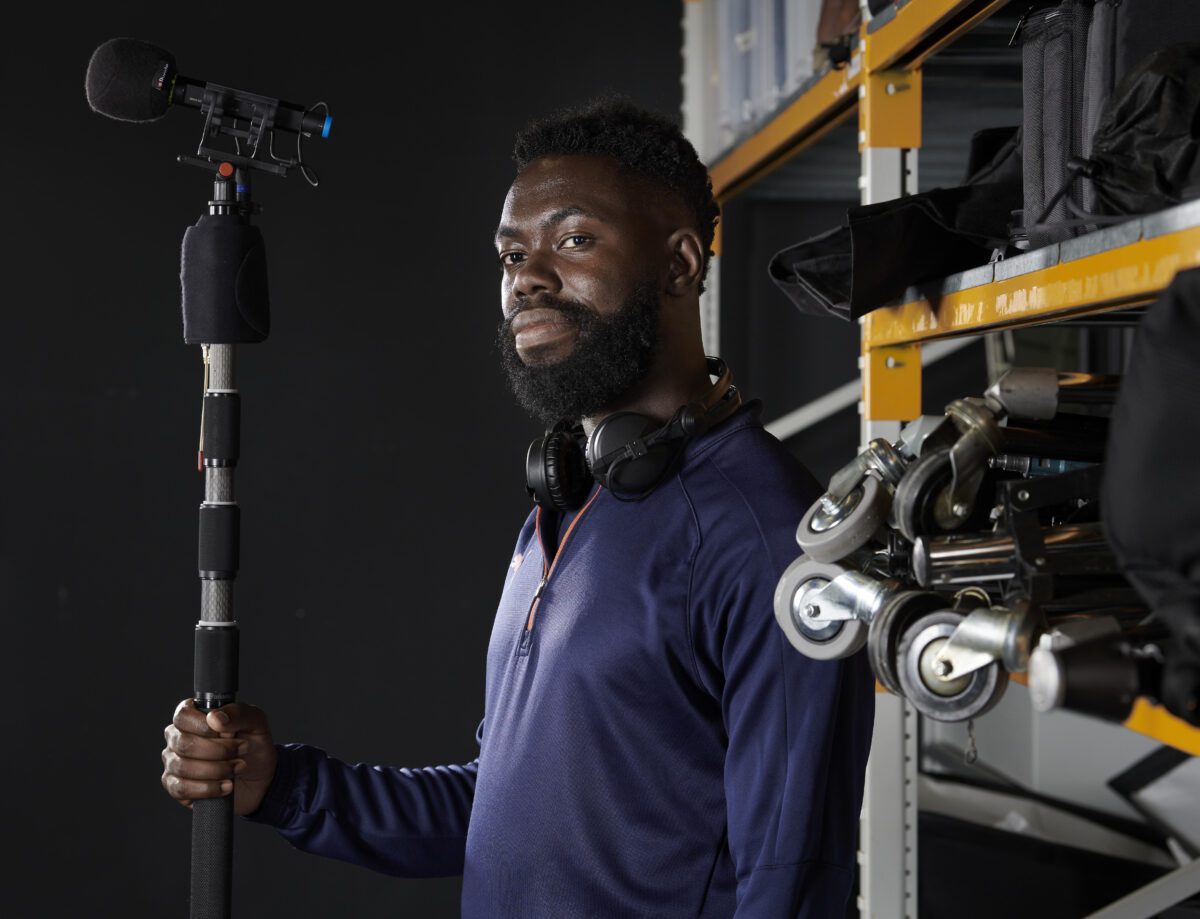
A sound technician holding a boom mic.

The type of work a Sound Technician will do

  • Setting up equipment to suit the acoustics and the sound designer’s instructions
  • Selecting and placing microphones
  • Operating the boom (microphone on a pole)
  • Checking sound quality
  • Recording sound onto digital devices
  • Servicing and repairing equipment
  • Playing music or sound effects into a live programme
  • Carrying out post production tasks, including mixing and balancing speech, effects and background music
  • Creating extra sound effects and adding them to the soundtrack
Useful skills
Attention to detail
Useful skills
Instructing others
Useful skills
Technologically minded
Useful skills
Precise
£ 0 1 2 3 4 5 6 7 8 9 0 1 2 3 4 5 6 7 8 9 , 0 1 2 3 4 5 6 7 8 9 0 1 2 3 4 5 6 7 8 9 0 1 2 3 4 5 6 7 8 9
Average salary per year *
£ 0 1 2 3 4 5 6 7 8 9 , 0 1 2 3 4 5 6 7 8 9 0 1 2 3 4 5 6 7 8 9 0 1 2 3 4 5 6 7 8 9
Average salary per month *

Data powered by LMI for all
*according to ONS

Future career opportunities for a Sound Technician

You could decide to work in a small TV studio and work up to a national one. Or you could specialise in one area of sound and use that skill to work as a freelancer, getting contracts on films and programmes made all over the world.

There is also a career path you can follow from trainee level to assistant sound, to first assistant sound, and then sound mixer. Another option is broadening out from sound and moving into studio management.

How to become a Sound Technician

There’s no perfect career path or ideal way into your dream job.

But if you’re interested in education and training options that could be relevant to this role, you might want to consider:

Options available after GCSEs:

More options available after that:

  • An apprenticeship as a Broadcast and Media Systems Technician.

Schools and colleges each have their own career guidance plan and can provide detailed information, advice, and guidance on options and next steps.

A little more about the role

Exciting features...

In this role you use lots of technical equipment to capture sounds clearly, including a boom (a microphone on a pole that can get close to the sound source) and microphone transmitters. Very large rigs of kit can be used to ensure the acoustics and sounds are just right, and to enable directors and sound teams to hear what actors are saying as films and programmes are being made.

How a Gaming Audio Technician makes a difference

If you’re a gamer, you know how much thought goes into the whole experience of a game. Not only to the storyline, characters, script, visuals, and the action that’s in the hands of the gamer, but also to the sounds. Animal squeals, explosions, gun shots, electric storms, car screeches and crashes: all need to be created and programmed to happen at exactly the right time.

A lot of creativity and precision goes into making these sounds. A gaming audio technician helps to record material that can be manipulated to make the best possible sound effect. They’re also involved in putting character’s voices into games. With nearly three billion gamers all over the world, you could be the technician who helps create the excitement and atmosphere of the next big game they play.

A sound mixing desk with dials and buttons.

The type of work a Gaming Audio Technician will do

  • Assessing the needs of a game and planning the type of audio it will require
  • Sourcing existing sound effects from sound libraries
  • Layering sounds together to produce the sound required
  • Manipulating sound files digitally
  • Recording new material to add to sounds or to create a new one
  • Programming sounds to happen in time with the action
  • Recording actors’ voice overs and adjusting recordings suit the character they’re playing
  • Listening in detail to every sound that’s created to make sure it is perfect and seamlessly integrated into the sound track
Useful skills
Technologically minded
Useful skills
Attention to detail
Useful skills
Precise
Useful skills
Problem solving
£ 0 1 2 3 4 5 6 7 8 9 0 1 2 3 4 5 6 7 8 9 , 0 1 2 3 4 5 6 7 8 9 0 1 2 3 4 5 6 7 8 9 0 1 2 3 4 5 6 7 8 9
Average salary per year *
£ 0 1 2 3 4 5 6 7 8 9 , 0 1 2 3 4 5 6 7 8 9 0 1 2 3 4 5 6 7 8 9 0 1 2 3 4 5 6 7 8 9
Average salary per month *

Data powered by LMI for all
*according to ONS

Future career opportunities for a Gaming Audio Technician

With experience you could become a senior audio designer and eventually an audio director. Alternatively you could choose to be a freelance sound designer, working with a range of gaming design studios. Another option is transferring your skills to the film and TV industries and focussing on editing either sound effects, music, or dialogue.

How to become a Gaming Audio Technician

There’s no perfect career path or ideal way into your dream job.

But if you’re interested in education and training options that could be relevant to this role, you might want to consider:

Options available after GCSEs:

Schools and colleges each have their own career guidance plan and can provide detailed information, advice, and guidance on options and next steps.

A little more about the role

Exciting features...

You will work with a big team of designers and programmers to plan and create the soundtrack for a game. You might also run auditions to find voice actors you need and then work with them to record their lines with the right energy, style and tone to match the action of the game.

How a Lighting Technician makes a difference

Lighting is used to create atmosphere and dramatic effects in a wide range of situations, from concerts to conferences, theatre performances to exhibitions, film and tv productions to advertising.

Working with a lighting designer, the lighting crew make sure the stage or set is lit correctly and safely. They also make adjustments as filming and rehearsals progress, to support the designer’s creative vision. You could be the technician who brings light to film and theatre, enabling performances of all kinds to be visually striking.

Lauren operating a flood light.

The type of work a Lighting Technician will do

  • Interpreting a lighting designer’s plan
  • Planning where to run cables and place lights
  • Helping to set up the rig and check equipment
  • Taking instructions from the stage manager in the theatre or the floor manager in TV on what they want to achieve
  • Programming and operating manual or computer controlled lighting systems
  • Carrying out risk assessments for health and safety purposes
  • Taking down and storing equipment after shows or filming
Useful skills
Precise
Useful skills
Decisive
Useful skills
Instructing others
£ 0 1 2 3 4 5 6 7 8 9 0 1 2 3 4 5 6 7 8 9 , 0 1 2 3 4 5 6 7 8 9 0 1 2 3 4 5 6 7 8 9 0 1 2 3 4 5 6 7 8 9
Average salary per year *
£ 0 1 2 3 4 5 6 7 8 9 , 0 1 2 3 4 5 6 7 8 9 0 1 2 3 4 5 6 7 8 9 0 1 2 3 4 5 6 7 8 9
Average salary per month *

Data powered by LMI for all
*according to ONS

Future career opportunities for a Lighting Technician

Once you’ve gained experience in a supporting role you could progress to leading a team of lighting technicians and managing the logistics for ordering and delivering of lighting.

More experience will also allow you to work on bigger and more complex projects, and to specialise in areas such as electrical safety, inspection and testing, pyrotechnics or rigging.

How to become a Lighting Technician

There’s no perfect career path or ideal way into your dream job.

But if you’re interested in education and training options that could be relevant to this role, you might want to consider:

Options available after GCSEs:

  • A T-level in Media, Broadcast and Production.
  • An apprenticeship as a Live Event Rigger.
  • An apprenticeship as a Creative Industries Production Technician.

Schools and colleges each have their own career guidance plan and can provide detailed information, advice, and guidance on options and next steps.

A little more about the role

Exciting features...

Films, advertising shoots, conferences, and theatre shows take place in lots of different locations, so you’ll have the opportunity to travel around and gain access to places you may not otherwise visit. You’ll also meet a wide variety of people, some of whom could be famous performers and actors.

Other job titles...

This role can also be known by some other job titles including:

Gaffer

How a Creative Venue Technician makes a difference

If you’ve ever been to a concert, the theatre or even a show on ice, you probably remember the performers most of all. However, every production – whether it’s live, for the radio, or on film – involves a large back stage crew who take care of the scenery, lights, cameras, sound and smooth running of a performance.

Some members of the crew will be specialists in a specific area while others are multi-skilled, working across a range of technical disciplines. This could be anything from constructing scenery to moving it around set, repairing equipment to adapting venues for touring shows. You could be the technician who helps to create the magic of performances and ensures audiences are fully entertained.

The type of work a Creative Venue Technician will do

  • Assembling and installing stage scenery
  • Maintaining scenery, equipment and props
  • Working with the creative team to deliver staging ideas
  • Programming lighting, audio, video and automation
  • Carrying out repairs to a venue
  • Working with a group to deliver projects on time
  • Interacting with a diverse range of technical and creative people
Useful skills
Attention to detail
Useful skills
Instructing others
Useful skills
Communicating complex ideas
Useful skills
Problem solving
£ 0 1 2 3 4 5 6 7 8 9 0 1 2 3 4 5 6 7 8 9 , 0 1 2 3 4 5 6 7 8 9 0 1 2 3 4 5 6 7 8 9 0 1 2 3 4 5 6 7 8 9
Average salary per year *
£ 0 1 2 3 4 5 6 7 8 9 , 0 1 2 3 4 5 6 7 8 9 0 1 2 3 4 5 6 7 8 9 0 1 2 3 4 5 6 7 8 9
Average salary per month *

Data powered by LMI for all
*according to ONS

Future career opportunities for a Creative Venue Technician

Once you’ve developed an all-round understanding of stage craft and how different teams work together, you may decide to specialise in one area, whether that’s lighting, sound, scenery or stage management.

Even if you choose to continue as a multi-skilled technician, you can progress to being a team leader, responsible for project management, training other people, and the quality of delivery. Eventually you could reach the position of producer and have overall control of how a show is put together.

How to become a Creative Venue Technician

There’s no perfect career path or ideal way into your dream job.

But if you’re interested in education and training options that could be relevant to this role, you might want to consider:

Options available after GCSEs:

  • A T-level in Media, Broadcast and Production.
  • An apprenticeship as a Creative Industries Production Technician.
  • An apprenticeship as a Scenic Automation Technician.

Schools and colleges each have their own career guidance plan and can provide detailed information, advice, and guidance on options and next steps.

A little more about the role

Exciting features...

There are many kinds of creative venue. Not only theatres and concert halls, but arts centres, broadcast studios, recording studios and festivals. The stagecraft you learn, including carpentry, operating stage machinery, and performing scene changes, will be transferrable to lots of different shows and environments, and could allow you to travel the world.

Other job titles...

This role can also be known by some other job titles including:

Venue Technician
Theatre Technician
Stage Technician
Lighting Technician
Sound Technician
Video Technician
Automation Technician