
Favourites

How a Surveying Technician makes a difference

Surveying Technicians support architects, engineers and planners, by collecting data about buildings and land.

They use state of the art technology, like laser scanners, 360° cameras and drones, to collect measurements about a location.

This data helps to make sure buildings, roads and other structures are built safely, in the right place, and stay on budget.

You could be the technician who helps to keep a complex construction project on track. 

A person on a construction site in a hi-vis jacket and hard hat, flying a drone by remote.

The type of work a Surveying Technician will do

  • Use specialist equipment to measure land and buildings
  • Record and process survey data
  • Create maps, plans and drawings
  • Use computer software to analyse information
  • Check measurements are accurate and reliable
  • Work outdoors on sites and indoors in offices
  • Support surveyors, engineers and construction teams
£ 0 1 2 3 4 5 6 7 8 9 0 1 2 3 4 5 6 7 8 9 , 0 1 2 3 4 5 6 7 8 9 0 1 2 3 4 5 6 7 8 9 0 1 2 3 4 5 6 7 8 9
Average salary per year *
£ 0 1 2 3 4 5 6 7 8 9 , 0 1 2 3 4 5 6 7 8 9 0 1 2 3 4 5 6 7 8 9 0 1 2 3 4 5 6 7 8 9
Average salary per month *

Data powered by LMI for all
*according to ONS

Future career opportunities for a Surveying Technician

With experience, you could become a surveyor, site engineer or project manager. You might specialise in areas like land surveying, building surveying or mapping. Further training could lead to senior roles or professional qualifications.

How to become a Surveying Technician

There’s no perfect career path or ideal way into your dream job.

But if you’re interested in education and training options that could be relevant to this role, you might want to consider:

Options available after GCSEs:

Schools and colleges each have their own career guidance plan and can provide detailed information, advice, and guidance on options and next steps.

A little more about the role

Exciting features...

This role offers a mix of outdoor and office based work.

As a Surveying Technician, you could work on all kinds of buildings and structures, from 38 storey office blocks, bridges, sports arenas, wind turbines, or a new development of 200 homes.

You get to use modern equipment like drones and 3D scanning tools. It is a great way to see how big construction projects come together from the ground up. You also work with a range of people, from engineers to architects, making it a varied job.
Other job titles...

Building Surveying Technician
Commercial Property Surveying Technician
Consultant Project Management Technician
Consultant Quantity Surveying Technician
Engineering Survey Technician
Geomatics Technician
Geospatial Technician
Land Survey Technician
Residential Property Surveying Technician
Site Survey Technician
Survey Assistant
Valuation Surveying Technician

Useful skills
Attention to detail
Useful skills
Technologically minded
Useful skills
Critical thinking

How a Space Engineering Technician makes a difference

Space manufacturing includes the design and production of satellites, as well as the components and subsystems that are used within them. This area of manufacturing is growing in the UK and more specialist engineers are needed to work in UK spaceports, new satellite launch sites and testing facilities.

As a space engineering technician, you’ll be involved in the development, manufacture, assembly, integration, and testing of complex, high-value space hardware and ground-based equipment. Every component helps to enable important things like in-space power generation, altitude control, rocket propulsion, and space communication. You could be the technician who helps space exploration to happen without a hitch and communications to be maintained.

The type of work a Space Engineering Technician will do

  • Build and test precision components
  • Plan and carry out component assembly
  • Inspect components and find the source of any faults
  • Carry out integration and testing activity
  • Operate equipment and analysis tools
  • Complete documentation for each stage of activity
  • Present test results
  • Find ways to improve processes and procedures
Useful skills
Critical thinking
Useful skills
Decisive
Useful skills
Instructing others
Useful skills
Precise
Useful skills
Technologically minded
£ 0 1 2 3 4 5 6 7 8 9 0 1 2 3 4 5 6 7 8 9 , 0 1 2 3 4 5 6 7 8 9 0 1 2 3 4 5 6 7 8 9 0 1 2 3 4 5 6 7 8 9
Average salary per year *
£ 0 1 2 3 4 5 6 7 8 9 , 0 1 2 3 4 5 6 7 8 9 0 1 2 3 4 5 6 7 8 9 0 1 2 3 4 5 6 7 8 9
Average salary per month *

Data powered by LMI for all
*according to ONS

Future career opportunities for a Space Engineering Technician

Once you’ve built your knowledge about a range of components, you may decide to specialise in a particular kind, or focus your career on the research and development of new components.

Senior space engineering roles include responsibility for managing and training other people, project management, and liaising with international space partners.

How to become a Space Engineering Technician

There’s no perfect career path or ideal way into your dream job.

But if you’re interested in education and training options that could be relevant to this role, you might want to consider:

Options available after GCSEs:

More options available after that:

  • A Higher Technical Qualification such as a Higher National Certificate in Space Technologies for England.
  • An apprenticeship as a Space Engineering Technician.

Schools and colleges each have their own career guidance plan and can provide detailed information, advice, and guidance on options and next steps.

A little more about the role

Exciting features...

You will contribute to inspection and testing activities for mission-critical satellites and support the integration of technology at space centres and launch sites in other countries. Your range of customers will include space agencies and satellite operators and you will interact with international organisations responsible for space technology standardisation and quality.

Other job titles...

This role can also be known by some other job titles including:

Advanced Manufacturing Technician
Assembly
Control and Instrumentation Engineering Technician
Electrical Engineering Technician
Integration and Test Technician
Materials and Chemical Engineering Technician
Quality and Product Assurance Technician
Satellite Manufacturing
Spacecraft Mechanical Engineering Technician
Spacecraft Propulsion Engineering Technician

How a Rail Engineering Technician makes a difference

In the UK we have a large network of trains and railway tracks that run up, down and across the country. Millions of people rely on trains to take them to work every day, to visit friends and family, and to take them on holiday.

There are many components to the rail network. The main infrastructure includes railway stations, trains and tracks, overhead lines, and signalling and telecommunications systems. A rail engineering technician helps to repair and maintain several elements. You could be the technician who helps railway journeys to run without a hitch, making sure people reach their destination safely, comfortably, and on time.

The type of work a Rail Engineering Technician will do

  • Constructing and updating parts of the railway network
  • Monitoring infrastructure and finding faults
  • Diagnosing the reasons for failures and completing fixes
  • Using hand and power tools, including welding kit
  • Repairing and replacing parts
  • Helping to build new carriages and engines
  • Testing equipment
  • Maintaining records and writing reports
Useful skills
Attention to detail
Useful skills
Precise
Useful skills
Problem solving
Useful skills
Communicating complex ideas
£ 0 1 2 3 4 5 6 7 8 9 0 1 2 3 4 5 6 7 8 9 , 0 1 2 3 4 5 6 7 8 9 0 1 2 3 4 5 6 7 8 9 0 1 2 3 4 5 6 7 8 9
Average salary per year *
£ 0 1 2 3 4 5 6 7 8 9 , 0 1 2 3 4 5 6 7 8 9 0 1 2 3 4 5 6 7 8 9 0 1 2 3 4 5 6 7 8 9
Average salary per month *

Data powered by LMI for all
*according to ONS

Future career opportunities for a Rail Engineering Technician

Over time you will pick up a range of skills in testing, maintenance, installation, and safety, and could progress to a management position, such as a maintenance team leader or engineering workshop manager.

You might decide you want to focus on vehicle engineering or move into consultancy, working for an engineering firm that helps to design and project manage the delivery of new railways.

How to become a Rail Engineering Technician

There’s no perfect career path or ideal way into your dream job.

But if you’re interested in education and training options that could be relevant to this role, you might want to consider:

Options available after GCSEs:

More options available after that:

  • An apprenticeship as a Rail Engineering Advanced Technician.
  • An apprenticeship as a Rail and Rail Systems Engineer.

Schools and colleges each have their own career guidance plan and can provide detailed information, advice, and guidance on options and next steps.

A little more about the role

Exciting features...

As well as maintaining existing railway tracks and trains, you could be involved in restoring vintage train vehicles. There are also several new railway lines being planned which involve more energy-efficient vehicles and complex engineering projects.

Other job titles...

This role can also be known by some other job titles including:

Track Technician
Overhead Line Technician
Electrification Technician
Traction and Rolling Stock Technician
Signalling Technician
Telecoms Technician
Rail Systems Technician

How a Propulsion Technician makes a difference

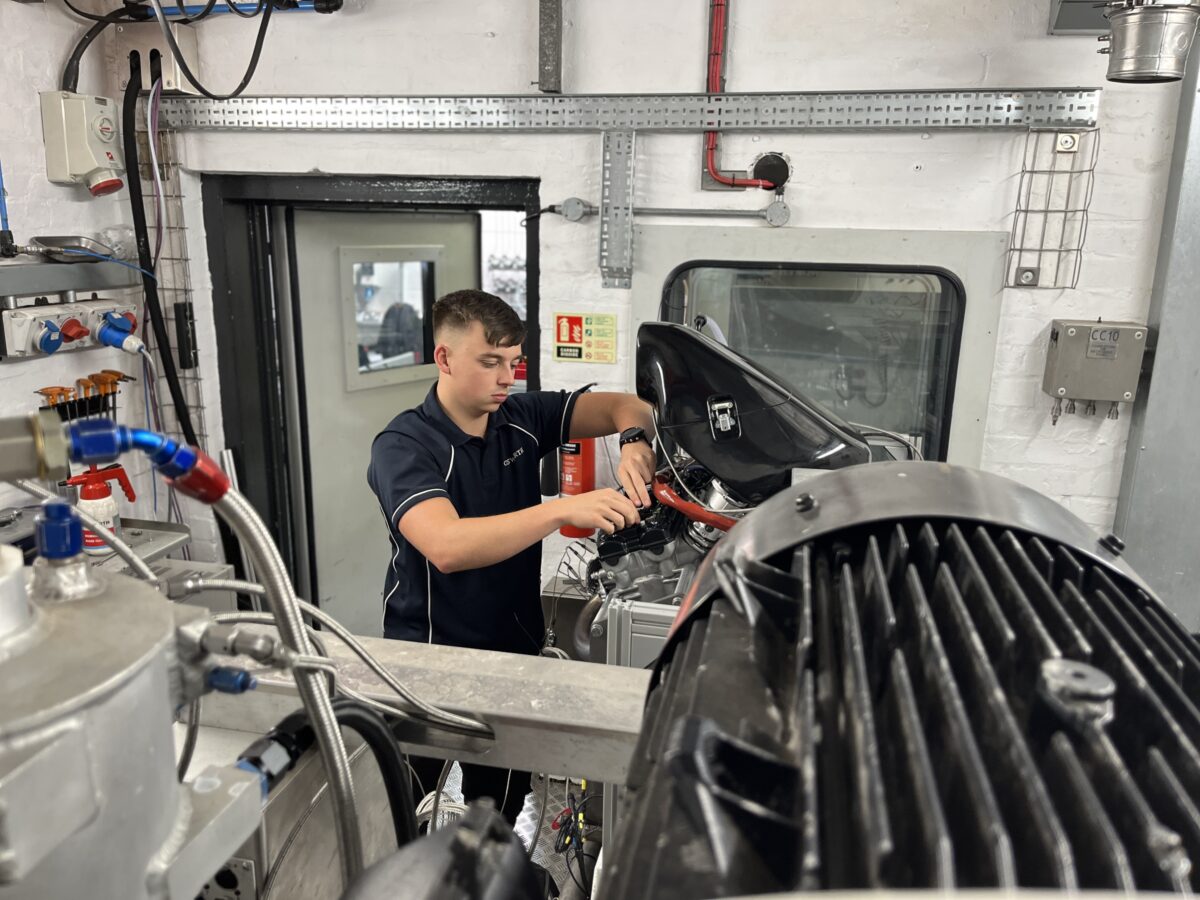
Propulsion is a force that pushes something forward. A propulsion system – like an engine in a car, boat, or space ship  – combines mechanical power with a propulsor. The propulsor converts mechanical power into a forward moving force.

A propulsion technician helps to build, test, and assess the quality of propulsion systems in combustion engines, hybrid and electric propulsion technology, and in advanced control systems. You could be the technician who ensures thousands of vehicles move forward safely, quickly and efficiently.

A propulsion technician undertaking maintenance on aviation machinery.

The type of work a Propulsion Technician will do

  • Carrying out checks on propulsion systems
  • Identifying issues and fixing problems
  • Setting up equipment and ancillary systems used for build and testing
  • Checking instrumentation is capturing high quality data
  • Confirming calibration activities and reading measurements
  • Implementing modifications
  • Producing modification and design proposals
  • Liaising with internal teams and external customers
Useful skills
Problem solving
Useful skills
Precise
Useful skills
Communicating complex ideas
Useful skills
Critical thinking
Useful skills
Technologically minded
Useful skills
Instructing others
£ 0 1 2 3 4 5 6 7 8 9 0 1 2 3 4 5 6 7 8 9 , 0 1 2 3 4 5 6 7 8 9 0 1 2 3 4 5 6 7 8 9 0 1 2 3 4 5 6 7 8 9
Average salary per year *
£ 0 1 2 3 4 5 6 7 8 9 , 0 1 2 3 4 5 6 7 8 9 0 1 2 3 4 5 6 7 8 9 0 1 2 3 4 5 6 7 8 9
Average salary per month *

Data powered by LMI for all
*according to ONS

Future career opportunities for a Propulsion Technician

As you gain experience, you can take on more responsibility for managing bigger and more complex projects and teams of technicians and engineers.

There are opportunities to work in engineering consultancies, but you could also choose to become a freelancer, taking on contract work for a range of different projects and industries.

How to become a Propulsion Technician

There’s no perfect career path or ideal way into your dream job.

But if you’re interested in education and training options that could be relevant to this role, you might want to consider:

Options available after GCSEs:

More options available after that:

  • An apprenticeship as a Propulsion Technician.

Schools and colleges each have their own career guidance plan and can provide detailed information, advice, and guidance on options and next steps.

A little more about the role

Exciting features...

Propulsion technicians play a critical role in the engineering and design of propulsion systems, typically for the automotive, marine, and power equipment sectors. However they can also support the development of new and alternative technologies for other applications, including manufacturing and assembly processes.

Other job titles...

This role can also be known by some other job titles including:

Propulsion Test Engineer
Propulsion Test Technician
Engine Build and Process Technician
Product Analysis and Verification Technician
Engine Test Technician

How a Metrology Technician makes a difference

Metrology is the science of measurement. It covers the theoretical side and practical applications, including collecting the measurements that enable goods and utilities to be sold. 

£600 billion worth of goods and utilities are sold in the UK every year, based on the measurement of their quantity and quality. You could be the technician who helps people understand the value of what’s being sold.

The type of work a Metrology Technician will do

  • Using measuring instruments and equipment
  • Calibrating machines and tools
  • Assessing quality and value based on measurements
  • Working independently on measurement projects
  • Collaborating with teams on new items to be measured
  • Using software to collect and analyse measurement data
Useful skills
Attention to detail
Useful skills
Instructing others
Useful skills
Logical thinking
Useful skills
Communicating complex ideas
£ 0 1 2 3 4 5 6 7 8 9 0 1 2 3 4 5 6 7 8 9 , 0 1 2 3 4 5 6 7 8 9 0 1 2 3 4 5 6 7 8 9 0 1 2 3 4 5 6 7 8 9
Average salary per year *
£ 0 1 2 3 4 5 6 7 8 9 , 0 1 2 3 4 5 6 7 8 9 0 1 2 3 4 5 6 7 8 9 0 1 2 3 4 5 6 7 8 9
Average salary per month *

Data powered by LMI for all
*according to ONS

Future career opportunities for a Metrology Technician

You can use your skills to work in many different industries, from environment, energy and aerospace to transport, construction and healthcare. 

With experience, you can move into a team management role, specialise in a particular area of measurement, or work in science and research.

How to become a Metrology Technician

There’s no perfect career path or ideal way into your dream job.

But if you’re interested in education and training options that could be relevant to this role, you might want to consider:

Options available after GCSEs:

  • A T-level in Science.
  • An apprenticeship as a Metrology Technician.

More options available after that:

  • An apprenticeship as a Senior Metrology Technician.

Schools and colleges each have their own career guidance plan and can provide detailed information, advice, and guidance on options and next steps.

A little more about the role

Exciting features...

Metrology takes place across diverse industries including advanced manufacturing, aerospace, automotive, construction, energy, environment, pharmaceuticals and healthcare and within all sizes of organisation. You could be measuring galaxies, molecules, chemical pollutants, hip joints, aircraft or industrial emissions.

Other job titles...

This role can also be known by some other job titles including:

Measurement Scientist

How a Telecommunications Technician makes a difference

Organisations rely on telecommunication systems in all areas of operations, just as people rely on voice, data, and video communications across their leisure and home life. The number of devices that utilise mobile and broadband networks has expanded tremendously over the last ten years, as internet and mobile technology have become faster and more readily available.

Not all areas enjoy the same superfast internet connections, however, and mobile and broadband networks can fail. Therefore specialists are required to understand what the challenges are, install the right technology, and repair issues quickly. You could be the technician who helps people and business to communicate with each other effectively by making network connections fast and reliable.

The type of work a Telecommunications Technician will do

  • Implementing IT solutions involving network hardware, software, databases and programming
  • Responding to reports about failing networks and communications
  • Diagnosing issues
  • Interacting with a wide variety of users with varying levels of technical knowledge
  • Collecting and analysing network and telecommunications performance data
  • Implementing and testing secure systems
  • Testing and maintaining core network infrastructure
Useful skills
Logical thinking
Useful skills
Attention to detail
Useful skills
Problem solving
Useful skills
Technologically minded
£ 0 1 2 3 4 5 6 7 8 9 0 1 2 3 4 5 6 7 8 9 , 0 1 2 3 4 5 6 7 8 9 0 1 2 3 4 5 6 7 8 9 0 1 2 3 4 5 6 7 8 9
Average salary per year *
£ 0 1 2 3 4 5 6 7 8 9 , 0 1 2 3 4 5 6 7 8 9 0 1 2 3 4 5 6 7 8 9 0 1 2 3 4 5 6 7 8 9
Average salary per month *

Data powered by LMI for all
*according to ONS

Future career opportunities for a Telecommunications Technician

You could work in several different environments, including large telecoms companies, within the IT team of a big organisation, or within a specialist IT consultancy that helps organisations install and manage their telecommunication systems.

As your knowledge and experience increase, you could get involved in the design of networks, helping organisations transition from old telecommunications systems to fast internet-based solutions.

How to become a Telecommunications Technician

There’s no perfect career path or ideal way into your dream job.

But if you’re interested in education and training options that could be relevant to this role, you might want to consider:

Options available after GCSEs:

More options available after that:

  • An apprenticeship as a Cellular Network Field Engineer.

Schools and colleges each have their own career guidance plan and can provide detailed information, advice, and guidance on options and next steps.

A little more about the role

Exciting features...

Many of the systems you install will be based in the cloud, instead of being installed in servers on premises. You’ll use cloud technology to roll out new systems to businesses and to provide software updates and new services to customers. You will understand how voice, data, and video infrastructure operates and how to direct different types of calls over the network to make telecommunications as cost effective as possible.

Other job titles...

This role can also be known by some other job titles including:

Cloud Technician
Communications Technician
Cyber/Security Support
Data Centre Support Technician
Help Desk Support
IT Field Technician
IT Support Analyst
Network Field Operative
Network Support
Office IT Technician

How a Data Technician makes a difference

Over the last twenty years, a large proportion of our lives and business activity has become digitalised. On an individual level, every app, purchase, video stream, online search, and social media post we make generates huge amounts of data about how we think and behave. Businesses analyse our data to understand and serve us better, and to offer us products and services that will appeal to us.

They also gather data on other factors that impact their business, such as prices, populations, energy use, and weather conditions. You could be the technician who helps to source, format, and present data securely, to help generate insights that lead to improved services and product innovations.

The type of work a Data Technician will do

  • Blending data from multiple sources
  • Following legal and ethical principles of data collection
  • Explaining the insights the data generated
  • Producing reports containing data and insights
  • Interacting with a wide range of people who have an interest in the data
  • Understanding the types of insights people need to collect appropriate data
  • Processing data using computers
  • Storing and managing data
Useful skills
Technologically minded
Useful skills
Precise
Useful skills
Problem solving
Useful skills
Logical thinking
Useful skills
Critical thinking
Useful skills
Instructing others
Useful skills
Communicating complex ideas
£ 0 1 2 3 4 5 6 7 8 9 0 1 2 3 4 5 6 7 8 9 , 0 1 2 3 4 5 6 7 8 9 0 1 2 3 4 5 6 7 8 9 0 1 2 3 4 5 6 7 8 9
Average salary per year *
£ 0 1 2 3 4 5 6 7 8 9 , 0 1 2 3 4 5 6 7 8 9 0 1 2 3 4 5 6 7 8 9 0 1 2 3 4 5 6 7 8 9
Average salary per month *

Data powered by LMI for all
*according to ONS

Future career opportunities for a Data Technician

You could build a career in data analytics in a large accounting or consulting firm, so teams can serve and inform clients in diverse sectors. As your experience grows, you can lead a team of analysts.

Alternatively you might join a consumer retail, marketing agency, or public sector organisation, and use data to develop products, campaigns or services.

How to become a Data Technician

There’s no perfect career path or ideal way into your dream job.

But if you’re interested in education and training options that could be relevant to this role, you might want to consider:

Options available after GCSEs:

More options available after that:

  • A Higher Technical Qualification in Computer Science or Data Analytics.
  • An apprenticeship as a Data Analyst.

Schools and colleges each have their own career guidance plan and can provide detailed information, advice, and guidance on options and next steps.

A little more about the role

Exciting features...

Data collection and analytics is a big part of many industries, including finance, retail, education, health, media, manufacturing, and hospitality. As a Data Technician you will be required to present data securely in a relevant way, so other people understand the insights the data has generated and the outcomes it can help them achieve.

Other job titles...

This role can also be known by some other job titles including:

Data Engineer
Data and Reporting Analyst
Security Architect

How a Building Design Technician makes a difference

When you imagine a building being constructed, you probably think about its exterior and maybe the shapes of the rooms inside. But there is much more to a building than simply its bricks and mortar.

For a building to really come to life, it needs to be connected to resources and services people use, and to meet safety, security, efficiency, and environmental standards. You could be the technician who designs these resources, services, and standards into many kinds of buildings, giving people a high quality of life.

Useful skills
Attention to detail
Useful skills
Problem solving
Useful skills
Precise
Useful skills
Technologically minded

The type of work a Building Design Technician will do

  • Supporting the design of building services system
  • Making sure designs meet the relevant building and environmental standards
  • Capturing data and carrying out calculations to define the best design solution
  • Using data analysis and digital modelling software
  • Understanding the risks involved with different services and controlling the risks within your designs
  • Project management of your designs and proposals
  • Presenting your ideas and solutions to other people
£ 0 1 2 3 4 5 6 7 8 9 0 1 2 3 4 5 6 7 8 9 , 0 1 2 3 4 5 6 7 8 9 0 1 2 3 4 5 6 7 8 9 0 1 2 3 4 5 6 7 8 9
Average salary per year *
£ 0 1 2 3 4 5 6 7 8 9 , 0 1 2 3 4 5 6 7 8 9 0 1 2 3 4 5 6 7 8 9 0 1 2 3 4 5 6 7 8 9
Average salary per month *

Data powered by LMI for all
*according to ONS

Future career opportunities for a Building Design Technician

With experience you could become a design engineer, or a site manager with responsibility for overseeing design implementation.

Another option is working in design and construction management and leading a technical team. Alternatively, you could move into a head of facilities position and manage building operations.

How to become a Building Design Technician

There’s no perfect career path or ideal way into your dream job. But if you're interested in education and training options that could be relevant to this role, you might want to consider:  

But if you’re interested in education and training options that could be relevant to this role, you might want to consider:

Options available after GCSEs:

More options available after that:

  • A Higher Technical Qualification, such as a Higher National Certificate in Architectural Technology for England.
  • An apprenticeship as a Construction Design and Build Technician.

Schools and colleges each have their own career guidance plan and can provide detailed information, advice, and guidance on options and next steps.

A little more about the role

Exciting features...

As a building design technician you plan how heating, ventilation and cooling, electrical power, water, and drainage systems all operate in a building. You need to consider comfort and control, safety and security, efficiency and sustainability, and access, to make it easy for systems to be fixed and maintained.

Other job titles...

This role can also be known by some other job titles including:

Building Services Technician
Building Services Engineering Technician

How an Aircraft Maintenance Technician makes a difference

Aircraft come in many shapes and forms – from small aeroplanes to airliners, jet fighters to helicopters – and it’s fascinating to understand what enables them to fly.

Each aircraft, whether it’s used for international travel, rescue, cargo or by the military, needs to be thoroughly checked and maintained to make sure it’s fit to fly. You could be the technician that examines every element of aircraft – the mechanics and the electricals – to get people and goods to their destinations safely.

Useful skills
Technologically minded
Useful skills
Attention to detail
Useful skills
Precise
Useful skills
Instructing others

The type of work an Aircraft Maintenance Technician will do

  • Planning maintenance schedules
  • Completing maintenance checks and procedures
  • Keeping records of the results
  • Communicating with other engineers and aircrew on the airworthiness of aircraft
  • Immediately reporting any incidents or defects with aircraft, tooling or test equipment
  • Maintaining a safe working environment
  • Completing documentation to support handovers to other engineers
£ 0 1 2 3 4 5 6 7 8 9 0 1 2 3 4 5 6 7 8 9 , 0 1 2 3 4 5 6 7 8 9 0 1 2 3 4 5 6 7 8 9 0 1 2 3 4 5 6 7 8 9
Average salary per year *
£ 0 1 2 3 4 5 6 7 8 9 , 0 1 2 3 4 5 6 7 8 9 0 1 2 3 4 5 6 7 8 9 0 1 2 3 4 5 6 7 8 9
Average salary per month *

Data powered by LMI for all
*according to ONS

Future career opportunities for an Aircraft Maintenance Technician

With aircraft engineering skills you could work for a major airline maintaining passenger planes, or for a more specialised business that offers transportation by helicopter.

Once you’ve gained experience, you could become a senior aircraft maintenance engineer, responsible for leading a team, or progress into regulation, helping to continuously improve the standards of aircraft.

How to become an Aircraft Maintenance Technician

There’s no perfect career path or ideal way into your dream job.

But if you’re interested in education and training options that could be relevant to this role, you might want to consider:

Options available after GCSEs:

More options available after that:

Schools and colleges each have their own career guidance plan and can provide detailed information, advice, and guidance on options and next steps.

A little more about the role

Exciting features...

As well as working on aircraft in the hangar, you could be flown out to international destinations to complete your maintenance work. You’ll have a lot of responsibility, confirming all necessary checks have taken place in line with aircraft regulations, and making sure all faults and issues are highlighted and addressed.

Other role titles...

This role can also be known by some other job titles including:

Air Engineer
Aircraft Certifying Engineer
Aircraft Maintenance Engineer
Licenced Aircraft Engineer
Licenced Avionics Engineer

How a Robotics Technician makes a difference

When we think of robots, most of us have a picture in our minds of a human-like figure made out of metal. However robots – or robotic machines – come in all shapes and sizes and play an important role in the manufacturing, engineering, construction, healthcare, military, and logistics sectors.

Many of the tasks completed by robots are repetitive, detailed, or difficult for people to do safely or quickly. Robots improve accuracy and efficiency, and help protect people. As they are machines, they need to be maintained and programmed, which is where humans come in. You could be the technician who makes sure robots can complete the work they’re required to do to the right standard.

The type of work a Robotics Technician will do

  • Repairing robots and connected equipment
  • Troubleshooting robotic systems
  • Programming different kinds of robotic functions
  • Installing and updating software
  • Maintaining technical documents
  • Advising other people on how robotic functions should work or be designed 
  • Supporting operational teams with ideas for improving systems and processes
Useful skills
Precise
Useful skills
Problem solving
Useful skills
Communicating complex ideas
£ 0 1 2 3 4 5 6 7 8 9 0 1 2 3 4 5 6 7 8 9 , 0 1 2 3 4 5 6 7 8 9 0 1 2 3 4 5 6 7 8 9 0 1 2 3 4 5 6 7 8 9
Average salary per year *
£ 0 1 2 3 4 5 6 7 8 9 , 0 1 2 3 4 5 6 7 8 9 0 1 2 3 4 5 6 7 8 9 0 1 2 3 4 5 6 7 8 9
Average salary per month *

Data powered by LMI for all
*according to ONS

Future career opportunities for a Robotics Technician

Your career in robotics engineering could begin in several different sectors, where you will learn how to make robots, fix and improve them. You could decide to specialise in this sector or transfer your skills to another one.

There will be opportunities to lead technical teams or to move further into research and development of products. You might join a consultancy that focuses on design and innovation.

How to become a Robotics Technician

There’s no perfect career path or ideal way into your dream job.

But if you’re interested in education and training options that could be relevant to this role, you might want to consider:

Options available after GCSEs:

  • A T-level in Science.
  • An apprenticeship as a Laboratory Technician.

Schools and colleges each have their own career guidance plan and can provide detailed information, advice, and guidance on options and next steps.

A little more about the role

Exciting features...

Robotics engineering involves multiple kinds of technology, including microprocessors, programmable controllers, electronics, circuits, sensors, hydraulics, and feedback systems. They can also be connected to the internet to share data and become part of a wider manufacturing and logistics system.

Other job titles...

This role can also be known by some other job titles including:

Manufacturing Engineer
Process Engineer
Production Support Engineer
Installation Engineer
Quality Engineer