Favourites

How a Digital Forensic Technician makes a difference

Digital forensic technicians help keep people and organisations safe. They look for clues on computers, mobile phones and online systems to help solve crimes or understand what went wrong after a cyber-attack.

Their work can support police investigations, protect businesses from hackers and help courts make fair decisions. By carefully handling digital evidence, they help make sure the truth is found and that evidence can be trusted.

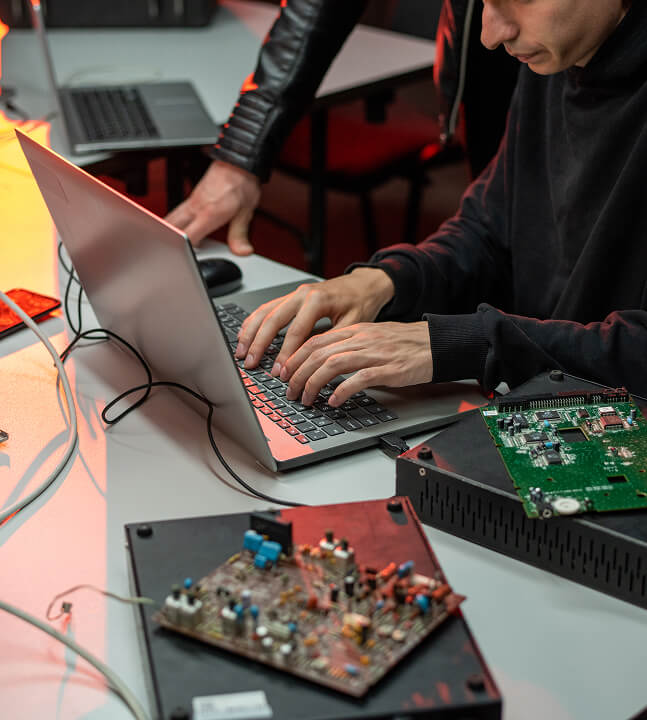
2 people working on one laptop with electronic devices around them.

The type of work a Digital Forensic Technician will do

  • Investigate digital devices like laptops, phones and tablets
  • Study usage, like internet history and app activity
  • Use specialist software to look for deleted files, messages and pictures
  • Make safe copies of data and store evidence securely
  • Keep clear notes of everything you do
  • Work with police or security teams
  • Write up reports of findings
Useful skills
Attention to detail
Useful skills
Critical thinking
Useful skills
Decisive
Useful skills
Logical thinking
Useful skills
Practical application
Useful skills
Precise
Useful skills
Technologically minded
£ 0 1 2 3 4 5 6 7 8 9 0 1 2 3 4 5 6 7 8 9 , 0 1 2 3 4 5 6 7 8 9 0 1 2 3 4 5 6 7 8 9 0 1 2 3 4 5 6 7 8 9
Average salary per year *
£ 0 1 2 3 4 5 6 7 8 9 , 0 1 2 3 4 5 6 7 8 9 0 1 2 3 4 5 6 7 8 9 0 1 2 3 4 5 6 7 8 9
Average salary per month *

Data powered by LMI for all
*according to ONS

Future career opportunities for a Digital Forensic Technician

With experience, you could become a senior digital forensic analyst or move into cyber security roles. Some people specialise in mobile devices or online investigations. Others move into training, management or work as expert witnesses in court. There are also opportunities to work in policing, private companies or government organisations.

How to become a Digital Forensic Technician

There’s no perfect career path or ideal way into your dream job.

But if you’re interested in education and training options that could be relevant to this role, you might want to consider:

Options available after GCSEs:

  • A T-level in Digital Support and Security
  • An apprenticeship as a Data Technician

More options available after that:

  • An apprenticeship as a Digital Forensic Technician

Schools and colleges each have their own career guidance plan and can provide detailed information, advice, and guidance on options and next steps.

A little more about the role

Exciting features...

You might be working on a criminal investigation one day and helping a company recover from a cyber-attack the next. You get to use advanced tools to uncover hidden information and solve real-world problems. Your work can have a big impact, helping to protect people, money and important systems.

Other job titles...

You might also see this role listed under different job titles, including:

Digital forensic analyst
Digital forensics investigator
Cyber forensic technician
Computer forensic analyst

How a Mechatronics Technician makes a difference

Mechatronics technicians are essential in places that use machines with lots of moving parts, like factories making cars or planes. They make sure the machines that help produce goods are safe, efficient and reliable.

When something breaks or doesn’t work correctly, they find the problem and fix it so the production line can keep running, which keeps products flowing to shops and customers. Their work helps companies meet goals for safety, quality and production.

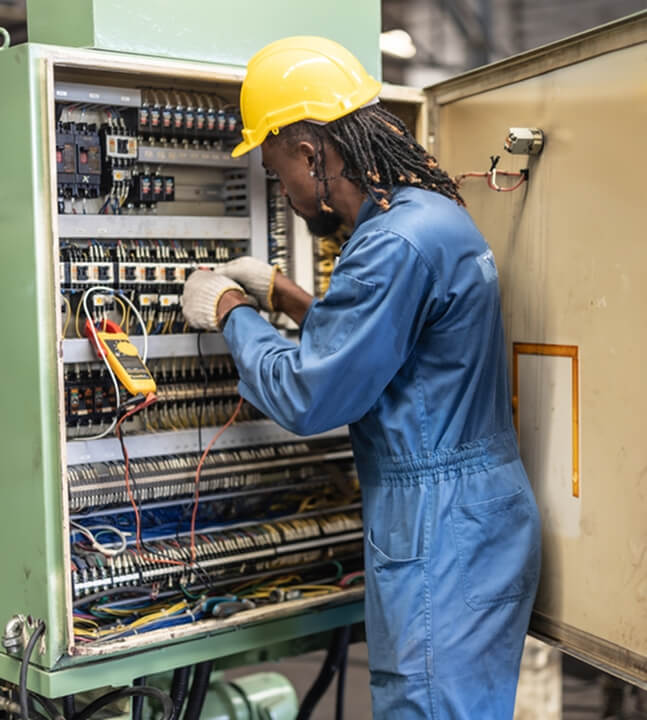
Man in blue overalls and yellow hard had working on an industrial size electric board.

The type of work a Mechatronics Technician will do

  • Install and set up automated equipment
  • Test machine systems to make sure they work properly
  • Find faults when things go wrong
  • Fix or adjust mechanical, electrical and control system problems
  • Do planned maintenance to prevent breakdowns
  • Keep clear records of completed work
Useful skills
Practical application
Useful skills
Problem solving
Useful skills
Technologically minded
Useful skills
Attention to detail
£ 0 1 2 3 4 5 6 7 8 9 0 1 2 3 4 5 6 7 8 9 , 0 1 2 3 4 5 6 7 8 9 0 1 2 3 4 5 6 7 8 9 0 1 2 3 4 5 6 7 8 9
Average salary per year *
£ 0 1 2 3 4 5 6 7 8 9 , 0 1 2 3 4 5 6 7 8 9 0 1 2 3 4 5 6 7 8 9 0 1 2 3 4 5 6 7 8 9
Average salary per month *

Data powered by LMI for all
*according to ONS

Future career opportunities for a Mechatronics Technician

Once trained, mechatronics technicians can specialise further in roles like Maintenance Engineer or Automation Specialist. With more experience you might move into team leadership, technical management, project engineering or broader engineering roles in sectors such as aerospace, automotive and energy.

How to become a Mechatronics Technician

There’s no perfect career path or ideal way into your dream job.

But if you’re interested in education and training options that could be relevant to this role, you might want to consider:

Options available after GCSEs:

  • A T-level in Engineering, Manufacturing, Processing and Control
  • An apprenticeship as an Engineering technician

Schools and colleges each have their own career guidance plan and can provide detailed information, advice, and guidance on options and next steps.

A little more about the role

Exciting features...

As a mechatronics technician, you work with lots of modern machines and systems that combine mechanics, electricity and electronics. You get to figure out how things work and be the person who gets things back up and running when they go wrong. You might work on robots, conveyor systems, control panels and sensors. Some days you’ll be in busy workshops or production halls, and other days you could be solving complex problems on advanced automated equipment. This role is hands on, varied and gives you skills employers across many industries value.

Other job titles...

You might also see this role listed under different job titles, including:

Mechatronics Maintenance Technician
Automation Technician
Engineering Technician
Maintenance Engineer
Technical Support Technician

How an IT Network Technician makes a difference

IT Network Technicians help schools, businesses and organisations stay connected. They make sure computers, Wi-Fi and other devices can talk to each other safely and reliably.

Without networks, people could not send emails, join online lessons, access files or use many everyday digital services. This role helps others do their jobs properly and keeps important systems running. When something goes wrong, the technician steps in to fix it so work can continue.

A young man working on the back of a computer monitor attempting to fix it

The type of work an IT Network Technician will do

  • Set up and maintain network hardware, like servers and Wi-Fi systems
  • Check networks are running smoothly
  • Find and fix problems when things stop working
  • Replace or upgrade network equipment
  • Help keep data secure
  • Connect devices like computers and printers
Useful skills
Critical thinking
Useful skills
Attention to detail
Useful skills
Problem solving
£ 0 1 2 3 4 5 6 7 8 9 0 1 2 3 4 5 6 7 8 9 , 0 1 2 3 4 5 6 7 8 9 0 1 2 3 4 5 6 7 8 9 0 1 2 3 4 5 6 7 8 9
Average salary per year *
£ 0 1 2 3 4 5 6 7 8 9 , 0 1 2 3 4 5 6 7 8 9 0 1 2 3 4 5 6 7 8 9 0 1 2 3 4 5 6 7 8 9
Average salary per month *

Data powered by LMI for all
*according to ONS

Future career opportunities for an IT Network Technician

With experience, an IT Network Technician can move into more senior IT roles. This could include becoming a Network Engineer, working on larger and more complex networks, or moving into specialist areas of IT support. Some people continue learning while working and progress into higher-level technical or management roles.

How to become an IT Network Technician

There’s no perfect career path or ideal way into your dream job.

But if you’re interested in education and training options that could be relevant to this role, you might want to consider:

Options available after GCSEs:

  • A T-level in Digital Support and Security
  • An apprenticeship as an Information Communications Technician

More options available after that:

  • An apprenticeship as a Network Engineer
  • A Higher Technical Qualification (HTQ) in Computing

Schools and colleges each have their own career guidance plan and can provide detailed information, advice, and guidance on options and next steps.

A little more about the role

Exciting features...

This role mixes hands-on work with problem solving. One day you might be setting up new equipment and the next day fixing a tricky network fault. You get to see the results of your work straight away when systems start working again. IT Network Technicians are needed in many different places, so the skills you learn can take you in lots of directions

Other job titles...

You might also see this role listed under different job titles, including:

Network Support Technician
IT Support Technician
Network Support Engineer
Information Communications Technician

How a Data and AI Technician makes a difference

Data and AI Technicians help organisations save time and reduce mistakes. They look at everyday tasks and help improve how they are done using smart digital tools and data.

AI means computers that can learn from data and make decisions. Automation means setting up systems that carry out tasks on their own. By doing this work, Data and AI Technicians help teams focus on more interesting and meaningful jobs, improve services for customers and use technology in a safe and responsible way.

A compute screen with code on it

The type of work a Data and AI Technician will do

  • Use existing AI and automation tools to design processes and reduce errors
  • Collect and analyse data to spot errors and fix problems
  • Test systems to make sure they work properly
  • Fix issues when things do not work as planned
  • Keep data safe and use AI responsibly
  • Talk to colleagues to understand problems and feed back
  • Help others learn how to use new tools
Useful skills
Technologically minded
Useful skills
Problem solving
Useful skills
Critical thinking
£ 0 1 2 3 4 5 6 7 8 9 0 1 2 3 4 5 6 7 8 9 , 0 1 2 3 4 5 6 7 8 9 0 1 2 3 4 5 6 7 8 9 0 1 2 3 4 5 6 7 8 9
Average salary per year *
£ 0 1 2 3 4 5 6 7 8 9 , 0 1 2 3 4 5 6 7 8 9 0 1 2 3 4 5 6 7 8 9 0 1 2 3 4 5 6 7 8 9
Average salary per month *

Data powered by LMI for all
*according to ONS

Future career opportunities for a Data and AI Technician

With experience, you could move into roles like automation specialist, data analyst or digital transformation lead. Some people go on to manage projects or teams. Others specialise in AI systems or business improvement. This role can also lead to higher level digital or data apprenticeships.

How to become a Data and AI Technician

There’s no perfect career path or ideal way into your dream job.

But if you’re interested in education and training options that could be relevant to this role, you might want to consider:

Options available after GCSEs:

  • A T-level in Digital Production, Design and Development

More options available after that:

  • An apprenticeship as an Artificial intelligence (AI) and Automation Practitioner

Schools and colleges each have their own career guidance plan and can provide detailed information, advice, and guidance on options and next steps.

A little more about the role

Exciting features...

This job lets you work with cutting edge technology without needing to be a coding expert. You get to see your ideas make a real difference to how people work. No two days are the same because every organisation has different challenges. You also play a part in making sure AI is used fairly, safely and responsibly, which is becoming more important every year.

Other job titles...

You might also see this role listed under different job titles, including:

Automation practitioner
AI automation specialist
Digital automation practitioner
Process automation analyst

How a Broadcast Technician makes a difference

Broadcast Technicians help TV, radio, and online shows get from the studio to your screens and speakers. They make sure things like cameras, microphones and other equipment are working to capture, record and transmit high quality sound and picture. 

Without them, live sport, news, podcasts and music wouldn’t work properly. They set things up, check equipment and keep things running during broadcasts. They need to be able to spot and fix problems fast. Their work helps people stay informed, entertained and connected every day.

A camera on a tripod in a studio

The type of work a Broadcast Technician will do

  • Set up equipment like cameras and microphones
  • Test sound and picture quality
  • Run equipment during live broadcasts
  • Monitor signals and spot faults
  • Fix problems quickly when things go wrong
  • Work with presenters and producers
Useful skills
Logical thinking
Useful skills
Technologically minded
Useful skills
Practical application
£ 0 1 2 3 4 5 6 7 8 9 0 1 2 3 4 5 6 7 8 9 , 0 1 2 3 4 5 6 7 8 9 0 1 2 3 4 5 6 7 8 9 0 1 2 3 4 5 6 7 8 9
Average salary per year *
£ 0 1 2 3 4 5 6 7 8 9 , 0 1 2 3 4 5 6 7 8 9 0 1 2 3 4 5 6 7 8 9 0 1 2 3 4 5 6 7 8 9
Average salary per month *

Data powered by LMI for all
*according to ONS

Future career opportunities for a Broadcast Technician

With experience, you could become a senior broadcast technician or a technical supervisor. Some people move into sound, lighting or camera roles. Others go into engineering, systems design or training apprentices. You could also work on bigger live events or specialise in TV, radio or online streaming.

How to become a Broadcast Technician

There’s no perfect career path or ideal way into your dream job.

But if you’re interested in education and training options that could be relevant to this role, you might want to consider:

Options available after GCSEs:

  • A T-level in Media, broadcast and production
  • An apprenticeship as a Broadcast and media systems technical operator

More options available after that:

  • An apprenticeship as a Broadcast and media systems technician

Schools and colleges each have their own career guidance plan and can provide detailed information, advice, and guidance on options and next steps.

A little more about the role

Exciting features...

Every day can be different. One day you might be in a TV studio and the next at a live event. You get to work behind the scenes on shows people love. Live broadcasts can be exciting because you have to think fast and fix problems quickly. New technology is always coming in, so there is always something new to learn. You also get to work with lots of creative people.

Other job titles...

You might also see this role listed under different job titles, including:

Broadcast and Media Systems Technician
Broadcast Engineer
Media Technician
Studio Technician
Outside Broadcast Technician

How a Museum and Galleries Technician makes a difference

Exhibitions in museums and galleries are increasingly interactive, with moving parts, controllers, audio visual elements, and digital components all helping to build engagement with people of all ages.

Displays need to be built within strict deadlines and, once an exhibition is open to the public, it needs to be maintained. You could be the technician who makes sure every moving and interactive part in an exhibition works perfectly, enabling greater learning opportunities and enjoyment for visitors.

The type of work a Museum and Galleries Technician will do

  • Planning and maintaining technical elements of exhibitions
  • Producing documentation on how different features work
  • Assessing the risk involved in different display approaches
  • Handling precious objects and preparing them for transportation
  • Maintaining tools and equipment
  • Fixing displays while the museum or exhibition is open to the public
  • Working with exhibition designers on how displays should work
Visitors exploring the interactive Technicians gallery, at the Science Museum in London.
Useful skills
Problem solving
Useful skills
Critical thinking
Useful skills
Instructing others
Useful skills
Attention to detail

Future career opportunities for a Museum and Galleries Technician

You might decide to specialise in a particular technical area or alternatively develop a broad range of skills working in an agency that helps to bring exhibitions to life.

As your skills develop, you could end up leading a technical team in a world famous museum or gallery or work as a freelancer, taking your technical skills to exhibitions all over the world.

£ 0 1 2 3 4 5 6 7 8 9 0 1 2 3 4 5 6 7 8 9 , 0 1 2 3 4 5 6 7 8 9 0 1 2 3 4 5 6 7 8 9 0 1 2 3 4 5 6 7 8 9
Average salary per year *
£ 0 1 2 3 4 5 6 7 8 9 , 0 1 2 3 4 5 6 7 8 9 0 1 2 3 4 5 6 7 8 9 0 1 2 3 4 5 6 7 8 9
Average salary per month *

Data powered by LMI for all
*according to ONS

How to become a Museum and Galleries Technician

There’s no perfect career path or ideal way into your dream job.

But if you’re interested in education and training options that could be relevant to this role, you might want to consider:

Options available after GCSEs:

  • A T-level in Craft and Design.
  • An apprenticeship as a Museum and Galleries Technician.

Schools and colleges each have their own career guidance plan and can provide detailed information, advice, and guidance on options and next steps.

A little more about the role

Exciting features...

You’ll support exhibition designers with the realisation of their creative vision and might work in an environment that contains priceless artefacts or world famous works of art. You’ll also use wide-ranging materials and will get involved in different kinds of technical projects.

Other job titles...

Advanced Operators
Manufacturing Technician
Process Development Technician
Process Technician
Technical Operator

How a Games Designer makes a difference

Did you know there are nearly 3 billion gamers around the world? Gaming used to be an activity enjoyed by a smaller community, but today, because of the range of games available and the ease of accessing them, on our mobile phones as well as games consoles, it’s hard to avoid gaming.

A games designer helps to generate the ideas for a game, builds prototypes – small scale versions of a game concept – creates the game storyline, decides on the points of interaction with a gamer, and plans the game mechanics. You could be the technician who helps to invent whole new gaming worlds that millions of people explore for fun and entertainment.

A person playing a game on their mobile phone.

The type of work a Games Designer will do

  • Designing games for a range of devices and platforms
  • Finding ways to capture the imagination of a gamer
  • Planning in detail every element of a new game, including the setting, rules, story flow, props, vehicles, characters and mode of play
  • Presenting your ideas to people in your game development team
  • Carrying out market research to learn what your target audience wants from a game
  • Transforming your initial ideas into a detailed concept, then implementing the concept
  • Writing scripts and designing storyboards
  • Developing design specifications and adapting them as the game progresses
  • Planning the overall user experience
Useful skills
Technologically minded
Useful skills
Attention to detail
Useful skills
Communicating complex ideas
Useful skills
Problem solving
£ 0 1 2 3 4 5 6 7 8 9 0 1 2 3 4 5 6 7 8 9 , 0 1 2 3 4 5 6 7 8 9 0 1 2 3 4 5 6 7 8 9 0 1 2 3 4 5 6 7 8 9
Average salary per year *
£ 0 1 2 3 4 5 6 7 8 9 , 0 1 2 3 4 5 6 7 8 9 0 1 2 3 4 5 6 7 8 9 0 1 2 3 4 5 6 7 8 9
Average salary per month *

Data powered by LMI for all
*according to ONS

Future career opportunities for a Games Designer

After gaining experience as a junior games designer, you could get promoted to a quality assurance (QA) testing role. In this role you would be involved in testing applications and games to confirm they reach the right standards and operate well properly across different platforms.

You can progress into a senior creative or technological role, subject to the training and experience you have. You might prefer to be involved in developing the storylines and working out how to make them a great gaming experience, or it could be the programming and build of the games you enjoy more.

How to become a Games Designer

There’s no perfect career path or ideal way into your dream job.

But if you’re interested in education and training options that could be relevant to this role, you might want to consider:

Options available after GCSEs:

More options available after that:

  • An apprenticeship as a Junior VFX Artist.

Schools and colleges each have their own career guidance plan and can provide detailed information, advice, and guidance on options and next steps.

A little more about the role

Exciting features...

You’ll work in a creative and technologically-advanced environment, interacting with game developers, programmers, game artists, animators and quality assurance testers. You’ll brainstorm together all the different ways a game could work in order to create the best gaming experience possible. Your role could include interface or content design. In smaller teams you will tend to get involved in a range of work, whereas bigger companies often have specialists focused on each element of game design.

How a Software Tester makes a difference

Software is used in many different situations, on our mobiles phones, desktop computers, to run machinery, gather data, and to design things. It’s relied upon by individuals and businesses who use software to work properly to complete what they need to do.

New digital products also need new software to go with them and there are frequent updates to improve performance and product functionality. You could be the technician that tests software and tries to break it, so the final version is as perfect as possible.

The type of work a Software Tester will do

  • Designing and building test cases
  • Checking software meets security, performance, and usability requirements
  • Carrying out manual and automated tests
  • Finding bugs and issues with how software works, so they can be fixed
  • Contributing to software development
  • Working independently to complete tests
  • Working collaboratively to develop solutions
Useful skills
Technologically minded
Useful skills
Communicating complex ideas
Useful skills
Attention to detail
Useful skills
Precise
Useful skills
Problem solving
£ 0 1 2 3 4 5 6 7 8 9 0 1 2 3 4 5 6 7 8 9 , 0 1 2 3 4 5 6 7 8 9 0 1 2 3 4 5 6 7 8 9 0 1 2 3 4 5 6 7 8 9
Average salary per year *
£ 0 1 2 3 4 5 6 7 8 9 , 0 1 2 3 4 5 6 7 8 9 0 1 2 3 4 5 6 7 8 9 0 1 2 3 4 5 6 7 8 9
Average salary per month *

Data powered by LMI for all
*according to ONS

Future career opportunities for a Software Tester

You will have the option to apply your software testing skills to many different environments based on the products and services you find most interesting.

Teaching others how to test software and record findings could be another step in your career, or you could progress to designing software yourself.

How to become a Software Tester

There’s no perfect career path or ideal way into your dream job.

But if you’re interested in education and training options that could be relevant to this role, you might want to consider:

Options available after GCSEs:

More options available after that:

  • A Higher Technical Qualification in Computing or Software Development.
  • An apprenticeship as a Software Tester.

Schools and colleges each have their own career guidance plan and can provide detailed information, advice, and guidance on options and next steps.

A little more about the role

Exciting features...

You can be a software tester in many kinds of organisation, from a big tech brand that creates consumer products, to a large multinational organisation focused on business applications, to a smaller consulting firm that works on a contract basis, perhaps for the government, on health, education or defence projects.

Other job titles...

This role can also be known by some other job titles including:

Software Test Analyst
Software QA (Quality Assurance) Tester
Automation Tester
Integration Tester
Penetration Tester

How a Smart Home Technician makes a difference

Nowadays, homes are often full of complex technology with audio, video, home cinema, security systems, blinds, heating and ventilation all connecting to the internet and being controllable through apps.

When these smart systems and appliances are installed, they need to be configured and connected to the network without disrupting any other item’s performance. You could be the technician who ensures simple, secure and reliable technology experiences that let people enjoy and manage their lives.

The type of work a Smart Home Technician will do

  • Understanding architect’s plans, technical drawings, product specifications and wiring schedules
  • Installing and upgrading networks
  • Installing a variety of systems, from lighting to entertainment to security
  • Enabling automation and control of devices through home computers and apps
  • Collaborating with other construction trades
Useful skills
Attention to detail
Useful skills
Communicating complex ideas
Useful skills
Instructing others
£ 0 1 2 3 4 5 6 7 8 9 0 1 2 3 4 5 6 7 8 9 , 0 1 2 3 4 5 6 7 8 9 0 1 2 3 4 5 6 7 8 9 0 1 2 3 4 5 6 7 8 9
Average salary per year *
£ 0 1 2 3 4 5 6 7 8 9 , 0 1 2 3 4 5 6 7 8 9 0 1 2 3 4 5 6 7 8 9 0 1 2 3 4 5 6 7 8 9
Average salary per month *

Data powered by LMI for all
*according to ONS

Future career opportunities for a Smart Home Technician

Initially you’ll be working with senior colleagues at different sites, supporting installations and the maintenance of systems.

As your experience grows, you may specialise in a specific technology, lead a team or design the networks that others install.

How to become a Smart Home Technician

There’s no perfect career path or ideal way into your dream job.

But if you’re interested in education and training options that could be relevant to this role, you might want to consider:

Options available after GCSEs:

Schools and colleges each have their own career guidance plan and can provide detailed information, advice, and guidance on options and next steps.

A little more about the role

Exciting features...

You’ll create integrated systems using a variety of equipment and services from a range of suppliers, and deliver projects that vary in size and scale. You could be on a construction site one day connecting multiple homes, on another you might be connecting equipment on a luxury yacht, or installing the very latest digital appliances in a mansion.

Other job titles...

This role can also be known by some other job titles including:

Smart Home Installation Technician
Residential Network Installer
Audio/Video Installer

How a Simulation Technician makes a difference

Simulations – creating a model or replica of how something works in real life – are great tools for teaching people. The NHS uses them to help people learn, rehearse, and perfect patient care.

There are different forms of simulations, including IT equipment, audio visual equipment, models of the human body, and other mechanical and electronic devices. You could be the technician who makes these simulations as real as possible, helping train NHS staff to carry out healthcare tasks to the required standard.

The type of work a Simulation Technician will do

  • Working with medical specialists to understand the training required
  • Understanding different specialisms in a hospital
  • Developing effective simulations
  • Setting up scenarios for staff training
  • Participating in simulation sessions and courses
  • Organising and maintaining equipment
  • Pretending to be the patient
Useful skills
Attention to detail
Useful skills
Logical thinking
Useful skills
Technologically minded
Useful skills
Instructing others
Useful skills
Precise
£ 0 1 2 3 4 5 6 7 8 9 0 1 2 3 4 5 6 7 8 9 , 0 1 2 3 4 5 6 7 8 9 0 1 2 3 4 5 6 7 8 9 0 1 2 3 4 5 6 7 8 9
Average salary per year *
£ 0 1 2 3 4 5 6 7 8 9 , 0 1 2 3 4 5 6 7 8 9 0 1 2 3 4 5 6 7 8 9 0 1 2 3 4 5 6 7 8 9
Average salary per month *

Data powered by LMI for all
*according to ONS

Future career opportunities for a Simulation Technician

NHS simulation departments are busy environments that will present you with interesting challenges.

Initially you’ll support senior colleagues then, with experience, will have the opportunity to become a supervisor yourself.

How to become a Simulation Technician

There’s no perfect career path or ideal way into your dream job.

But if you’re interested in education and training options that could be relevant to this role, you might want to consider:

Options available after GCSEs:

  • A T-level in Science.
  • A T-level in Health.
  • An apprenticeship as an Education technician (Simulation-based).

Schools and colleges each have their own career guidance plan and can provide detailed information, advice, and guidance on options and next steps.

A little more about the role

Exciting features...

You’ll work in a team with a range of specialists, developing a mix of skills for the different simulations you produce. Some will be simple simulations while others will be highly complex, requiring great thought and ingenuity to determine how you can best mirror reality.