Favourites

How a Healthcare Science Technician makes a difference

When people fall ill, a doctor will often request blood and other samples. These samples go through a series of tests in a lab, to check the patient’s health, diagnose what’s making them unwell, and determine the treatment they should receive.

Healthcare Science Technicians carry out these tests, helping patients to get the right diagnosis.

Sometimes, people who are ill need personalised treatments put together, to treat conditions like cancer. These need to be created precisely in the lab.

Healthcare Science Technicians develop these treatments, making sure patients get the treatment that’s right for them.

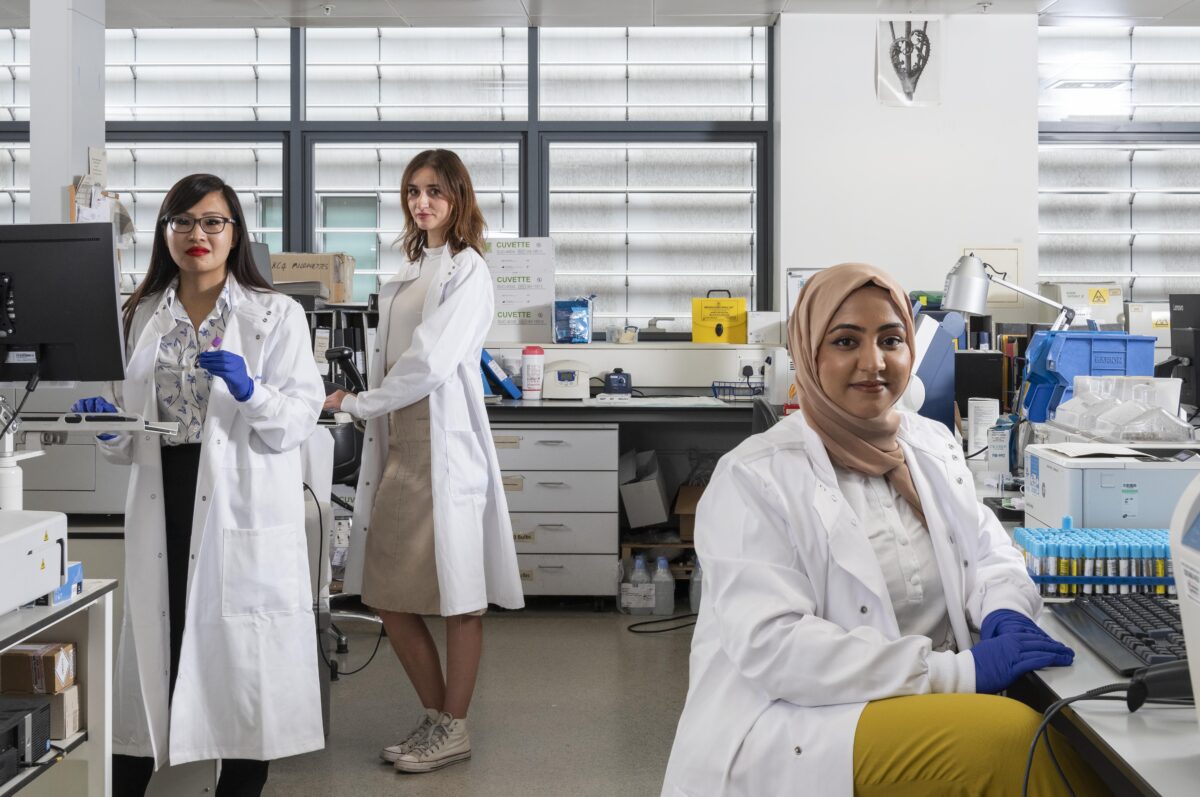
Three technicians wearing lab coats in a healthcare laboratory.

The type of work a Healthcare Science Technician will do

  • Preparing and handling patient samples, like blood or tissue
  • Using lab equipment to carry out tests
  • Recording and checking test results
  • Following strict safety and hygiene rules
  • Supporting healthcare scientists and other staff
  • Managing and storing samples correctly
  • Cleaning and maintaining equipment
Useful skills
Attention to detail
Useful skills
Problem solving
£ 0 1 2 3 4 5 6 7 8 9 0 1 2 3 4 5 6 7 8 9 , 0 1 2 3 4 5 6 7 8 9 0 1 2 3 4 5 6 7 8 9 0 1 2 3 4 5 6 7 8 9
Average salary per year *
£ 0 1 2 3 4 5 6 7 8 9 , 0 1 2 3 4 5 6 7 8 9 0 1 2 3 4 5 6 7 8 9 0 1 2 3 4 5 6 7 8 9
Average salary per month *

Data powered by LMI for all
*according to ONS

Future career opportunities for a Healthcare Science Technician

With experience, you could become a Healthcare Scientist or specialise in areas like microbiology or genetics. You might move into senior technician roles, become a lab manager, or train others.

There are also opportunities to work in research, hospitals or public health organisations.

How to become a Healthcare Science Technician

There’s no perfect career path or ideal way into your dream job.

But if you’re interested in education and training options that could be relevant to this role, you might want to consider:

Options available after GCSEs:

  • A T-level in Science.
  • An apprenticeship as a Laboratory Technician.

More options available after that:

  • An apprenticeship as a Healthcare Science Associate.

Schools and colleges each have their own career guidance plan and can provide detailed information, advice, and guidance on options and next steps.

A little more about the role

Exciting features...

This role sits at the heart of healthcare, but isn't patient-facing. You get to use advanced technology and learn how science helps save lives every day. It's a great choice if you enjoy practical science, biology and want a job that feels meaningful.

Other job titles...

This role can also be known by some other job titles including:

Healthcare Science Associate
Healthcare Science Assistant
Assistant Scientist
Biomedical Science Technician
Clinical Laboratory Technician
Laboratory Analyst
Laboratory Assistant
Laboratory Co-ordinator
Laboratory Research Assistant
Laboratory Support Worker
Laboratory Technician
Medical Laboratory Assistant
Microbiology Support Scientist
Pathology Technician
Quality Control Laboratory Assistant
Science Technician
Technical Laboratory Assistant
Technical Specialist (Scientist)
Technical Support Scientist

How a Food Science Technician makes a difference

Every day, millions of fresh, creative and tasty food products are made, packed, and sold for the enjoyment of consumers in the UK and around the world. Every product needs to meet the safety standards of the country it’s made in and the countries where it’s sold.

People can have allergies to some ingredients, so measures are taken to stop the wrong ingredients being mixed in by mistake and to make sure packaging is labelled properly. A lot of time is also spent improving and creating new products. You could be the technician who helps to ensure food and drink products are great-tasting, labelled correctly and safe to eat and drink.

The type of work a Food Science Technician will do

  • Collecting, interpreting, and analysing data
  • Specifying ingredients and organising their storage, handling and quality checks
  • Meeting with suppliers of raw materials and assessing taste and quality
  • Costing and comparing the costs of different products
  • Contributing to new product ideas
  • Overseeing and auditing processes to make sure safety standards are met
  • Liaising with manufacturing and production teams
  • Helping to improve systems and processes
Useful skills
Attention to detail
Useful skills
Communicating complex ideas
Useful skills
Precise
Useful skills
Instructing others
£ 0 1 2 3 4 5 6 7 8 9 0 1 2 3 4 5 6 7 8 9 , 0 1 2 3 4 5 6 7 8 9 0 1 2 3 4 5 6 7 8 9 0 1 2 3 4 5 6 7 8 9
Average salary per year *
£ 0 1 2 3 4 5 6 7 8 9 , 0 1 2 3 4 5 6 7 8 9 0 1 2 3 4 5 6 7 8 9 0 1 2 3 4 5 6 7 8 9
Average salary per month *

Data powered by LMI for all
*according to ONS

Future career opportunities for a Food Science Technician

You could be employed by a grower, a large or small food manufacturer, or by a retailer, such as a major UK supermarket.

Once you have experience, possible roles include technical manager, quality assurance, process development, new product development or auditor.

There may be the opportunity to travel as part of your role, either to discover new foods and ingredients internationally or to promote products to other countries.

How to become a Food Science Technician

There’s no perfect career path or ideal way into your dream job.

But if you’re interested in education and training options that could be relevant to this role, you might want to consider:

Options available after GCSEs:

  • A T-level in Science.
  • An apprenticeship as a Food Industry Technologist.

Schools and colleges each have their own career guidance plan and can provide detailed information, advice, and guidance on options and next steps.

A little more about the role

Exciting features...

You will develop an understanding of the complete food journey, from field to fork, and can help drive a manufacturing process that protects the nutritious ingredients in food for the benefit of people’s health. The ingredients you choose and where you source them from can also have a positive impact on the environment and communities. More local sourcing can reduce transportation time and carbon emissions, while sourcing internationally can provide vital work opportunities to people in developing countries.

Other job titles...

This role can also be known by some other job titles including:

Food Technologist

How a Composites Technician makes a difference

Composites are manufactured using a combination of materials and can be formed into rigid structures that are lighter and stronger than metals. They are used by the aerospace, automotive, oil & gas, rail, marine, construction, and renewables industries for smaller components as well as structures such as panels and frames.

The composites manufacturing process involves cutting edge technologies and there is continuous research into new ways to solve product and construction challenges. You could be the technician who designs and manufactures composite parts for turbine blades, bridges, aeroplanes, or satellites in space.

Useful skills
Attention to detail
Useful skills
Critical thinking
Useful skills
Communicating complex ideas

The type of work a Composites Technician will do

  • Selecting materials to produce composites
  • Designing and preparing mould tools
  • Reading and understanding technical drawings
  • Designing and manufacturing components
  • Operating machinery
  • Carrying out machine maintenance
  • Listening to customer requirements and supporting research projects
£ 0 1 2 3 4 5 6 7 8 9 0 1 2 3 4 5 6 7 8 9 , 0 1 2 3 4 5 6 7 8 9 0 1 2 3 4 5 6 7 8 9 0 1 2 3 4 5 6 7 8 9
Average salary per year *
£ 0 1 2 3 4 5 6 7 8 9 , 0 1 2 3 4 5 6 7 8 9 0 1 2 3 4 5 6 7 8 9 0 1 2 3 4 5 6 7 8 9
Average salary per month *

Data powered by LMI for all
*according to ONS

Future career opportunities for a Composites Technician

You will have the opportunity to work in different industries, creating composite parts that solve a range of challenges.

Alternatively, you could work for a design studio that takes commissions from clients, supporting their internal research and development teams.

How to become a Composites Technician

There’s no perfect career path or ideal way into your dream job.

But if you’re interested in education and training options that could be relevant to this role, you might want to consider:

Options available after GCSEs:

Schools and colleges each have their own career guidance plan and can provide detailed information, advice, and guidance on options and next steps.

A little more about the role

Exciting features...

The growth in demand for composites is increasing the need for skilled technicians with knowledge of composite design, tooling, moulding, machining, testing, repairing, and material production. These specialised skills will give you the opportunity to be involved in important projects, some of which could be reported in the news.

Other job titles...

This role can also be known by some other job titles including:

Composites Designer
Composites Materials Technician
Composites Tool-Maker
Composites Laminators
Composites Inspector
Composites Repairer

How a Research Laboratory Technician makes a difference

Laboratory research is involved in many different sectors and products, including health, pharmaceuticals, beauty, medical treatments, industrial chemicals and cleaning products, as well as the food and drinks we consume. The range is huge.

Sometimes the research is focused on developing new features. Alternatively it could concentrate on testing whether products and treatments are safe, reliable and do what they say they’re going to do. You could be the technician that helps to create important products and treatments and proves that they work.

Useful skills
Problem solving
Useful skills
Precise
Useful skills
Critical thinking

The type of work a Research Laboratory Technician will do

  • Carrying out repeat experiments
  • Data capture and record keeping
  • Checking findings against standards, highlighting any differences
  • Evaluating data
  • Formulating and reporting evidence
  • Collaborating with the lab team
£ 0 1 2 3 4 5 6 7 8 9 0 1 2 3 4 5 6 7 8 9 , 0 1 2 3 4 5 6 7 8 9 0 1 2 3 4 5 6 7 8 9 0 1 2 3 4 5 6 7 8 9
Average salary per year *
£ 0 1 2 3 4 5 6 7 8 9 , 0 1 2 3 4 5 6 7 8 9 0 1 2 3 4 5 6 7 8 9 0 1 2 3 4 5 6 7 8 9
Average salary per month *

Data powered by LMI for all
*according to ONS

Future career opportunities for a Research Laboratory Technician

Your technician role will give you skills that are transferrable to many kinds of laboratories, so you could decide to work in several different sectors.

Over time, you’ll have the experience to manage a team and could become a Lab Manager.

How to become a Research Laboratory Technician

There’s no perfect career path or ideal way into your dream job. But if you're interested in education and training options that could be relevant to this role, you might want to consider:  

But if you’re interested in education and training options that could be relevant to this role, you might want to consider:

Options available after GCSEs:

  • A T-level in Science.
  • An apprenticeship as a Laboratory Technician.

Schools and colleges each have their own career guidance plan and can provide detailed information, advice, and guidance on options and next steps.

A little more about the role

Exciting features...

You’ll use established scientific processes and experiments to assess the quality of items and to solve problems. You’ll also have the opportunity to propose new scientific ideas that could support your laboratory’s investigations.

Other job titles...

This role can also be known by some other job titles including:

Analytical Support Chemist
Technical Support Scientist
Microbiology Support Scientist
Process Development Technologist
Laboratory Assistant
Senior Laboratory Technician
Assistant Scientist
Technical Specialist (Scientist)
Quality Control Laboratory Assistant, 
Laboratory Co-ordinator
Technical Laboratory Assistant
Laboratory Analyst
Laboratory Research Assistant