Favourites

How a Materials Technician makes a difference

Materials technicians help create and check materials that are used in everyday products and cutting-edge technologies. They make sure materials are safe, strong, reliable and fit for purpose.

Their work supports things like cars, planes, medicines, sports gear, buildings and more. By testing and improving materials, they help companies make better products and support innovation in science and engineering.

A 3D printer creating a model out of metal powder.

The type of work a Materials Technician will do

  • Prepare materials for experiments and processing
  • Use tools and machines for cutting, moulding and forming materials
  • Test how materials behave under different conditions
  • Carry out quality checks on products and components
  • Record and analyse test results for engineers
  • Help make composite parts for different industries
Useful skills
Attention to detail
Useful skills
Critical thinking
Useful skills
Practical application
Useful skills
Precise
Useful skills
Problem solving
£ 0 1 2 3 4 5 6 7 8 9 0 1 2 3 4 5 6 7 8 9 , 0 1 2 3 4 5 6 7 8 9 0 1 2 3 4 5 6 7 8 9 0 1 2 3 4 5 6 7 8 9
Average salary per year *
£ 0 1 2 3 4 5 6 7 8 9 , 0 1 2 3 4 5 6 7 8 9 0 1 2 3 4 5 6 7 8 9 0 1 2 3 4 5 6 7 8 9
Average salary per month *

Data powered by LMI for all
*according to ONS

Future career opportunities for a Materials Technician

Being a Materials Technician can lead to jobs such as Materials Engineer, Quality Technician, Laboratory Technician or a specialist technician in industries like aerospace or automotive. With more training or education, you could move into research, product development or leading technical teams.

How to become a Materials Technician

There’s no perfect career path or ideal way into your dream job.

But if you’re interested in education and training options that could be relevant to this role, you might want to consider:

Options available after GCSEs:

  • A T-level in Engineering, Manufacturing, Processing and Control
  • An apprenticeship as a Composites Technician

More options available after that:

  • An apprenticeship as an Engineering Manufacturing Technician
  • An HTQ in Manufacturing Engineering

Schools and colleges each have their own career guidance plan and can provide detailed information, advice, and guidance on options and next steps.

A little more about the role

Exciting features...

As an advanced materials technician, you get hands-on with exciting materials that make products lighter, stronger and smarter. You might work with materials used in cars, planes, renewable energy or medical equipment. The role mixes science with practical work, using specialist tools, machines and testing equipment. Every day can be different, especially when you are helping to develop new materials and technologies for the future.

Other job titles...

You might also see this role listed under different job titles, including:

Materials technician
Composites technician
Materials testing technician
Production technician
Laboratory technician

How a Chemical Process Technician makes a difference

Chemical Process Technicians help create everyday products like medicines, fuels, plastics and cleaning products. They make sure these products are made safely, to the right quality and without harming people or the environment.

By carefully checking equipment and following safety rules, they help factories run smoothly and stop accidents from happening. Their work supports important industries that people rely on every day, from healthcare to energy and clean water.

Shelves in a lab lined up with various glass lab equipment like conical flasks

The type of work a Chemical Process Technician will do

  • Set up and run machines that mix or change chemicals
  • Take and record measurements for things like temperature and pressure
  • Take and check samples to check product quality
  • Make sure processes are carried out safely
  • Spot problems and report them quickly
Useful skills
Attention to detail
Useful skills
Practical application
Useful skills
Precise
Useful skills
Critical thinking
£ 0 1 2 3 4 5 6 7 8 9 0 1 2 3 4 5 6 7 8 9 , 0 1 2 3 4 5 6 7 8 9 0 1 2 3 4 5 6 7 8 9 0 1 2 3 4 5 6 7 8 9
Average salary per year *
£ 0 1 2 3 4 5 6 7 8 9 , 0 1 2 3 4 5 6 7 8 9 0 1 2 3 4 5 6 7 8 9 0 1 2 3 4 5 6 7 8 9
Average salary per month *

Data powered by LMI for all
*according to ONS

Future career opportunities for a Chemical Process Technician

With experience, a Chemical Process Technician could become a senior technician, team leader or supervisor. Some people move into quality control, maintenance or training roles. Others continue learning and move into engineering or process management. There are opportunities across many industries, including energy, pharmaceuticals and manufacturing.

How to become a Chemical Process Technician

There’s no perfect career path or ideal way into your dream job.

But if you’re interested in education and training options that could be relevant to this role, you might want to consider:

Options available after GCSEs:

  • A T-level in Engineering, Manufacturing, Processing and Control
  • An apprenticeship as a Process Industry Manufacturing Technician

Schools and colleges each have their own career guidance plan and can provide detailed information, advice, and guidance on options and next steps.

A little more about the role

Exciting features...

Chemical Process Technicians work with different processes, machines and products. The job can involve large machines, control rooms and real responsibility. You help make products used all over the world. It is a hands-on role where your work really matters, especially when it comes to safety and protecting the environment.

Other job titles...

You might also see this role listed under different job titles, including:

Chemical process technician
Chemical production technician
Process manufacturing technician
Plant technician

How a Brewing Technician makes a difference

Working in the brewing industry means contributing to this country’s largest food and drink export. The sector is diverse, with craft, micro, national, and international breweries.

All breweries are focused on doing the same thing – creating beer and maintaining the same quality and taste, time and again. You could be the technician that helps to maintain standards, ensuring customers have their beer at the quality they expect.

A woman checking brewing vats in a brewery.

The type of work a Brewing Technician will do

  • Stock control of ingredients
  • Overseeing brewing processes, for example fermentation and yeast management
  • Monitoring brewing systems
  • Maintaining hygiene across the production environment
  • Directing transport and beer dispensing systems
  • Design and adjustment of beer recipes
  • Engaging with the public, for example with tasting sessions
Useful skills
Attention to detail
Useful skills
Precise
Useful skills
Instructing others
£ 0 1 2 3 4 5 6 7 8 9 0 1 2 3 4 5 6 7 8 9 , 0 1 2 3 4 5 6 7 8 9 0 1 2 3 4 5 6 7 8 9 0 1 2 3 4 5 6 7 8 9
Average salary per year *
£ 0 1 2 3 4 5 6 7 8 9 , 0 1 2 3 4 5 6 7 8 9 0 1 2 3 4 5 6 7 8 9 0 1 2 3 4 5 6 7 8 9
Average salary per month *

Data powered by LMI for all
*according to ONS

Future career opportunities for a Brewing Technician

You could begin your career in brewing as a packer or assistant brewer and progress to running a brewery or being responsible for developing new products.

If the brewery you work for exports beer you could become responsible for global logistics or travel to different countries promoting your brewery’s brands.

How to become a Brewing Technician

There’s no perfect career path or ideal way into your dream job.

But if you’re interested in education and training options that could be relevant to this role, you might want to consider:

Options available after GCSEs:

More options available after that:

  • An apprenticeship as a Brewer.
  • An apprenticeship as a Food and Drink Engineer.

Schools and colleges each have their own career guidance plan and can provide detailed information, advice, and guidance on options and next steps.

A little more about the role

Exciting features...

Unlike other alcoholic drinks, beer is fermented rather than distilled and uses cereals rather than fruit. You’ll get to know all the ingredients and how they behave in different situations. You may also have a role in design and development of new brands, using your production knowledge to advise how tastes can be achieved.

How a Battery Technician makes a difference

Improving the technology of all sorts of batteries has never been more important, with manufacturers, design companies and construction companies all searching for new ways to power their products, infrastructure and processes with clean and renewable energy.

Battery makers develop and test different battery types to see how effective they are at supporting what a customer’s product or process does. This includes finding out how long a battery lasts before it needs recharging. You could be the technician who develops energy efficient batteries to power electric vehicles, devices and machinery, helping to address climate change.

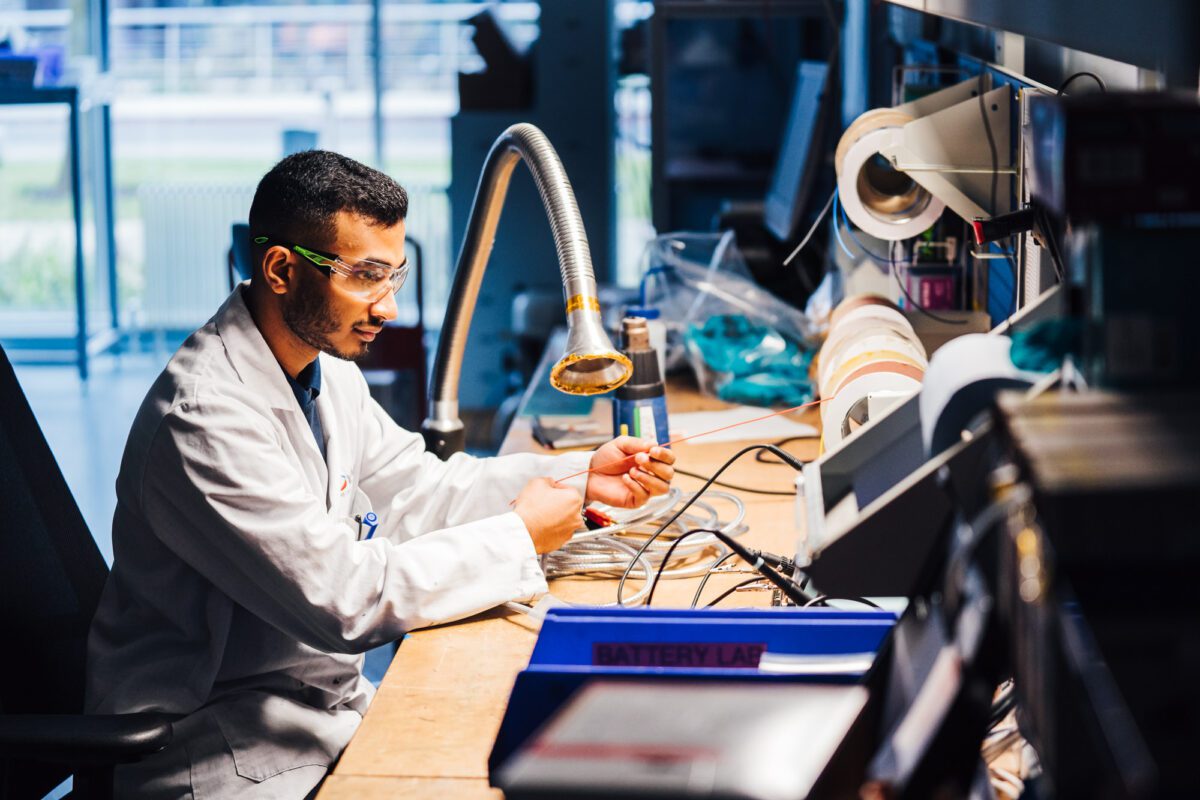
A male battery technician, wearing a lab coat and goggles, works at a desk covered with electrical equipment.

The type of work a Battery Technician will do

  • Listening to customers and understanding what they need batteries to do
  • Mixing the chemicals that are used in batteries
  • Testing batteries in climate chambers to see how they perform
  • Gathering information from research projects
  • Organising and analysing data
  • Supporting senior engineers with their tests and pilot programmes
  • Modifying battery products so they can be produced at scale
Useful skills
Logical thinking
Useful skills
Precise
Useful skills
Communicating complex ideas
Useful skills
Attention to detail
£ 0 1 2 3 4 5 6 7 8 9 0 1 2 3 4 5 6 7 8 9 , 0 1 2 3 4 5 6 7 8 9 0 1 2 3 4 5 6 7 8 9 0 1 2 3 4 5 6 7 8 9
Average salary per year *
£ 0 1 2 3 4 5 6 7 8 9 , 0 1 2 3 4 5 6 7 8 9 0 1 2 3 4 5 6 7 8 9 0 1 2 3 4 5 6 7 8 9
Average salary per month *

Data powered by LMI for all
*according to ONS

Future career opportunities for a Battery Technician

In the early stages of your career you will learn the different processes involved in battery making and progress through each of them as your skills develop.

With experience, you could become a team leader, running a process in a research or manufacturing plant. Alternatively you might develop your career into product design, creating things that use batteries.

How to become a Battery Technician

There’s no perfect career path or ideal way into your dream job.

But if you’re interested in education and training options that could be relevant to this role, you might want to consider:

Options available after GCSEs:

More options available after that:

  • An apprenticeship as an Engineering Manufacturing Technician.

Schools and colleges each have their own career guidance plan and can provide detailed information, advice, and guidance on options and next steps.

A little more about the role

Exciting features...

A Battery Technician is involved in the research and design phase of work which includes analysing alternative battery options and making refinements to meet the needs of each client. When a solution is agreed upon it progresses to a pilot testing phase and if this is successful the battery you’ve helped to develop will progress to full-scale manufacturing.

Other job titles...

This role can also be known by some other job titles including:

Battery Testing Characterisation Engineer
Mechanical Technician
Process Engineer
Quality Engineer
Test and Commissioning Engineer

How a Water Quality Technician makes a difference

Did you know, on average one person uses 152 litres of water per day? Multiply that by an average family of four and by 28 million households and you get an idea of just how much water we all use. We need our water to be readily available – at work, in our homes and for our public services – and rely on our water being clean and safe.

High quality water comes from large water processing plants that need to be continuously maintained. This involves reactive and routine repairs on water treatment systems and the fixing of leaks. You could be the technician who processes and protects our water to make sure it never stops running from our taps.

The type of work a Water Quality Technician will do

  • Following the procedures for regular checks
  • Carrying out tests on equipment, instruments and IT systems
  • Finding out the causes of faults and dealing with leaks in the system
  • Confirming the correct use of chemicals
  • Communicating to others the maintenance and repair works taking place
  • Working as a team to complete repairs
  • Maintaining records of the work carried out
Useful skills
Critical thinking
Useful skills
Attention to detail
Useful skills
Communicating complex ideas
Useful skills
Problem solving
£ 0 1 2 3 4 5 6 7 8 9 0 1 2 3 4 5 6 7 8 9 , 0 1 2 3 4 5 6 7 8 9 0 1 2 3 4 5 6 7 8 9 0 1 2 3 4 5 6 7 8 9
Average salary per year *
£ 0 1 2 3 4 5 6 7 8 9 , 0 1 2 3 4 5 6 7 8 9 0 1 2 3 4 5 6 7 8 9 0 1 2 3 4 5 6 7 8 9
Average salary per month *

Data powered by LMI for all
*according to ONS

Future career opportunities for a Water Quality Technician

As you progress in your water quality career, you could become more focused on plant equipment and the water network, or become more involved in the science of treating water.

Depending on the path you chose, you might move into a specialised engineering role or spend your days in a lab, completing tests or carrying out research.

How to become a Water Quality Technician

There’s no perfect career path or ideal way into your dream job. But if you're interested in education and training options that could be relevant to this role, you might want to consider:

But if you’re interested in education and training options that could be relevant to this role, you might want to consider:

Options available after GCSEs:

More options available after that:

  • An apprenticeship as a Water Operations Manager.

Schools and colleges each have their own career guidance plan and can provide detailed information, advice, and guidance on options and next steps.

A little more about the role

Exciting features...

Water processing plants are connected to water networks – miles of pipes that deliver water to different premises – and used water goes into the sewerage system. The pipe and sewerage networks also need to be monitored and maintained. As a water technician you’ll learn how water and waste water is managed across our whole country, how it connects to lakes, rivers, reservoirs and the sea, and how water resources are redirected around the country.

Other job titles...

This role can also be known by some other job titles including:

Water treatment process technician
Water treatment network technician
Water Distribution Network Technician
Water Distribution Leakage Technician
Waste Water Sewerage Technician
Waste Water Treatment Technician

How a Concrete Technician makes a difference

You might be surprised to hear that the construction industry has laboratories, but concrete, aggregates and asphalt all need to be tested to make sure they’re fit for purpose and in line with the required standards.

Tests are carried out in the laboratory and onsite and research examines how materials can be improved to make them stronger, more adaptable and to reduce their environmental impact. You could be the technician that ensures we have safe, strong and environmentally-sound buildings and roads.

The type of work a Concrete Technician will do

  • Completing tests on materials in the lab and on site
  • Carrying out spot checks as concrete is poured
  • Maintaining equipment
  • Liaising with senior members of staff
  • Communicating with construction teams
  • Reporting on tests and research findings
Useful skills
Problem solving
Useful skills
Precise

Future career opportunities for a Concrete Technician

You could progress from being a Concrete Technician to a Lab Manager.

With lots of experience behind you, you might become a Materials Engineer.

£ 0 1 2 3 4 5 6 7 8 9 0 1 2 3 4 5 6 7 8 9 , 0 1 2 3 4 5 6 7 8 9 0 1 2 3 4 5 6 7 8 9 0 1 2 3 4 5 6 7 8 9
Average salary per year *
£ 0 1 2 3 4 5 6 7 8 9 , 0 1 2 3 4 5 6 7 8 9 0 1 2 3 4 5 6 7 8 9 0 1 2 3 4 5 6 7 8 9
Average salary per month *

Data powered by LMI for all
*according to ONS

How to become a Concrete Technician

There’s no perfect career path or ideal way into your dream job.

But if you’re interested in education and training options that could be relevant to this role, you might want to consider:

Options available after GCSEs:

More options available after that:

  • An apprenticeship as a Mineral Products Technician.

Schools and colleges each have their own career guidance plan and can provide detailed information, advice, and guidance on options and next steps.

A little more about the role

Exciting features...

As well as running checks on materials, you’ll be responsible for calibrating machines and analysing statistics. A lot of your work will also be onsite, where you’ll be part of the team helping to build essential infrastructure and exciting new buildings.

Other job titles...

This role can also be known by some other job titles including:

Laboratory Technician
Materials Technician

How a Water Process Technician makes a difference

Every time people flush toilets or use sinks, dirty water needs cleaning before it goes back into nature. Water Process Technicians help make sure this happens.

They help maintain the equipment that removes rubbish, germs and harmful chemicals from wastewater, so it is safe for our rivers and seas. This protects fish and plants and keeps beaches and drinking water sources cleaner. Their work also helps communities stay healthy and supports a cleaner future for everyone.

Industrial bridge in water unit.

The type of work a Water Process Technician will do

  • Maintain machines that clean wastewater
  • Take samples of water to test how clean it is
  • Spot problems like faulty equipment or leaks and help fix them
  • Measure and add treatment chemicals to kill germs
  • Keep records of tests and results
  • Work both indoors and outdoors at treatment sites
  • Help respond to emergencies such as floods or pollution incidents
Useful skills
Attention to detail
Useful skills
Decisive
Useful skills
Logical thinking
Useful skills
Precise
£ 0 1 2 3 4 5 6 7 8 9 0 1 2 3 4 5 6 7 8 9 , 0 1 2 3 4 5 6 7 8 9 0 1 2 3 4 5 6 7 8 9 0 1 2 3 4 5 6 7 8 9
Average salary per year *
£ 0 1 2 3 4 5 6 7 8 9 , 0 1 2 3 4 5 6 7 8 9 0 1 2 3 4 5 6 7 8 9 0 1 2 3 4 5 6 7 8 9
Average salary per month *

Data powered by LMI for all
*according to ONS

Future career opportunities for a Water Process Technician

With experience, you could become a senior technician or team leader. Some people move into managing whole treatment sites. Others train in areas like water quality, environmental protection or engineering. You could also work on new green technologies that help reuse water and reduce pollution.

How to become a Water Process Technician

There’s no perfect career path or ideal way into your dream job.

But if you’re interested in education and training options that could be relevant to this role, you might want to consider:

Options available after GCSEs:

More options available after that:

  • An apprenticeship as a Water Operations Manager.

Schools and colleges each have their own career guidance plan and can provide detailed information, advice, and guidance on options and next steps.

A little more about the role

Exciting features...

No two days are the same in this job. You might be testing water one day and helping solve a big problem the next. You get to see real results from your work when cleaner water flows back into rivers. The job mixes science, teamwork and practical skills. You are doing something that really matters for people and the planet. It is a role where you can learn on the job and build a long term career.

Other job titles...

You might also see this role listed under different job titles, including:

Wastewater Treatment Technician
Sewage Works Technician
Water Treatment Operative
Process Plant Technician
Environmental Water Technician

How a University Technician makes a difference

Most universities have laboratories where important research programmes are carried out and where students studying a range of science and engineering subjects learn experimentation techniques.

Laboratories and the equipment in them need to be properly supplied and managed, and students and researchers need support with their projects and experiments. You could be the technician who carries out research processes and helps students and colleagues to make scientific discoveries.

The type of work a University Technician will do

  • Carrying out repeat experiments
  • Data capture and record keeping
  • Checking findings against standards, highlighting any differences
  • Evaluating data
  • Formulating and reporting evidence
  • Collaborating with the lab team and university teachers
  • Helping students plan and carry out their scientific work
Useful skills
Attention to detail
Useful skills
Problem solving
£ 0 1 2 3 4 5 6 7 8 9 0 1 2 3 4 5 6 7 8 9 , 0 1 2 3 4 5 6 7 8 9 0 1 2 3 4 5 6 7 8 9 0 1 2 3 4 5 6 7 8 9
Average salary per year *
£ 0 1 2 3 4 5 6 7 8 9 , 0 1 2 3 4 5 6 7 8 9 0 1 2 3 4 5 6 7 8 9 0 1 2 3 4 5 6 7 8 9
Average salary per month *

Data powered by LMI for all
*according to ONS

Future career opportunities for a University Technician

Your technician role will give you skills that are transferrable to many kinds of laboratories, so you could decide to work in several different sectors.

Over time, you will have the experience to manage a team and could become a lab manager.

How to become a University Technician

There’s no perfect career path or ideal way into your dream job.

But if you’re interested in education and training options that could be relevant to this role, you might want to consider:

Options available after GCSEs:

  • A T-level in Science.
  • An apprenticeship as a Laboratory Technician.

Schools and colleges each have their own career guidance plan and can provide detailed information, advice, and guidance on options and next steps.

A little more about the role

Exciting features...

As well as being involved in research and working with scientists on research programmes, you will play an important role helping students to become immersed in their scientific studies. You will also enable them to operate in the laboratory safely and efficiently and achieve their scientific goals.

Other job titles...

This role can also be known by some other job titles including:

Analytical Support Chemist
Technical Support Scientist
Microbiology Support Scientist
Process Development Technologist
Laboratory Assistant
Senior Laboratory Technician
Assistant Scientist
Technical Specialist (Scientist)
Quality Control Laboratory Assistant
Laboratory Co-ordinator
Technical Laboratory Assistant
Laboratory Analyst
Laboratory Research Assistant

How a Science Manufacturing Technician makes a difference

All manufacturing processes today are very precisely configured to ensure products are made accurately and as efficiently as possible. In industries such as pharmaceuticals, biotechnology, and chemicals, maintaining accuracy ensures the quality, effectiveness, and safety of products, while efficiency ensures the timeliness and cost effectiveness of delivery.

A science manufacturing technician monitors the manufacturing process, collecting data from different stages to establish where efficiencies can be gained, errors have happened, and problems have been overlooked. You could be the technician who helps to control production, to monitor quality and efficiency, and to help make sure final products are safe.

The type of work a Science Manufacturing Technician will do

  • Setting up manufacturing processes and collecting performance data from different stages
  • Following quality procedures set by the law and your workplace
  • Monitoring processing equipment
  • Highlighting abnormal activity or conditions
  • Collaborating with different specialisms in the manufacturing team to understand why problems have occurred
  • Findings ways to solve problems
  • Developing ways to improve all areas of the manufacturing process
Useful skills
Communicating complex ideas
Useful skills
Precise
Useful skills
Technologically minded
£ 0 1 2 3 4 5 6 7 8 9 0 1 2 3 4 5 6 7 8 9 , 0 1 2 3 4 5 6 7 8 9 0 1 2 3 4 5 6 7 8 9 0 1 2 3 4 5 6 7 8 9
Average salary per year *
£ 0 1 2 3 4 5 6 7 8 9 , 0 1 2 3 4 5 6 7 8 9 0 1 2 3 4 5 6 7 8 9 0 1 2 3 4 5 6 7 8 9
Average salary per month *

Data powered by LMI for all
*according to ONS

Future career opportunities for a Science Manufacturing Technician

As your experience grows, you will take on more responsibility for data analysis as well as data capture, and could become a senior manager leading a team of technicians.

Your specialist knowledge in developing efficiencies and continuous improvements in manufacturing, could lead you to working in a consultancy, advising a range of companies on how to achieve high standards in manufacturing.

How to become a Science Manufacturing Technician

There’s no perfect career path or ideal way into your dream job.

But if you’re interested in education and training options that could be relevant to this role, you might want to consider:

Options available after GCSEs:

Schools and colleges each have their own career guidance plan and can provide detailed information, advice, and guidance on options and next steps.

A little more about the role

Exciting features...

You will work with specialist systems and equipment to capture data in a range of different conditions, including on the production line. Many sectors have laws that control how things are made and you will share responsibility for making sure the right standards are maintained.

Other job titles...

This role can also be known by some other job titles including:

Chemical Plan Process Workers
Polymer Technician
Pharmaceutical Technician
Chemical Engineering Technician

How a Pharmacy Technician makes a difference

Most of us think of pharmacies being on our local high street, but in fact they exist in several different places. For instance inside prisons and care homes, in hospitals and mental health clinics, in the armed forces and in some GP practices. 

In all these environments, pharmacies support a range of health needs, providing professional advice and dispensing medicines and treatments. In some, however, there may be more direct contact with patients: people who could have multiple conditions or potentially addictions to consider. You could be the technician who provides the right medicine at the right time, helping people to feel better and recover fully.

A pharmacy technician organising shelves of medicine boxes.

The type of work a Pharmacy Technician will do

  • Assembling medicines for prescriptions
  • Providing information to patients and other healthcare professionals
  • Managing areas of medicine supply and maintain stocks
  • Supervising other pharmacy staff
  • Answering customers questions face to face or by phone
  • Pre-packing, assembling and labelling medicines
  • Referring problems or queries to the pharmacist
Useful skills
Precise
Useful skills
Attention to detail
Useful skills
Instructing others
Useful skills
Problem solving
£ 0 1 2 3 4 5 6 7 8 9 0 1 2 3 4 5 6 7 8 9 , 0 1 2 3 4 5 6 7 8 9 0 1 2 3 4 5 6 7 8 9 0 1 2 3 4 5 6 7 8 9
Average salary per year *
£ 0 1 2 3 4 5 6 7 8 9 , 0 1 2 3 4 5 6 7 8 9 0 1 2 3 4 5 6 7 8 9 0 1 2 3 4 5 6 7 8 9
Average salary per month *

Data powered by LMI for all
*according to ONS

Future career opportunities for a Pharmacy Technician

A career in pharmacy can take you in lots of different directions, to the wide range of settings where pharmacies are located. In each location you will gain the primary skills of a pharmacist but also gain specialist knowledge that supports the environment you’re working in.

With experience you will be expected to instruct and train other people and could develop your career as a trainer. There are also opportunities in academia where you can carry out research, apply innovative teaching methods, and contribute to national and international pharmacy policy. You may also choose to open your own pharmacy.

How to become a Pharmacy Technician

There’s no perfect career path or ideal way into your dream job.

But if you’re interested in education and training options that could be relevant to this role, you might want to consider:

Options available after GCSEs:

  • A T-level in Science.
  • A T-level in Health.
  • An apprenticeship as a Pharmacy Technician.

Schools and colleges each have their own career guidance plan and can provide detailed information, advice, and guidance on options and next steps.

A little more about the role

Exciting features...

Pharmacy technicians manage the supply of medicines and devices in a pharmacy and assist pharmacists with advisory services. You will be responsible for carrying out both routine and specialist services, including highly complex activities requiring the use of your professional judgement.