Favourites

How a Countryside Ranger makes a difference

Over 25% of our country is covered by National Parks and Areas of Outstanding Natural Beauty (AONBs) and more than 350,000 hectares are managed by organisations such as the National Trust, Natural England, Wildlife Trusts, and the Royal Society for Protection of Birds.

All these organisations and this vast amount of land rely on countryside rangers to properly manage and maintain the natural environment, and to teach other people about what it involves. You could be the technician who helps to protect nature in all its forms and inspires other people to do the same.

Useful skills
Communicating complex ideas
Useful skills
Decisive
Useful skills
Attention to detail

The type of work a Countryside Ranger will do

  • Planning and delivering projects such as setting up a new visitor route or creating new grazing land
  • Organising staff and volunteers to carry out land management tasks
  • The construction and maintenance of boundaries
  • Species and habitat monitoring
  • Practical conservation tasks
  • Responding to events that affect the natural environment
  • Reviewing environmental, education, and public information communications
  • Participating in public events and educational visits
  • Sharing information and news on social media
£ 0 1 2 3 4 5 6 7 8 9 0 1 2 3 4 5 6 7 8 9 , 0 1 2 3 4 5 6 7 8 9 0 1 2 3 4 5 6 7 8 9 0 1 2 3 4 5 6 7 8 9
Average salary per year *
£ 0 1 2 3 4 5 6 7 8 9 , 0 1 2 3 4 5 6 7 8 9 0 1 2 3 4 5 6 7 8 9 0 1 2 3 4 5 6 7 8 9
Average salary per month *

Data powered by LMI for all
*according to ONS

Future career opportunities for a Countryside Ranger

With experience, you could become a senior, district or head ranger or warden. You could also become a countryside officer, working inside a local government organisation or charity.

Another option is moving into more specialised work, such as forestry, coastal area management, or wildlife conservation.

How to become a Countryside Ranger

There’s no perfect career path or ideal way into your dream job.

But if you’re interested in education and training options that could be relevant to this role, you might want to consider:

Options available after GCSEs:

More options available after that:

  • An apprenticeship as a Countryside Ranger.

Schools and colleges each have their own career guidance plan and can provide detailed information, advice, and guidance on options and next steps.

Exciting features...

There are many different environments you could be involved in managing, including moorland, heathland, wetland, woodland, grassland, coastal, and protected landscapes. You’ll be responsible for organising, supervising and delivering specific land management programmes, community engagement, and projects with a range of different partners.

Other job titles...

This role can also be known by some other job titles including:

Community Ranger
Estate Ranger
Estate supervisor
Park Ranger
Ranger
Recreation Ranger
Reserve Warden
Countryside Warden

How a Prosthetic and Orthotic Technician makes a difference

Prosthetics is the clinical term used for making artificial limbs (prostheses). Orthotics is the clinical term used for making a range of devices (orthoses), everything from technical footwear to back braces.

Working in these areas involves developing an understanding of the different conditions people have that can lead to them needing an artificial limb or device.

Specifications are provided to make sure each item fits comfortably and functions properly, enabling people to do what they want to do. You could be the technician who gives children and adults freedom of movement and their independence again.

The type of work a Prosthetic and Orthotic Technician will do

  • Interacting with clinical staff, patients and families
  • Understanding requirements and following specifications
  • Taking measurements and producing moulds
  • Planning out designs and making limbs and devices
  • Fitting and fixing limbs and devices
  • Providing advice on technical solutions
  • Using computers to support customised manufacture and fitting
Useful skills
Attention to detail
Useful skills
Logical thinking
£ 0 1 2 3 4 5 6 7 8 9 0 1 2 3 4 5 6 7 8 9 , 0 1 2 3 4 5 6 7 8 9 0 1 2 3 4 5 6 7 8 9 0 1 2 3 4 5 6 7 8 9
Average salary per year *
£ 0 1 2 3 4 5 6 7 8 9 , 0 1 2 3 4 5 6 7 8 9 0 1 2 3 4 5 6 7 8 9 0 1 2 3 4 5 6 7 8 9
Average salary per month *

Data powered by LMI for all
*according to ONS

Future career opportunities for a Prosthetic and Orthotic Technician

You could work in a team in the NHS, supporting clinicians and meeting with patients. You could also develop your skills working for a private manufacturing company.

Some companies work with patients directly, developing specialised devices. With experience you could lead a design team, working for the NHS or in a consultancy.

How to become a Prosthetic and Orthotic Technician

There’s no perfect career path or ideal way into your dream job.

But if you’re interested in education and training options that could be relevant to this role, you might want to consider:

Options available after GCSEs:

Schools and colleges each have their own career guidance plan and can provide detailed information, advice, and guidance on options and next steps.

A little more about the role

Exciting features...

You’ll be making things that will have a huge impact on people’s lives and could even produce limbs or devices that enable Paralympians to compete. You’ll meet with patients to help with the fitting of their device and will often be able to see the difference you make almost immediately. You could be changing the lives of young children born with missing limbs, people who have been in accidents or suffered injuries serving in the military, or those that have clinical conditions that restrict them.

How a Pharmacy Technician makes a difference

Most of us think of pharmacies being on our local high street, but in fact they exist in several different places. For instance inside prisons and care homes, in hospitals and mental health clinics, in the armed forces and in some GP practices. 

In all these environments, pharmacies support a range of health needs, providing professional advice and dispensing medicines and treatments. In some, however, there may be more direct contact with patients: people who could have multiple conditions or potentially addictions to consider. You could be the technician who provides the right medicine at the right time, helping people to feel better and recover fully.

A pharmacy technician organising shelves of medicine boxes.

The type of work a Pharmacy Technician will do

  • Assembling medicines for prescriptions
  • Providing information to patients and other healthcare professionals
  • Managing areas of medicine supply and maintain stocks
  • Supervising other pharmacy staff
  • Answering customers questions face to face or by phone
  • Pre-packing, assembling and labelling medicines
  • Referring problems or queries to the pharmacist
Useful skills
Precise
Useful skills
Attention to detail
Useful skills
Instructing others
Useful skills
Problem solving
£ 0 1 2 3 4 5 6 7 8 9 0 1 2 3 4 5 6 7 8 9 , 0 1 2 3 4 5 6 7 8 9 0 1 2 3 4 5 6 7 8 9 0 1 2 3 4 5 6 7 8 9
Average salary per year *
£ 0 1 2 3 4 5 6 7 8 9 , 0 1 2 3 4 5 6 7 8 9 0 1 2 3 4 5 6 7 8 9 0 1 2 3 4 5 6 7 8 9
Average salary per month *

Data powered by LMI for all
*according to ONS

Future career opportunities for a Pharmacy Technician

A career in pharmacy can take you in lots of different directions, to the wide range of settings where pharmacies are located. In each location you will gain the primary skills of a pharmacist but also gain specialist knowledge that supports the environment you’re working in.

With experience you will be expected to instruct and train other people and could develop your career as a trainer. There are also opportunities in academia where you can carry out research, apply innovative teaching methods, and contribute to national and international pharmacy policy. You may also choose to open your own pharmacy.

How to become a Pharmacy Technician

There’s no perfect career path or ideal way into your dream job.

But if you’re interested in education and training options that could be relevant to this role, you might want to consider:

Options available after GCSEs:

  • A T-level in Science.
  • A T-level in Health.
  • An apprenticeship as a Pharmacy Technician.

Schools and colleges each have their own career guidance plan and can provide detailed information, advice, and guidance on options and next steps.

A little more about the role

Exciting features...

Pharmacy technicians manage the supply of medicines and devices in a pharmacy and assist pharmacists with advisory services. You will be responsible for carrying out both routine and specialist services, including highly complex activities requiring the use of your professional judgement.

How a Healthcare Science Technician makes a difference

When people fall ill, a doctor will often request blood and other samples. These samples go through a series of tests in a lab, to check the patient’s health, diagnose what’s making them unwell, and determine the treatment they should receive.

Healthcare Science Technicians carry out these tests, helping patients to get the right diagnosis.

Sometimes, people who are ill need personalised treatments put together, to treat conditions like cancer. These need to be created precisely in the lab.

Healthcare Science Technicians develop these treatments, making sure patients get the treatment that’s right for them.

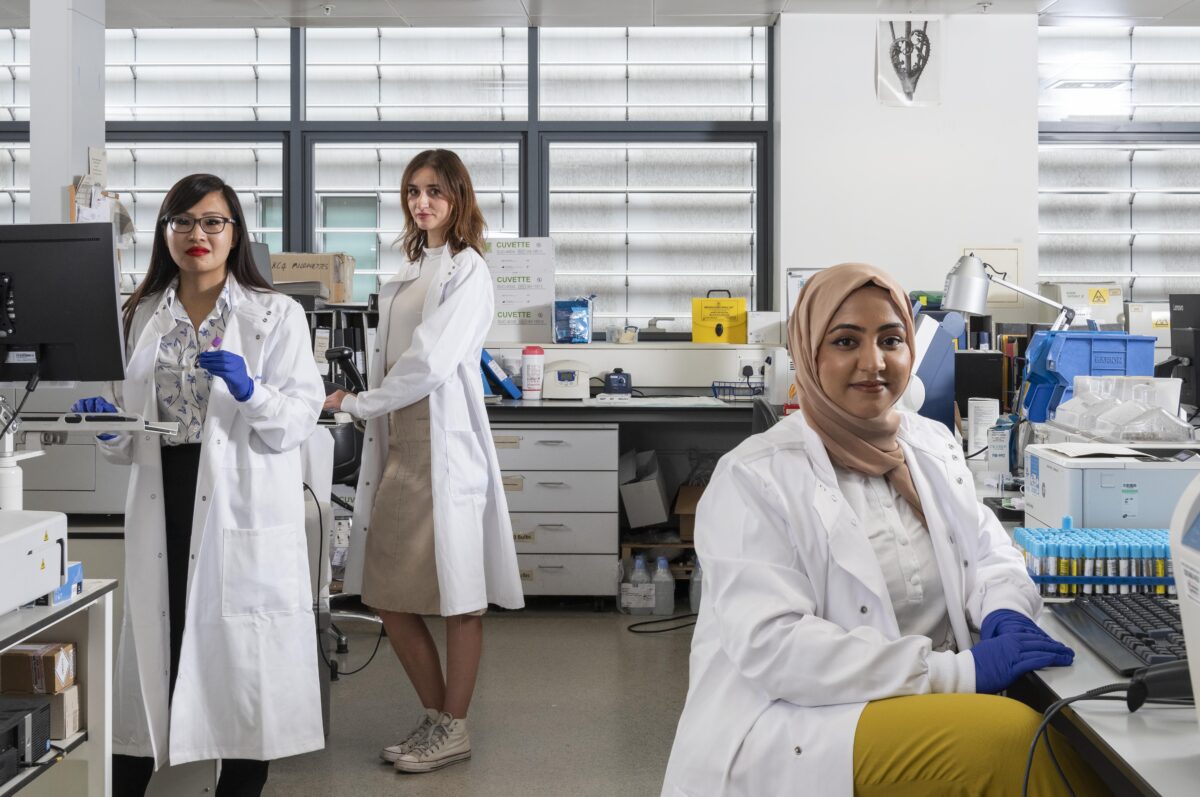
Three technicians wearing lab coats in a healthcare laboratory.

The type of work a Healthcare Science Technician will do

  • Preparing and handling patient samples, like blood or tissue
  • Using lab equipment to carry out tests
  • Recording and checking test results
  • Following strict safety and hygiene rules
  • Supporting healthcare scientists and other staff
  • Managing and storing samples correctly
  • Cleaning and maintaining equipment
Useful skills
Attention to detail
Useful skills
Problem solving
£ 0 1 2 3 4 5 6 7 8 9 0 1 2 3 4 5 6 7 8 9 , 0 1 2 3 4 5 6 7 8 9 0 1 2 3 4 5 6 7 8 9 0 1 2 3 4 5 6 7 8 9
Average salary per year *
£ 0 1 2 3 4 5 6 7 8 9 , 0 1 2 3 4 5 6 7 8 9 0 1 2 3 4 5 6 7 8 9 0 1 2 3 4 5 6 7 8 9
Average salary per month *

Data powered by LMI for all
*according to ONS

Future career opportunities for a Healthcare Science Technician

With experience, you could become a Healthcare Scientist or specialise in areas like microbiology or genetics. You might move into senior technician roles, become a lab manager, or train others.

There are also opportunities to work in research, hospitals or public health organisations.

How to become a Healthcare Science Technician

There’s no perfect career path or ideal way into your dream job.

But if you’re interested in education and training options that could be relevant to this role, you might want to consider:

Options available after GCSEs:

  • A T-level in Science.
  • An apprenticeship as a Laboratory Technician.

More options available after that:

  • An apprenticeship as a Healthcare Science Associate.

Schools and colleges each have their own career guidance plan and can provide detailed information, advice, and guidance on options and next steps.

A little more about the role

Exciting features...

This role sits at the heart of healthcare, but isn't patient-facing. You get to use advanced technology and learn how science helps save lives every day. It's a great choice if you enjoy practical science, biology and want a job that feels meaningful.

Other job titles...

This role can also be known by some other job titles including:

Healthcare Science Associate
Healthcare Science Assistant
Assistant Scientist
Biomedical Science Technician
Clinical Laboratory Technician
Laboratory Analyst
Laboratory Assistant
Laboratory Co-ordinator
Laboratory Research Assistant
Laboratory Support Worker
Laboratory Technician
Medical Laboratory Assistant
Microbiology Support Scientist
Pathology Technician
Quality Control Laboratory Assistant
Science Technician
Technical Laboratory Assistant
Technical Specialist (Scientist)
Technical Support Scientist

How a Horticultural Technician makes a difference

Fruit, vegetables, plants, and flowers are all grown in the horticultural industry. Each species in each of these categories benefits from particular conditions – soil, watering, feed, and temperatures – to grow at its best. 

Research takes place to understand what makes the difference to a plant’s health. Seedlings are nurtured in different conditions to compare the results and new techniques are employed to increase the yield of fruit or quality of flowers. You could be the technician who helps to create delicious fruits that feed people, and plants and flowers that make them happy.

The type of work a Horticultural Technician will do

  • Understanding different species and their stages of growth
  • Preparing seed beds/growing areas
  • Following procedures to maximise growth potential
  • Controlling pests, weeds, and diseases
  • Feeding and tending to plants
  • Managing accurate records
  • Operating and taking care of machinery
  • Experimenting with new growing approaches
Useful skills
Problem solving
Useful skills
Precise
£ 0 1 2 3 4 5 6 7 8 9 0 1 2 3 4 5 6 7 8 9 , 0 1 2 3 4 5 6 7 8 9 0 1 2 3 4 5 6 7 8 9 0 1 2 3 4 5 6 7 8 9
Average salary per year *
£ 0 1 2 3 4 5 6 7 8 9 , 0 1 2 3 4 5 6 7 8 9 0 1 2 3 4 5 6 7 8 9 0 1 2 3 4 5 6 7 8 9
Average salary per month *

Data powered by LMI for all
*according to ONS

Future career opportunities for a Horticultural Technician

Once you’ve gained experience in seed production, you could move on to leading a team and taking responsibility for crop management.

You could also become an independent grower, a researcher, or offer your skills as a consultant to other growers.

How to become a Horticultural Technician

There’s no perfect career path or ideal way into your dream job.

But if you’re interested in education and training options that could be relevant to this role, you might want to consider:

Options available after GCSEs:

  • A T-level in Science.
  • An apprenticeship as a Laboratory Technician.

Schools and colleges each have their own career guidance plan and can provide detailed information, advice, and guidance on options and next steps.

A little more about the role

Exciting features...

The horticulture industry is innovative and technologically advanced, combining scientific research with high-tech machinery and lots of outdoor work. As well as optimising fruit yields and enhancing the vibrancy of plants and flowers, you will also need to consider the surrounding environment to make sure growing practices maintain or improve the land.

Other job titles...

This role can also be known by some other job titles including:

Arable Technician
Horticulture Operative

How a Food Science Technician makes a difference

Every day, millions of fresh, creative and tasty food products are made, packed, and sold for the enjoyment of consumers in the UK and around the world. Every product needs to meet the safety standards of the country it’s made in and the countries where it’s sold.

People can have allergies to some ingredients, so measures are taken to stop the wrong ingredients being mixed in by mistake and to make sure packaging is labelled properly. A lot of time is also spent improving and creating new products. You could be the technician who helps to ensure food and drink products are great-tasting, labelled correctly and safe to eat and drink.

The type of work a Food Science Technician will do

  • Collecting, interpreting, and analysing data
  • Specifying ingredients and organising their storage, handling and quality checks
  • Meeting with suppliers of raw materials and assessing taste and quality
  • Costing and comparing the costs of different products
  • Contributing to new product ideas
  • Overseeing and auditing processes to make sure safety standards are met
  • Liaising with manufacturing and production teams
  • Helping to improve systems and processes
Useful skills
Attention to detail
Useful skills
Communicating complex ideas
Useful skills
Precise
Useful skills
Instructing others
£ 0 1 2 3 4 5 6 7 8 9 0 1 2 3 4 5 6 7 8 9 , 0 1 2 3 4 5 6 7 8 9 0 1 2 3 4 5 6 7 8 9 0 1 2 3 4 5 6 7 8 9
Average salary per year *
£ 0 1 2 3 4 5 6 7 8 9 , 0 1 2 3 4 5 6 7 8 9 0 1 2 3 4 5 6 7 8 9 0 1 2 3 4 5 6 7 8 9
Average salary per month *

Data powered by LMI for all
*according to ONS

Future career opportunities for a Food Science Technician

You could be employed by a grower, a large or small food manufacturer, or by a retailer, such as a major UK supermarket.

Once you have experience, possible roles include technical manager, quality assurance, process development, new product development or auditor.

There may be the opportunity to travel as part of your role, either to discover new foods and ingredients internationally or to promote products to other countries.

How to become a Food Science Technician

There’s no perfect career path or ideal way into your dream job.

But if you’re interested in education and training options that could be relevant to this role, you might want to consider:

Options available after GCSEs:

  • A T-level in Science.
  • An apprenticeship as a Food Industry Technologist.

Schools and colleges each have their own career guidance plan and can provide detailed information, advice, and guidance on options and next steps.

A little more about the role

Exciting features...

You will develop an understanding of the complete food journey, from field to fork, and can help drive a manufacturing process that protects the nutritious ingredients in food for the benefit of people’s health. The ingredients you choose and where you source them from can also have a positive impact on the environment and communities. More local sourcing can reduce transportation time and carbon emissions, while sourcing internationally can provide vital work opportunities to people in developing countries.

Other job titles...

This role can also be known by some other job titles including:

Food Technologist

How a Mortuary Technician makes a difference

Understanding that death is a part of life is a difficult but important lesson that everyone needs to learn. When you realise this you also understand that looking after the bodies of people who’ve died is skilled and essential work which requires compassion and respect.

It involves preparing, dressing and placing deceased people into coffins, and making sure they are presented with dignity and in line with their religious and cultural beliefs. You could be the technician who completes these preparations and reassures family members their loved one is being cared for.

The kind of work a Mortuary Technician will do

  • Monitoring the safety and hygiene of equipment
  • Managing the receipt and release of people
  • Checking people’s identities
  • Initial assessment and monitoring of deceased people
  • Initial care and cleaning of deceased people
  • Maintaining registers and documents for the deceased
  • Communication with people connected to the deceased
Useful skills
Attention to detail
Useful skills
Precise

Data powered by LMI for all
*according to ONS

Future career opportunities for a Mortuary Technician

This is a specialised role that can offer you a long-term career. Over time you may move into training other people or running a team.

You could also develop your skills to be more closely involved in the analysis of deceased people, as well as their preparation.

How to become a Mortuary Technician

There’s no perfect career path or ideal way into your dream job.

But if you’re interested in education and training options that could be relevant to this role, you might want to consider:

Options available after GCSEs:

  • A T-level in Health.
  • An apprenticeship as a Mortuary Technician.

More options available after that:

  • An apprenticeship as a Embalmer.

Schools and colleges each have their own career guidance plan and can provide detailed information, advice, and guidance on options and next steps.

A little more about the role

Exciting features...

You’ll be involved with all kinds of people, including relatives, funeral directors, embalmers, crematoria, cemeteries, funeral arrangers, doctors, police, coroners and hospital and home care staff. Your professionalism, integrity and sensitivity will be required at all times.

Other job titles...

This role can also be known by some other job titles including:

Anatomical Pathology Technologist
Embalming Assistant
Mortuary Assistant

How a Dental Technician makes a difference

Dental technicians manufacture precise, custom-made medical appliances including bridges, crowns, implants, and dentures. These are used to replace or repair people’s natural teeth, to prevent pain and discomfort, and to improve appearance.

The role requires a strong mix of science skills and knowledge, and creativity, as dental technicians need to achieve the same skill level as fine artists and understand the range of materials and mechanics involved in making the appliances. You could be the technician who brings a smile back to people’s faces, with medical appliances that fit perfectly and match their natural teeth shade and character as closely as possible.

The type of work a Dental Technician will do

  • Advising dentists on the appropriate dental appliance based on the patient’s needs
  • Producing models
  • Designing and manufacturing dental appliances
  • Selecting materials
  • Modifying and repairing appliances
  • Recording the design and decision-making process
  • Communicating with dental teams and patients
  • Maintaining a clean laboratory environment
Useful skills
Attention to detail
Useful skills
Precise
Useful skills
Logical thinking
Useful skills
Problem solving
Useful skills
Instructing others
£ 0 1 2 3 4 5 6 7 8 9 0 1 2 3 4 5 6 7 8 9 , 0 1 2 3 4 5 6 7 8 9 0 1 2 3 4 5 6 7 8 9 0 1 2 3 4 5 6 7 8 9
Average salary per year *
£ 0 1 2 3 4 5 6 7 8 9 , 0 1 2 3 4 5 6 7 8 9 0 1 2 3 4 5 6 7 8 9 0 1 2 3 4 5 6 7 8 9
Average salary per month *

Data powered by LMI for all
*according to ONS

Future career opportunities for a Dental Technician

As you learn your trade you will be part of a team, taking on individual elements of the manufacturing process and becoming an expert in the different tools you use.

In time, you may decide to set up your own laboratory, to help private and NHS dentists to meet their customers’ needs.

How to become a Dental Technician

There’s no perfect career path or ideal way into your dream job.

But if you’re interested in education and training options that could be relevant to this role, you might want to consider:

Options available after GCSEs:

  • A T-level in Health.
  • A T-level in Science.
  • An apprenticeship as a Dental Nurse.

More options available after that:

  • An apprenticeship as a Dental Technician.

Schools and colleges each have their own career guidance plan and can provide detailed information, advice, and guidance on options and next steps.

A little more about the role

Exciting features...

This is a physical role that involves making things with your hands for most of your working day. However, you will also use computers and software to support the modelling and detailing of the medical appliances you create. You’ll also get to meet customers at times, to make sure the fit, character, and colour of your technical work is absolutely spot on.

How a Crop Technician makes a difference

The land is where food production starts and it needs to be taken care of to produce healthy crops. As they grow, crops also need to be nurtured to protect them from weeds, diseases, harsh weather conditions, and hungry birds, insects and other animals.

Understanding how to build up resistance to all these things and improve the quality of crops involves research into how to establish strong seedlings, manage their growth, and harvest the final crop. You could be the technician who helps to grow successful crops to put tasty and nutritious food on people’s tables.

The type of work a Crop Technician will do

  • Understanding different species of crops and their stages of growth
  • Preparing seed beds/growing areas
  • Following procedures to maximise growth potential
  • Controlling pests, weeds, and diseases
  • Caring and tending to crops
  • Managing accurate records
  • Operating and taking care of machinery
  • Experimenting with new growing approaches
Useful skills
Instructing others
Useful skills
Critical thinking
Useful skills
Precise
£ 0 1 2 3 4 5 6 7 8 9 0 1 2 3 4 5 6 7 8 9 , 0 1 2 3 4 5 6 7 8 9 0 1 2 3 4 5 6 7 8 9 0 1 2 3 4 5 6 7 8 9
Average salary per year *
£ 0 1 2 3 4 5 6 7 8 9 , 0 1 2 3 4 5 6 7 8 9 0 1 2 3 4 5 6 7 8 9 0 1 2 3 4 5 6 7 8 9
Average salary per month *

Data powered by LMI for all
*according to ONS

Future career opportunities for a Crop Technician

Once you’ve gained experience in seed production, you could move on to leading a team and taking responsibility for crop management.

You could also become an independent grower, a researcher, or offer your skills as a consultant to other growers.

How to become a Crop Technician

There’s no perfect career path or ideal way into your dream job.

But if you’re interested in education and training options that could be relevant to this role, you might want to consider:

Options available after GCSEs:

Schools and colleges each have their own career guidance plan and can provide detailed information, advice, and guidance on options and next steps.

A little more about the role

Exciting features...

The agriculture industry needs to be innovative and technologically advanced, combining scientific research and high-tech machinery with lots of outdoor work. As well as optimising crop yields, you will also need to consider the surrounding environment, to make sure growing practices maintain or improve the land.

Other job titles...

This role can also be known by some other job titles including:

Arable Technician
Horticulture Operative

How a Research Laboratory Technician makes a difference

Laboratory research is involved in many different sectors and products, including health, pharmaceuticals, beauty, medical treatments, industrial chemicals and cleaning products, as well as the food and drinks we consume. The range is huge.

Sometimes the research is focused on developing new features. Alternatively it could concentrate on testing whether products and treatments are safe, reliable and do what they say they’re going to do. You could be the technician that helps to create important products and treatments and proves that they work.

Useful skills
Problem solving
Useful skills
Precise
Useful skills
Critical thinking

The type of work a Research Laboratory Technician will do

  • Carrying out repeat experiments
  • Data capture and record keeping
  • Checking findings against standards, highlighting any differences
  • Evaluating data
  • Formulating and reporting evidence
  • Collaborating with the lab team
£ 0 1 2 3 4 5 6 7 8 9 0 1 2 3 4 5 6 7 8 9 , 0 1 2 3 4 5 6 7 8 9 0 1 2 3 4 5 6 7 8 9 0 1 2 3 4 5 6 7 8 9
Average salary per year *
£ 0 1 2 3 4 5 6 7 8 9 , 0 1 2 3 4 5 6 7 8 9 0 1 2 3 4 5 6 7 8 9 0 1 2 3 4 5 6 7 8 9
Average salary per month *

Data powered by LMI for all
*according to ONS

Future career opportunities for a Research Laboratory Technician

Your technician role will give you skills that are transferrable to many kinds of laboratories, so you could decide to work in several different sectors.

Over time, you’ll have the experience to manage a team and could become a Lab Manager.

How to become a Research Laboratory Technician

There’s no perfect career path or ideal way into your dream job. But if you're interested in education and training options that could be relevant to this role, you might want to consider:  

But if you’re interested in education and training options that could be relevant to this role, you might want to consider:

Options available after GCSEs:

  • A T-level in Science.
  • An apprenticeship as a Laboratory Technician.

Schools and colleges each have their own career guidance plan and can provide detailed information, advice, and guidance on options and next steps.

A little more about the role

Exciting features...

You’ll use established scientific processes and experiments to assess the quality of items and to solve problems. You’ll also have the opportunity to propose new scientific ideas that could support your laboratory’s investigations.

Other job titles...

This role can also be known by some other job titles including:

Analytical Support Chemist
Technical Support Scientist
Microbiology Support Scientist
Process Development Technologist
Laboratory Assistant
Senior Laboratory Technician
Assistant Scientist
Technical Specialist (Scientist)
Quality Control Laboratory Assistant, 
Laboratory Co-ordinator
Technical Laboratory Assistant
Laboratory Analyst
Laboratory Research Assistant