
Favourites
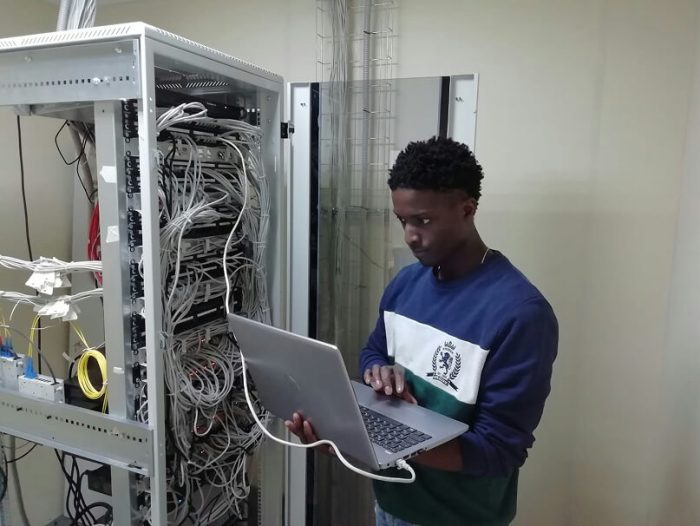
A mean holding a laptop attached to a big unit full of cables

IT Network Technician

IT Network Technicians keep computer networks working so people can connect, share information and use the internet without problems.

How an IT Network Technician makes a difference

IT Network Technicians help schools, businesses and organisations stay connected. They make sure computers, Wi-Fi and other devices can talk to each other safely and reliably.


Without networks, people could not send emails, join online lessons, access files or use many everyday digital services. This role helps others do their jobs properly and keeps important systems running. When something goes wrong, the technician steps in to fix it so work can continue.

A young man working on the back of a computer monitor attempting to fix it

The type of work an IT Network Technician will do

  • Set up and maintain network hardware, like servers and Wi-Fi systems
  • Check networks are running smoothly
  • Find and fix problems when things stop working
  • Replace or upgrade network equipment
  • Help keep data secure
  • Connect devices like computers and printers
Useful skills
Critical thinking
Useful skills
Attention to detail
Useful skills
Problem solving
£ 0 1 2 3 4 5 6 7 8 9 0 1 2 3 4 5 6 7 8 9 , 0 1 2 3 4 5 6 7 8 9 0 1 2 3 4 5 6 7 8 9 0 1 2 3 4 5 6 7 8 9
Average salary per year *
£ 0 1 2 3 4 5 6 7 8 9 , 0 1 2 3 4 5 6 7 8 9 0 1 2 3 4 5 6 7 8 9 0 1 2 3 4 5 6 7 8 9
Average salary per month *

Data powered by LMI for all
*according to ONS

Future career opportunities for an IT Network Technician

With experience, an IT Network Technician can move into more senior IT roles. This could include becoming a Network Engineer, working on larger and more complex networks, or moving into specialist areas of IT support. Some people continue learning while working and progress into higher-level technical or management roles.

How to become an IT Network Technician

There’s no perfect career path or ideal way into your dream job.

But if you’re interested in education and training options that could be relevant to this role, you might want to consider:

Options available after GCSEs:

  • A T-level in Digital Support and Security
  • An apprenticeship as an Information Communications Technician

More options available after that:

  • An apprenticeship as a Network Engineer
  • A Higher Technical Qualification (HTQ) in Computing

Schools and colleges each have their own career guidance plan and can provide detailed information, advice, and guidance on options and next steps.

A little more about the role

Exciting features...

This role mixes hands-on work with problem solving. One day you might be setting up new equipment and the next day fixing a tricky network fault. You get to see the results of your work straight away when systems start working again. IT Network Technicians are needed in many different places, so the skills you learn can take you in lots of directions

Other job titles...

You might also see this role listed under different job titles, including:

Network Support Technician
IT Support Technician
Network Support Engineer
Information Communications Technician