Favourites
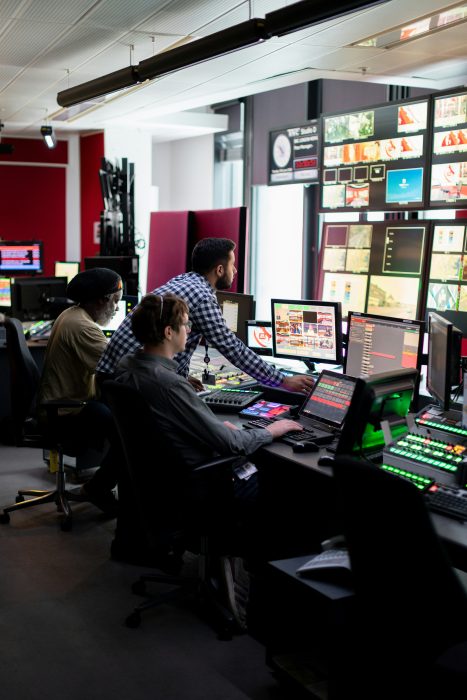
Broadcasting technicians in a broadcast room in front of lots of screens showing what's going on on the other side of the cameras

Broadcast technician

A broadcast technician sets up, runs and fixes the equipment that makes TV, radio and online broadcasts work.

How a Broadcast Technician makes a difference

Broadcast Technicians help TV, radio, and online shows get from the studio to your screens and speakers. They make sure things like cameras, microphones and other equipment are working to capture, record and transmit high quality sound and picture. 

Without them, live sport, news, podcasts and music wouldn’t work properly. They set things up, check equipment and keep things running during broadcasts. They need to be able to spot and fix problems fast. Their work helps people stay informed, entertained and connected every day.

A camera on a tripod in a studio

The type of work a Broadcast Technician will do

  • Set up equipment like cameras and microphones
  • Test sound and picture quality
  • Run equipment during live broadcasts
  • Monitor signals and spot faults
  • Fix problems quickly when things go wrong
  • Work with presenters and producers
Useful skills
Logical thinking
Useful skills
Technologically minded
Useful skills
Practical application
£ 0 1 2 3 4 5 6 7 8 9 0 1 2 3 4 5 6 7 8 9 , 0 1 2 3 4 5 6 7 8 9 0 1 2 3 4 5 6 7 8 9 0 1 2 3 4 5 6 7 8 9
Average salary per year *
£ 0 1 2 3 4 5 6 7 8 9 , 0 1 2 3 4 5 6 7 8 9 0 1 2 3 4 5 6 7 8 9 0 1 2 3 4 5 6 7 8 9
Average salary per month *

Data powered by LMI for all
*according to ONS

Future career opportunities for a Broadcast Technician

With experience, you could become a senior broadcast technician or a technical supervisor. Some people move into sound, lighting or camera roles. Others go into engineering, systems design or training apprentices. You could also work on bigger live events or specialise in TV, radio or online streaming.

How to become a Broadcast Technician

There’s no perfect career path or ideal way into your dream job.

But if you’re interested in education and training options that could be relevant to this role, you might want to consider:

Options available after GCSEs:

  • A T-level in Media, broadcast and production
  • An apprenticeship as a Broadcast and media systems technical operator

More options available after that:

  • An apprenticeship as a Broadcast and media systems technician

Schools and colleges each have their own career guidance plan and can provide detailed information, advice, and guidance on options and next steps.

A little more about the role

Exciting features...

Every day can be different. One day you might be in a TV studio and the next at a live event. You get to work behind the scenes on shows people love. Live broadcasts can be exciting because you have to think fast and fix problems quickly. New technology is always coming in, so there is always something new to learn. You also get to work with lots of creative people.
Other job titles...

You might also see this role listed under different job titles, including:

Broadcast and Media Systems Technician
Broadcast Engineer
Media Technician
Studio Technician
Outside Broadcast Technician